 English
 English

Rahul Gandhi's remarks on India-Israel relations trigger a fresh political debate. (Img: X)
New Delhi: Leader of Opposition in the Lok Sabha Rahul Gandhi's recent remarks on India's relationship with Israel have triggered a fresh political debate, with his position indicating a possible shift in the Congress leader's approach to international affairs — from ideological positioning towards a more pragmatic assessment of India's strategic interests.
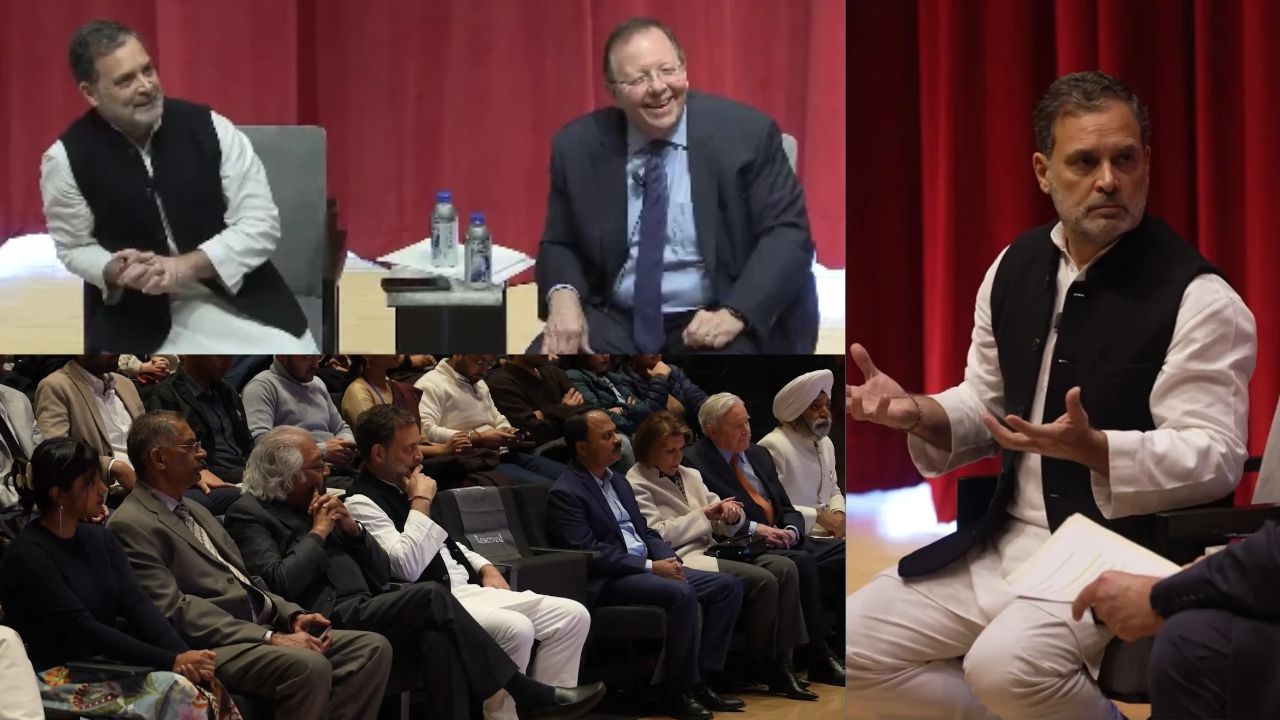
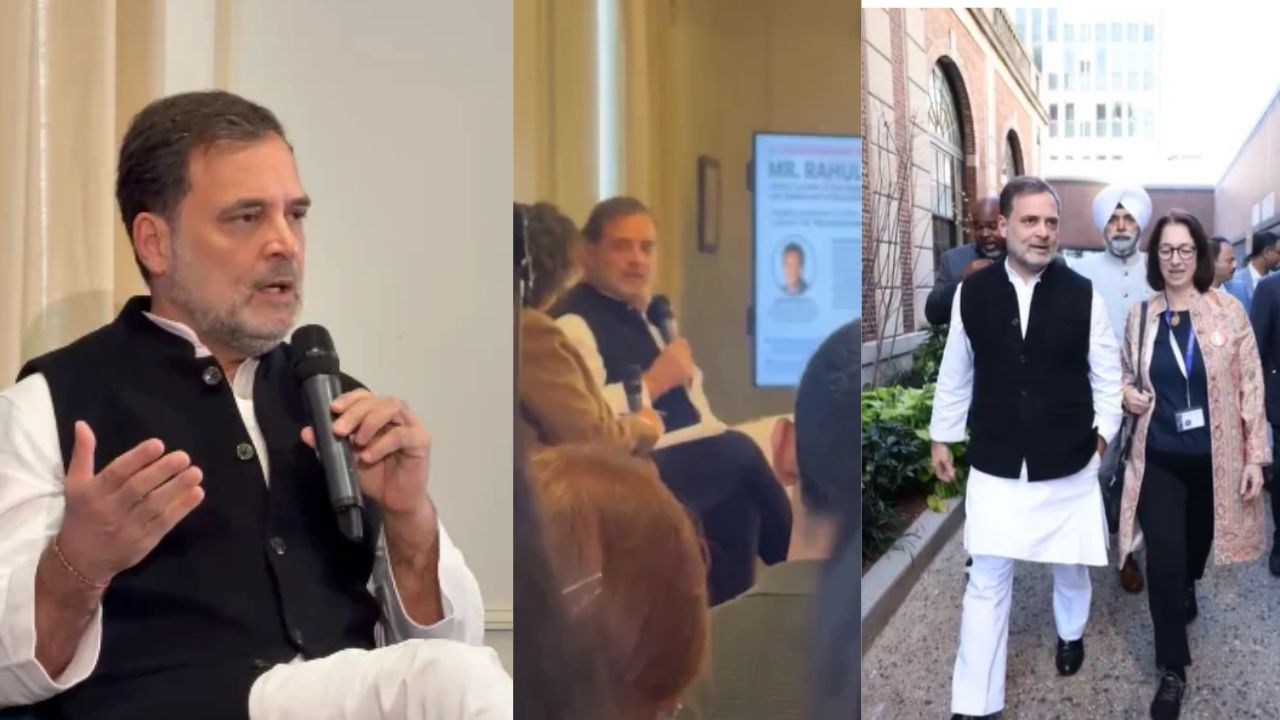
Speaking during an interaction at the University of Chicago with Professor Robert Pape, Gandhi advocated maintaining strong bilateral ties with Israel, particularly in view of India's defence requirements, while simultaneously criticising the country's military campaign in Gaza. His remarks have drawn attention because they appear to depart from the more uncompromising position traditionally articulated by sections of the Congress leadership on the Israel-Palestine conflict.
Gandhi sought to distinguish India's strategic engagement with Israel from its position on the humanitarian crisis in Gaza. He condemned the October 7, 2023 attacks on Israeli civilians as well as Israel's subsequent actions in Gaza, maintaining that the two developments could not be justified against each other. He also underlined that India's foreign policy should be determined by its own national interests rather than the strategic priorities of other countries.
Arguing in favour of continued defence cooperation, Gandhi said India needed access to advanced military equipment and should preserve its strategic relationship with Israel. However, he maintained that defence procurement and diplomatic engagement should not prevent New Delhi from expressing its views on international developments.
Significantly, Gandhi did not describe Israel's actions in Gaza as genocide, a term repeatedly used by several Congress leaders, including Sonia Gandhi and Priyanka Gandhi Vadra, while criticising the Israeli government and the Modi government's response to the conflict. His remarks also did not explicitly identify Hamas by name while condemning the October 7 attacks.
The comments assume significance against the backdrop of the Congress's longstanding political support for Palestinian statehood and its criticism of Israeli military operations.
Although India recognised Israel in 1950 under Prime Minister Jawaharlal Nehru, full diplomatic relations were established in January 1992 during the tenure of Prime Minister P V Narasimha Rao. The decision marked an important recalibration of India's West Asia policy, with Rao reportedly keeping Palestine Liberation Organisation chief Yasser Arafat informed before the formal announcement.
Subsequent governments continued to expand engagement with Israel. Defence cooperation gained momentum under the Atal Bihari Vajpayee-led NDA government, while the strategic partnership between India and the United States deepened during the UPA years.
Under Prime Minister Narendra Modi, however, India-Israel ties acquired greater political visibility, with defence, technology and diplomatic cooperation becoming important pillars of the relationship. Gandhi's latest intervention appears to acknowledge this strategic reality while seeking to preserve the Congress's traditional emphasis on Palestinian rights.
The Congress leader's remarks have not gone down well with some of his political allies in the INDIA bloc. CPI(M) leader and former Kerala Chief Minister Pinarayi Vijayan criticised the Congress's position, describing it as hypocritical. CPI(ML) Liberation general secretary Dipankar Bhattacharya also questioned the continuation of diplomatic ties with Israel and called for India to sever relations with the country.
The criticism reflects the difficulty confronting the Opposition alliance in maintaining a common position on an issue that carries both international and domestic political implications.
There are also concerns within Opposition circles that Gandhi's articulation could complicate the Congress's political messaging among Muslim voters, particularly with crucial Assembly elections approaching, including in Uttar Pradesh.
The issue could provide political ammunition to parties seeking to challenge the Congress-Samajwadi Party alliance over its position on Palestine. The emerging understanding between Asaduddin Owaisi's AIMIM and Chandrashekhar Azad's Azad Samaj Party could further intensify this contest.
The latest controversy has also brought renewed attention to differences within the Congress over its response to the Israel-Hamas conflict when hostilities began in October 2023.
At the time, the party faced criticism for not explicitly naming Hamas in its initial condemnation of the violence. Some senior leaders, including Shashi Tharoor, had reportedly favoured a more direct denunciation of the militant organisation's attack on Israeli civilians.
The party subsequently clarified its position. Congress spokesperson Pawan Khera unequivocally condemned Hamas's attack on Israeli civilians, while Rahul Gandhi, in an October 19, 2023 statement, denounced both the killing of Israeli civilians and the deaths of Palestinians in Gaza, including children.
Congress president Mallikarjun Kharge also subsequently criticised the actions of both Hamas and Israel.
Gandhi's latest comments therefore revive an existing debate within the party over how to reconcile its historical support for Palestine with India's expanding strategic relationship with Israel.
The BJP has also continued its criticism of Gandhi's overseas interventions, accusing him of portraying India in a negative light during his foreign engagements.
During his US visit, Gandhi made several politically contentious observations about India's economic condition, unemployment, manufacturing capabilities and the concentration of wealth. His remarks that India was becoming increasingly marginalised in global affairs also attracted criticism from the ruling party.
At the University of Chicago, Gandhi additionally addressed India's electoral system, arguing that boycotting elections on account of alleged institutional shortcomings would ultimately undermine democracy.
His position on Israel, however, has introduced a different dimension to the political debate, as it involves an attempt to articulate a foreign-policy position that acknowledges strategic considerations without abandoning criticism of the humanitarian situation in Gaza.
The larger question now is whether Gandhi's intervention represents an individual assessment or the beginning of a broader recalibration of the Congress's foreign-policy approach. With divergent opinions continuing within the Opposition alliance, the political consequences of his position are likely to extend beyond the immediate controversy.