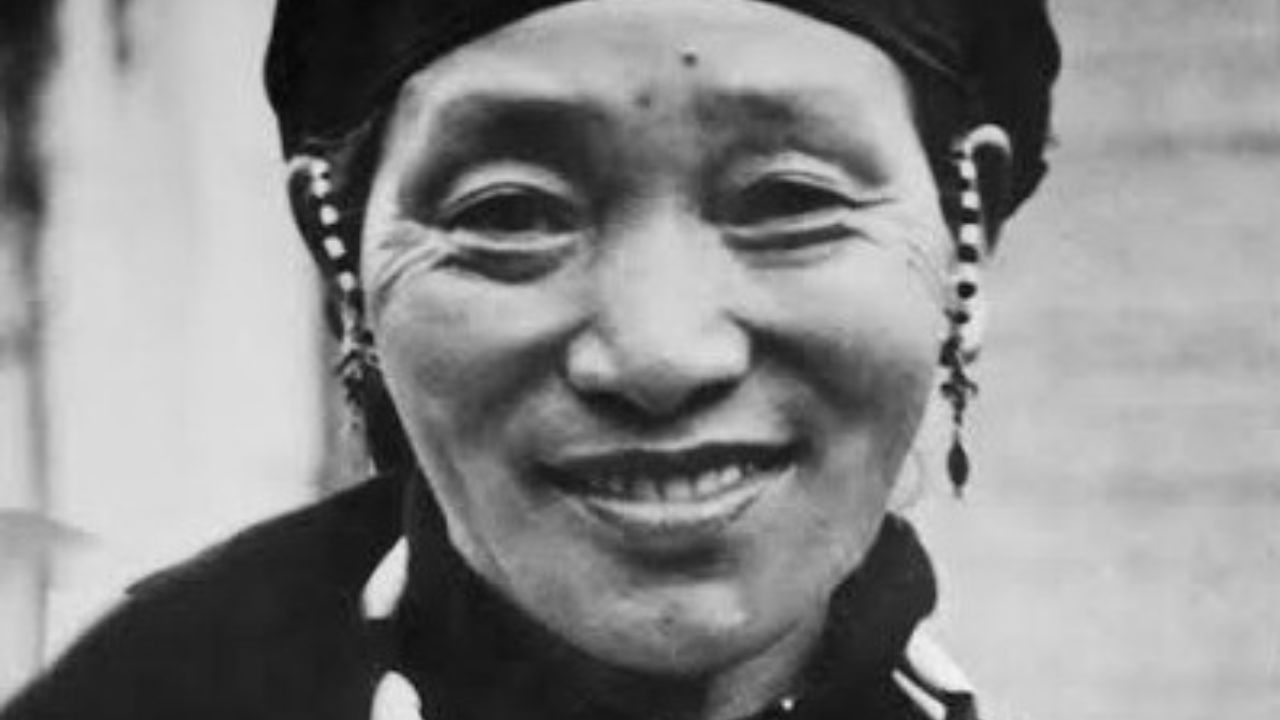
Rani Gaidinliu: The Torchbearer of Tribal Resistance
New Delhi: Long before the dawn of India’s independence, when colonial power cast a long shadow over the subcontinent, a young girl from the mist-covered hills of Manipur rose as a fearless voice of defiance. At an age when most children were still discovering the world around them, Rani Gaidinliu had already chosen the path of resistance, challenging the might of the British Empire and becoming a symbol of courage, conviction and cultural pride.
Born as Gaidinliu Pamei, she entered history as Rani Gaidinliu after Jawaharlal Nehru recognised her extraordinary courage and bestowed upon her the title of Rani, meaning queen. Her life became a remarkable saga of sacrifice, spiritual devotion and unwavering commitment towards the identity and welfare of the Zeliangrong Naga community.
A spiritual guide, political leader and revolutionary figure, Rani Gaidinliu played a defining role in the Heraka movement, which began as an effort to preserve indigenous traditions but gradually transformed into a movement against British colonial authority. Decades after her struggle, the Government of India honoured her contribution by conferring the Padma Bhushan and recognising her among the nation’s distinguished tribal freedom fighters whose courage shaped the course of history.
Rani Gaidinliu was born on January 26, 1915, in Nungkao village, also known as Longkao, located in the present-day Tousem subdivision of Tamenglong district in Manipur.
She was born into the Rongmei Naga community as the fifth among eight children of Lothonang Pamei and Kachaklenliu. Her family belonged to the ruling clan of the village, carrying the traditions and responsibilities associated with community leadership.
However, the remote region lacked proper educational infrastructure during that era, preventing her from receiving formal schooling. Yet, beyond the walls of conventional classrooms, the mountains and traditions of her homeland became her teachers.
She developed a deep understanding of indigenous customs, spiritual beliefs and the challenges faced by her people. These early experiences planted the seeds of leadership that would later transform her into one of Northeast India’s most influential figures.
In 1927, at merely 13 years of age, Gaidinliu joined the Heraka movement led by her cousin Haipou Jadonang, an influential leader among the Zeliangrong tribes comprising the Zeme, Liangmai and Rongmei communities.
The movement initially sought to revive ancestral religious traditions, protect cultural identity and strengthen social unity among indigenous communities. However, as British colonial policies increasingly affected local life, the movement gradually evolved into a political resistance against foreign rule.
Inspired by Jadonang’s ideology and vision, Gaidinliu became one of his closest followers. Her determination, spiritual commitment and ability to connect with people soon established her as a prominent figure within the movement.
Within the Heraka faith, followers came to regard her as a spiritual figure associated with Goddess Cherachamdinliu, adding another dimension to her growing influence among the community.
The expanding influence of the Heraka movement alarmed the British administration, which viewed it as a direct challenge to colonial authority.
In 1931, Haipou Jadonang was arrested and later executed by hanging in Imphal after being accused in connection with the deaths of four traders. His execution created a turning point, placing the responsibility of carrying forward the movement on the shoulders of young Gaidinliu.
Taking the role of a spiritual and political successor, she continued mobilising the Zeliangrong people against British policies, including colonial taxation practices.
Her message resonated among villagers, many of whom extended support and joined her movement. The British authorities responded with a massive search operation, deploying Assam Rifles units to capture her and suppress the rebellion.
The colonial government announced rewards for information leading to her arrest and imposed pressure on villages suspected of supporting her.
By 1932, Gaidinliu’s movement had entered a critical phase, with her followers engaging in armed confrontations with British forces in areas including North Cachar Hills and Hangrum village.
In October 1932, British troops launched a surprise attack against her supporters at Pulomi village, where a wooden fortification was being constructed.
Gaidinliu was eventually captured near Kenoma village along with several followers.
She denied involvement in attacks against British installations and rejected allegations connecting her directly with violent incidents carried out by some members of the movement.
Following a lengthy trial of around 10 months, the British Political Agent’s Court convicted her on charges related to abetment of murder and sentenced her to life imprisonment.
The crackdown also resulted in severe punishment for many of her associates, with several being executed or imprisoned.
From 1933 to 1947, Rani Gaidinliu remained imprisoned in various jails, including Guwahati, Shillong, Aizawl and Tura. Although confined behind prison walls, her influence continued to spread. For many supporters, she and Jadonang became enduring symbols of resistance against colonial domination.
In 1937, Jawaharlal Nehru visited her at Shillong Jail and recognised the extraordinary courage of the young revolutionary. Nehru described her as the daughter of the hills and gave her the title Rani, a name that would forever become attached to her legacy.
He also attempted to raise the issue of her release with British authorities, but the colonial administration refused, fearing that freeing her could revive political unrest.
India’s independence in 1947 marked a new chapter in Rani Gaidinliu’s life. After spending nearly 14 years in different prisons, she was released from Tura Jail. Freedom did not end her struggle; it transformed its purpose. She dedicated the next phase of her life to the welfare, development and cultural preservation of the Zeliangrong people.
She worked to protect traditional practices and promote social progress among her community. In 1953, she met Prime Minister Jawaharlal Nehru during his visit to Imphal and later held discussions with him in Delhi regarding the development and future of the Zeliangrong people.
Rani Gaidinliu’s journey after independence was marked by complex political challenges. She opposed the Naga National Council’s demand for separation from India and instead advocated a separate administrative arrangement for the Zeliangrong community within the Indian constitutional framework.
Her position brought her into disagreement with certain political groups supporting independence movements. She also faced opposition over her efforts to revive Heraka traditions, as some sections viewed the movement differently due to changing religious and social dynamics in the region. To protect her cultural mission and strengthen her position, she went underground in 1960.
After six years of underground life, Rani Gaidinliu returned to public life in 1966 following an understanding with the Government of India. She chose the path of democratic engagement and peaceful dialogue to continue working for her people.
She travelled to Kohima and later met Prime Minister Lal Bahadur Shastri in Delhi, where she presented her demands regarding the creation of a separate Zeliangrong administrative unit. In September 1966, around 320 of her followers surrendered at Henima, with some later joining the Nagaland Armed Police.
India honoured Rani Gaidinliu’s remarkable contributions through several prestigious awards.
She received the Tamrapatra Freedom Fighter Award in 1972, the Padma Bhushan in 1982 and the Vivekananda Seva Award in 1983.
She was also honoured with the Birsa Munda Award posthumously.
The Government of India issued a commemorative postal stamp in her honour in 1996 and released a commemorative coin marking her birth centenary in 2015.
In 1991, Rani Gaidinliu returned to her ancestral village of Longkao, where she spent the final chapter of her extraordinary life. She passed away on February 17, 1993, at the age of 78. Her funeral witnessed the presence of government officials, political leaders and people from across Northeast India, reflecting the deep respect she commanded among communities. The Manipur government declared a holiday in her honour, acknowledging her immense contribution to the region’s history.
Today, Rani Gaidinliu stands as a timeless symbol of courage, cultural preservation and tribal empowerment. Her life story is a reminder that the fight for freedom was not confined to battlefields and cities but also echoed through remote hills, forests and villages where countless unsung heroes challenged colonial power. From a young girl in a distant Naga village to a celebrated freedom fighter of India, Rani Gaidinliu’s journey remains a powerful chapter in the nation’s history, a story of resilience, sacrifice and an unbreakable spirit that refused to surrender.

