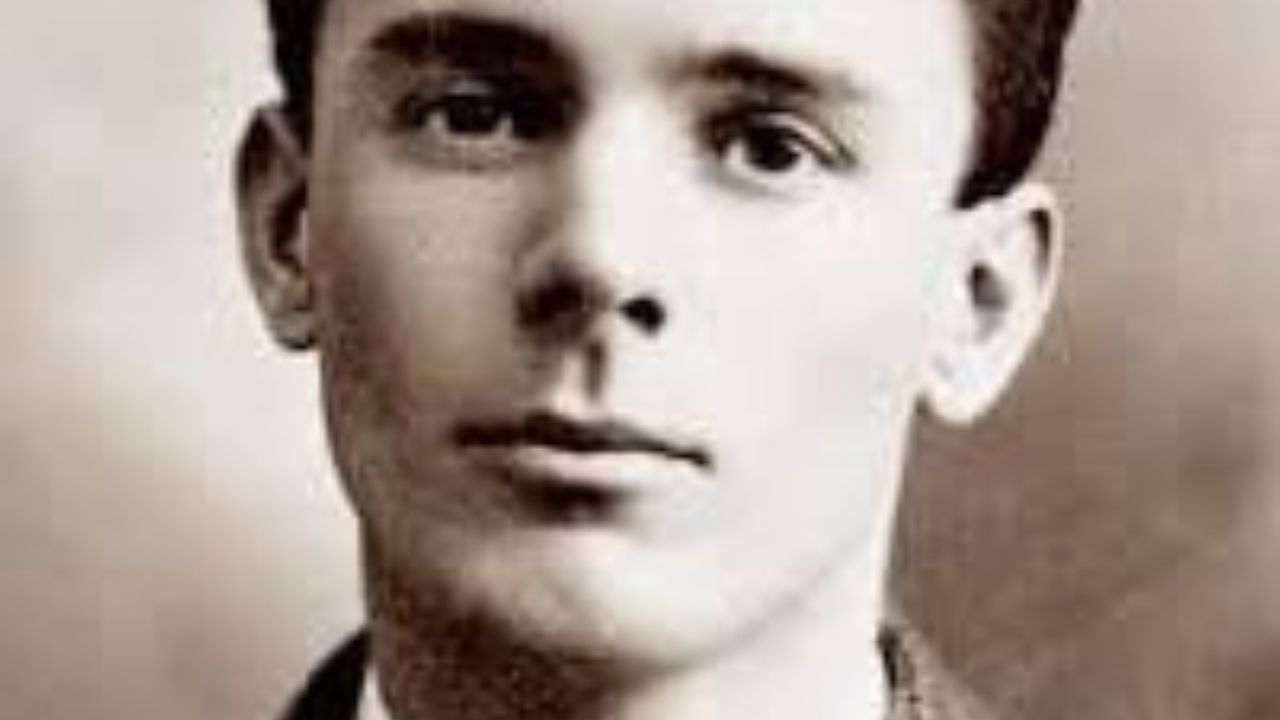
Born into a wealthy American family, Samuel Evans Stokes Jr. left behind a life of privilege to serve India’s poor, fight British colonial rule, face imprisonment and transform Himachal Pradesh’s apple economy.
New Delhi: Some people inherit fortunes. Others create legacies that outlive generations. Samuel Evans Stokes Jr. belonged to the rare group of people who walked away from privilege to serve a cause greater than themselves.
Born into a wealthy American family in Philadelphia, Stokes had a comfortable future waiting for him. He could have inherited a successful industrial empire and lived a life of luxury. Instead, at the age of 21, he crossed oceans and arrived in India in 1904, driven by a desire to serve people suffering from leprosy in the Himalayan region.
What began as a humanitarian journey transformed into something far greater. The American volunteer became Satyanand Stokes, a social reformer, freedom fighter, agricultural pioneer and the only American known to have been imprisoned by the British Raj for participating in India’s independence movement.
His story is not just about one man’s sacrifice. It is about how compassion can erase borders, how service can change identity and how a foreign-born individual became deeply connected with India’s struggle for freedom.
Samuel Evans Stokes Jr. was born on August 16, 1882, in Philadelphia, United States, into a prosperous Quaker family. His father was a successful industrialist who owned a company manufacturing mechanical elevators. Samuel was expected to continue the family business and inherit a secure future. However, he chose a completely different path.
In January 1904, at just 21 years old, Stokes travelled to India and reached Subathu in Himachal Pradesh. His purpose was simple: to work at a leprosy home managed by American doctor Marcus Carleton and provide care to those suffering from the disease.
For Stokes, India was not merely a destination. It slowly became his home, his identity and the centre of his life’s mission. The young American who arrived as an outsider began learning local languages, understanding village traditions and building a deep relationship with Himalayan communities.
The devastating Kangra earthquake of 1905 became a defining chapter in Stokes’ connection with India. One of the most destructive earthquakes in the region’s history, the disaster destroyed homes, disrupted villages and caused widespread suffering across Himachal Pradesh.
While relief efforts were underway, Stokes worked directly among affected communities. He used his own resources to support victims and participated in rehabilitation activities.
The experience exposed him to the hardships faced by ordinary Indians and strengthened his belief that serving people required more than charity — it required standing with them in their fight for dignity and justice. The Himalayas had changed him. India was no longer a place where he worked; it had become the land he had chosen.
After briefly returning to the United States following his father’s death in 1911, Stokes returned to India and decided to permanently settle in Himachal Pradesh. He married Agnes Benjamin, a local Rajput Christian woman, further strengthening his bond with the region.
Over the years, Stokes moved closer to Indian culture and traditions. He adopted Indian clothing, embraced local customs and later converted to Hinduism, taking the name Satyanand Stokes.
The transformation was more than a change of name. It reflected his complete emotional and spiritual connection with India. The American-born man had found a new identity among the people he had come to serve.
Stokes soon began raising his voice against social injustice faced by villagers in the Himalayan region. One of the major issues he challenged was begar, a system of forced and unpaid labour under which villagers were compelled to provide services for authorities and powerful individuals.
The practice placed a heavy burden on rural communities, taking away their time, dignity and economic independence. Stokes supported villagers who resisted the system and became a strong voice against exploitation. His fight for social reform brought him closer to India’s nationalist movement and the growing demand for independence from British rule.
The Jallianwala Bagh massacre of 1919 deeply affected Stokes and became a turning point in his political journey. The tragedy strengthened his opposition to British colonial policies and pushed him closer to Mahatma Gandhi’s philosophy of resistance and self-reliance.
Stokes joined the Non-Cooperation Movement, adopted khadi and supported the boycott of foreign goods as part of the national movement against British economic control. In 1921, he became part of a historic moment in Indian political history when he signed a Congress manifesto alongside leading nationalist figures including Motilal Nehru, Jawaharlal Nehru, Vallabhbhai Patel and other prominent leaders.
He was the only foreign-born participant associated with the initiative and became the only American to serve on the All India Congress Committee. For someone born thousands of miles away from India, his decision to stand with the freedom movement represented extraordinary courage and conviction.
The British administration considered Stokes’ political activities a challenge to colonial authority. As the Non-Cooperation Movement spread across India, the colonial government launched a crackdown against activists. On December 3, 1921, Stokes was arrested under Section 108 of the Criminal Procedure Code and faced charges linked to sedition. He was later sentenced to six months in Lahore Jail.
Despite being an American citizen and legally entitled to special treatment as a foreigner, Stokes rejected privileges based on his nationality. He demanded to be treated like Indian prisoners and accepted the same hardships faced by those fighting against British rule. The man who once belonged to America’s elite society chose to share a prison cell with India’s freedom fighters.
Samuel Evans Stokes’ contribution to India was not limited to politics. He also transformed the agricultural future of Himachal Pradesh. Stokes introduced high-quality American Red Delicious apple varieties to Kotgarh, bringing modern apple cultivation techniques to the Himalayan region.
He educated farmers about plantation methods, cultivation practices and packaging techniques, helping local communities build a sustainable agricultural economy. His efforts changed the economic landscape of Himachal Pradesh and played a major role in turning the state into India’s leading apple-producing region. From freedom struggle to farming revolution, Stokes left a legacy that continues to impact generations.
Samuel Evans Stokes Jr.’s journey remains one of the most extraordinary examples of love, sacrifice and commitment beyond borders. Born in America, he discovered his purpose in India; he arrived as a young volunteer but went on to become a freedom fighter, social reformer and a symbol of dedication to a nation that was not his birthplace but became his home.
He came to serve people suffering from hardship and illness, but his compassion transformed him into a figure deeply connected with India’s history. From the Himalayan villages of Himachal Pradesh to the prisons of British India, Stokes stood with ordinary people and became part of their struggle for dignity and freedom.
His story reminds us that India’s independence movement was not shaped only by those born on Indian soil. It was also supported by individuals who believed that justice, equality and human dignity belonged to everyone, regardless of nationality, language or birthplace.
Satyanand Stokes did not inherit India through birth. He chose India through his actions, sacrifices and unwavering commitment — and in return, India preserved his name in the pages of its history. His life proves that true belonging is not always defined by where a person is born, but by the people they stand beside and the values they choose to defend.
Samuel Evans Stokes entered India as a foreigner but left behind the legacy of a patriot, a reformer and a bridge between two worlds. He fought against exploitation, supported the freedom movement, transformed agriculture in Himachal Pradesh and dedicated his entire life to the people who accepted him as one of their own.
India’s freedom struggle was a movement built on courage, sacrifice and the belief that freedom and justice were universal dreams. Stokes became a part of that dream not because he was born here, but because he believed in it deeply. Samuel Evans Stokes chose India and history chose to remember him.

