English
 English

Sonia Gandhi releases Belonging: A Journey of Love, revisiting the defining personal and political moments of her life. (Img: X)
New Delhi: Sonia Gandhi's much-anticipated memoir, Belonging: A Journey of Love, has been officially released on November 10, 2026, bringing fresh attention to the personal experiences, political calculations and family tragedies that shaped one of India's most influential political figures. Among its most consequential revelations is her account of declining the prime minister's post after the Congress-led United Progressive Alliance (UPA) won the 2004 Lok Sabha elections, despite intense pressure from coalition partners.
The book revisits Rahul and Priyanka Gandhi's intervention, Sonia's eventual decision to nominate Dr Manmohan Singh as prime minister, her assessment of Pranab Mukherjee's political ambitions and her reflections on the Emergency, the assassination of Rajiv Gandhi and her transition from private life to public leadership. Its release has also triggered a political confrontation, with the BJP accusing her of attempting to whitewash controversial chapters of Congress history.
In Belonging: A Journey of Love, Sonia Gandhi offers an account of the deliberations behind her decision to decline the country's highest executive office following the 2004 general election. Although she emerged as the natural choice to lead the Congress-led coalition, Sonia says she had communicated her unwillingness to become prime minister to her children months before the election.
Rahul Gandhi and Priyanka Gandhi Vadra had questioned whether she would accept the position if Congress returned to power. Her response, according to the memoir, was an unequivocal refusal.
Their apprehensions were rooted in the traumatic history of the Gandhi family. Both had witnessed the assassination of their grandmother, former prime minister Indira Gandhi, in 1984, followed by the assassination of their father, former prime minister Rajiv Gandhi, in 1991.
The two siblings associated the prime ministerial office with heightened security threats and the possibility of another devastating family tragedy. They were therefore strongly opposed to their mother assuming the position. However, the political arithmetic following the 2004 Lok Sabha elections transformed the question into an immediate leadership challenge.
Sonia Gandhi recounts that after the Congress emerged as the principal party in the coalition preparing to form the government, several alliance leaders gathered at her 10 Janpath residence in New Delhi.
The discussions took place in the conference room associated with her late husband, Rajiv Gandhi. The leaders urged her to accept the prime ministership, maintaining that the electoral mandate and the coalition's political expectations made her leadership essential. Despite reiterating her unwillingness, she found herself facing considerable collective pressure. The alliance representatives reportedly insisted that they would not accept her refusal.
Overwhelmed by the confrontation, Sonia briefly responded with a subdued expression of agreement. The leaders immediately interpreted her reaction as acceptance and began congratulating her. However, the apparent change of position was short-lived.
Priyanka Gandhi, who was waiting outside the room, learnt what had happened and rushed to find Rahul. Both confronted their mother, questioning why she had appeared to surrender to pressure despite having repeatedly communicated her decision.
Rahul Gandhi was particularly distressed, asking why the family was expected to accept the risks associated with the prime ministerial office when Sonia herself had previously acknowledged their concerns.
Priyanka also urged her mother to remain firm and not allow political leaders to dictate a decision that she had already made. The episode, as described in the memoir, illustrates the intersection of coalition politics, family considerations and personal conviction during the formation of the first UPA government.
Following the confrontation with her children, Sonia Gandhi withdrew to her bedroom, where she reflected on the competing considerations surrounding the decision. She recalls lying on the side of the bed where Rajiv Gandhi had once slept, as memories and political responsibilities weighed on her mind.
One concern centred on her Italian origins and whether a woman born and raised in another country could lead a nation as diverse and populous as India. Another consideration was her deep emotional identification with India, the country she had adopted as her home and whose people had supported her following her husband's assassination.
She also considered the expectations of Congress workers who had campaigned for the party and contributed to its electoral success. Refusing the prime ministership, she recognised, could potentially be interpreted as abandoning the responsibility entrusted to her by the organisation.
The emotional conflict continued until exhaustion eventually overtook her. However, after waking up a few hours later, she experienced renewed clarity about her decision. She subsequently informed Rahul Gandhi that she would stand by her original position. He supported her decision and reassured her that it was the right course of action.
Sonia then returned to the Congress Parliamentary Party meeting, where party MPs continued urging her to reconsider. She eventually made it clear that her personal conviction did not permit her to accept the prime ministerial responsibility.
The announcement generated considerable commotion among party members. After briefly leaving the meeting, she returned and proposed an alternative leadership arrangement, paving the way for Manmohan Singh's elevation.
After deciding against becoming prime minister, Sonia Gandhi faced the equally significant task of identifying a leader who could command administrative confidence and steer the coalition government. In her memoir, she acknowledges that several senior Congress leaders were experienced and qualified for the position. However, Manmohan Singh stood out because of his professional credentials, political acceptability and personal integrity.
His record as finance minister in the government of former prime minister P.V. Narasimha Rao was particularly influential in her assessment. Singh had played a pivotal role in introducing India's landmark economic liberalisation programme in 1991, which transformed the country's economic policy framework through industrial deregulation, trade liberalisation and greater integration with international markets.
Sonia Gandhi believed his appointment would reassure stakeholders about the UPA government's commitment to economic stability and continuity, especially because the coalition also depended on support from Communist parties. She considered Singh relatively free from factional alignments within the Congress and regarded his technocratic background as an important advantage in managing a politically diverse coalition.
The memoir also highlights his extraordinary personal journey from a village in Punjab, now in Pakistan, to prestigious academic institutions in Oxford and Cambridge. His achievements as an economist and scholar, coupled with his experience in public administration, made him an attractive choice.
Beyond professional accomplishments, Sonia Gandhi emphasises Singh's compassion, humility and personal integrity. She was convinced that the country would remain in capable hands under his leadership. After consulting senior Congress colleagues, she proposed his candidature. The suggestion did not encounter opposition from the party's senior leadership.
Manmohan Singh was subsequently approached privately. Although he initially declined the offer, he was eventually persuaded to accept the responsibility, becoming India's prime minister in May 2004.
The memoir provides another significant account of May 18, 2004, when Sonia Gandhi and Manmohan Singh visited Rashtrapati Bhawan to formally stake the UPA's claim to form the government.
For Sonia, the visit carried considerable emotional significance because the presidential residence was closely associated with her family's political history. She had previously visited the building alongside her mother-in-law, former prime minister Indira Gandhi, and her husband, Rajiv Gandhi. This time, however, she was entering its corridors in an entirely different political capacity.
The experience brought back memories of her family's association with India's highest constitutional office and the personal tragedies that had subsequently transformed her life.
Following the meeting, Sonia Gandhi and Manmohan Singh returned to her residence at 10 Janpath. Interestingly, she recalls that neither during their journey nor before their arrival had the two discussed the question of who would become prime minister.
Singh, like most political leaders at the time, had naturally assumed that Sonia Gandhi would occupy the position. Her decision to nominate him had remained undisclosed even as the process of government formation advanced.
Another politically sensitive revelation concerns former Union minister and former President of India Pranab Mukherjee. Sonia Gandhi recounts a conversation with Mukherjee in 2010 during which he reportedly indicated that the time had come for a change in the country's political leadership.
She interpreted the remarks as an expression of his long-standing aspiration to become prime minister. The recollection offers an insight into the internal leadership dynamics of the Congress during the UPA years, particularly the relationship between the party president and the prime minister.
Sonia Gandhi has also addressed allegations that she exercised disproportionate influence over the government while Manmohan Singh occupied the constitutional office of prime minister. Rejecting the characterisation of herself as a backseat decision-maker, she maintains that she respected Singh's institutional authority and considered it her responsibility to defer to his position.
Even when disagreements arose, she was determined to prevent misunderstandings between the party leadership and the prime minister from weakening the government or providing political ammunition to the Opposition. Her account seeks to explain the distinction between organisational leadership within the Congress and the constitutional responsibilities vested in the prime minister.
Beyond the political developments of 2004, Belonging: A Journey of Love revisits the Emergency imposed by Indira Gandhi in June 1975, one of the most contentious episodes in India's democratic history.
Sonia Gandhi acknowledges that the Emergency was a mistake and indicates that she believes her mother-in-law eventually arrived at a similar conclusion.
The memoir also examines Sanjay Gandhi's influence during the period, suggesting that much of the political damage could have been avoided had Indira Gandhi exercised greater control over her younger son.
The Emergency, which continued until March 1977, witnessed the suspension of fundamental rights, restrictions on press freedom, the detention of political opponents and an unprecedented concentration of executive authority. The period remains a significant reference point in discussions surrounding constitutional safeguards, democratic accountability, civil liberties and the limits of governmental power.
Sonia Gandhi's assessment has consequently attracted attention because of its implications for the Congress party's historical position on the Emergency and the political legacy of the Nehru-Gandhi family.
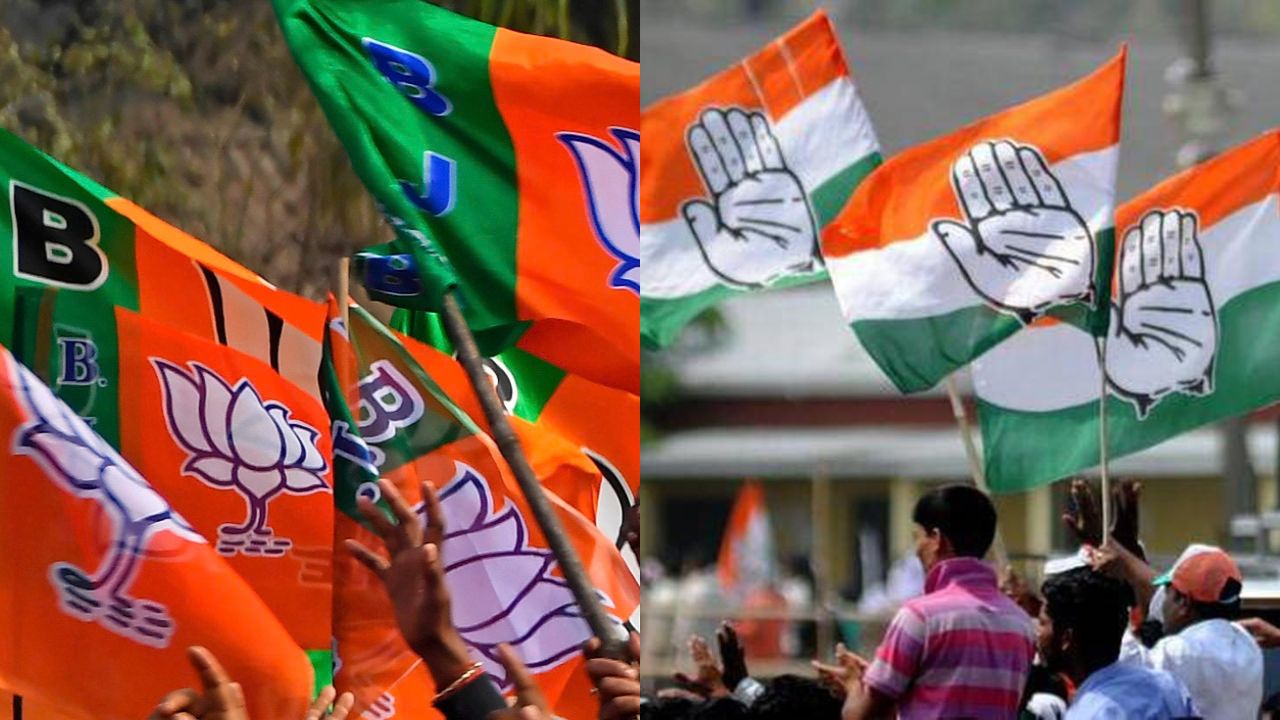
The release of Sonia Gandhi's memoir has triggered a sharp political response from the Bharatiya Janata Party, which has accused her of attempting to soften the historical record of the Congress and shield the Nehru-Gandhi family from scrutiny.
BJP national spokesperson C.R. Kesavan has questioned the book's treatment of controversial political episodes, arguing that its title should have reflected an attempt to whitewash rather than objectively examine historical developments. He alleged that the memoir sought to minimise the consequences of decisions taken during successive Congress governments and presented a selective account of the party's political legacy.
Kesavan particularly criticised Sonia Gandhi's assessment of the Emergency, arguing that the book attempted to normalise a period associated with the suspension of fundamental rights, press censorship and alleged excesses of executive authority. He also questioned her references to the demolition of the Babri Masjid and her recollections of communal violence.
The BJP spokesperson challenged Sonia Gandhi's account of her emotional response to the Babri Masjid demolition, raising questions about whether she had expressed similar concern over the 1984 anti-Sikh violence.
The violence erupted following Indira Gandhi's assassination and resulted in the deaths of thousands of people, with Sikh neighbourhoods and religious establishments, including gurdwaras, coming under attack. Kesavan accused the Congress leadership of selective sensitivity towards incidents of communal violence and questioned its historical accountability for the events of 1984.
Kesavan also referred to the controversy surrounding the Congress leadership's response to the 2008 Batla House encounter in Delhi. He questioned whether Sonia Gandhi had demonstrated comparable concern for the Central Reserve Police Force (CRPF) personnel who lost their lives in the line of duty.
The BJP spokesperson further raised the issue of the November 2008 Mumbai terror attacks, questioning whether the memoir addressed the deaths of innocent civilians and the UPA government's response to the cross-border terror assault.
He also questioned the absence of a sufficiently critical assessment of the government's decision-making and counterterrorism response following the 26/11 attacks. These allegations formed part of the BJP's broader attempt to challenge the Congress's interpretation of its own political history.
Kesavan also brought up the controversy surrounding former external affairs minister K. Natwar Singh's autobiography, One Life Is Not Enough, published in 2014. Natwar Singh had discussed the circumstances surrounding Sonia Gandhi's decision to decline the prime ministership following the 2004 Lok Sabha elections.
According to the BJP spokesperson, Sonia Gandhi and Priyanka Gandhi had visited Natwar Singh before the publication of his autobiography, after a gap of approximately eight-and-a-half years. Kesavan questioned the circumstances surrounding the meeting and alleged that Sonia Gandhi was apprehensive about what Natwar Singh might reveal regarding the events preceding the formation of the UPA government and the decision to nominate Manmohan Singh.
He also criticised the Congress's record during its nearly 55 years in power at the Centre, alleging that successive governments had inflicted significant damage on India's political institutions and democratic framework. Kesavan credited Prime Minister Narendra Modi with addressing what he described as historical wrongs committed during Congress rule.
The BJP's response has added a political dimension to the memoir's release, ensuring that the book's historical assessments are likely to remain a subject of debate between the ruling party and the Opposition.
Despite its extensive political revelations, Sonia Gandhi describes Belonging: A Journey of Love primarily as a personal account rather than a conventional political autobiography. The memoir traces her childhood in post-war Italy and her subsequent transition into Indian society following her relationship with Rajiv Gandhi.
Born in Italy, Sonia was 19 and studying in Cambridge, England, when she met Rajiv Gandhi in 1965. Their relationship eventually culminated in marriage on February 25, 1968, marking the beginning of her association with one of India's most prominent political families.
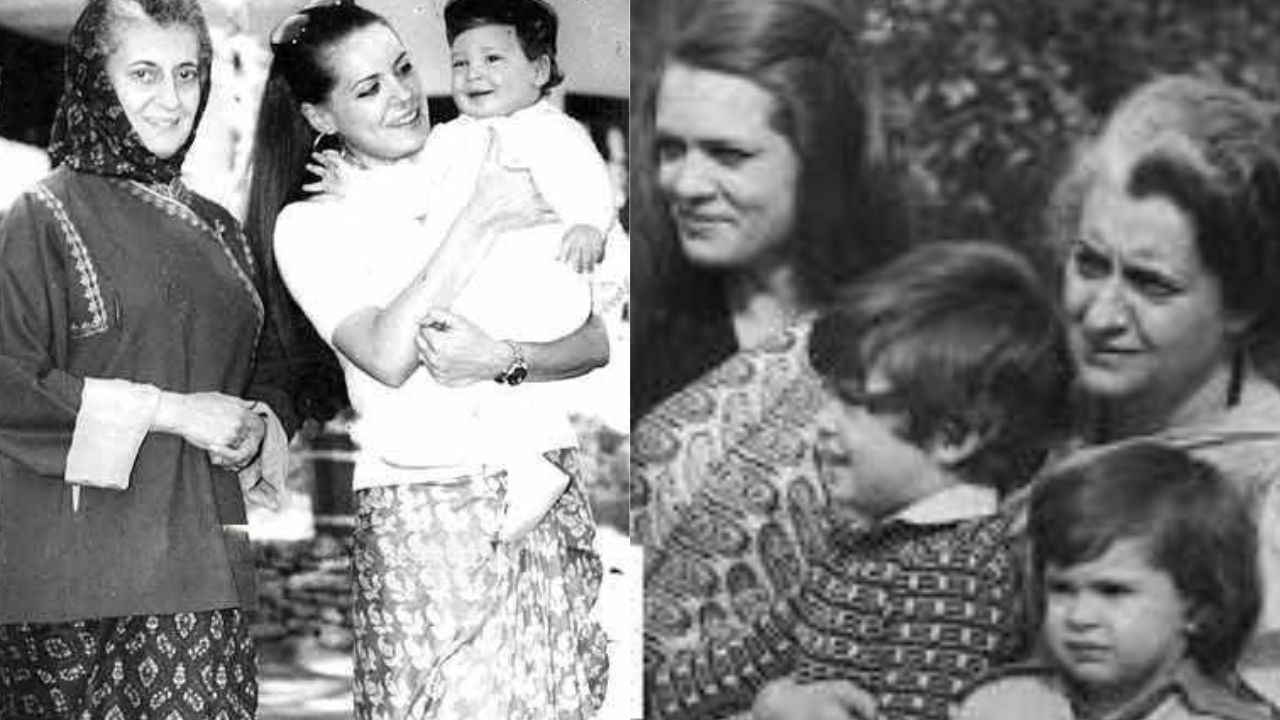
The book revisits her introduction to Indira Gandhi and the process of adjusting to a new country, language and cultural environment. Her transition involved learning Hindi, adopting traditional Indian clothing, including saris, becoming familiar with Indian cuisine and understanding the customs and traditions of her new family.
Over time, India became central to her personal identity, particularly following the political and personal upheavals that transformed her life. She also reflects on her close relationship with Indira Gandhi and the experience of raising Rahul and Priyanka while navigating the extraordinary public responsibilities associated with the Nehru-Gandhi family.
Some of the most personal sections of the memoir revisit the tragedies that profoundly altered Sonia Gandhi's family and eventually drew her into public life. The death of Sanjay Gandhi in a plane crash in 1980 was followed by the assassination of Indira Gandhi on October 31, 1984.
The most devastating personal loss came on May 21, 1991, when Rajiv Gandhi was assassinated in a suicide bombing at Sriperumbudur in Tamil Nadu during the Lok Sabha election campaign. Sonia Gandhi recounts the night of the assassination, including the moment when her daughter Priyanka informed her about the tragedy.
The memoir describes the emotional shock, disbelief and difficulty of accepting that her husband had been killed in a terrorist attack. It also revisits Rahul Gandhi's concerns about his father's security in the months preceding the assassination.
According to Sonia's recollection, Rahul had expressed fears approximately two months before the attack that inadequate security arrangements could result in his father's death. His apprehension, viewed against the subsequent assassination, remains one of the most distressing personal recollections in the book.
The accounts collectively illustrate how successive tragedies transformed Sonia Gandhi's life, eventually bringing her into the centre of India's political establishment despite her earlier reluctance to participate in active politics.
In an introductory reflection published ahead of the memoir's release, Sonia Gandhi explains that she had spent much of her life protecting her private world from public scrutiny. Even after grief and family circumstances drew her into politics, she attempted to preserve whatever personal space remained available to her.
Writing openly about her experiences had long appeared difficult, particularly because her family's history had been extensively discussed in political and public discourse. She says that stepping back from the daily pressures of public life eventually allowed her to examine her own experiences with greater perspective. Looking back, she identifies love and loyalty as the central threads connecting the different phases of her life.
Her journey began in England, where a young Italian woman met an Indian student, eventually moving to a different country, embracing a new family and building a life in India. She also reflects on her relationship with Indira Gandhi, the experience of raising her children and the personal devastation caused by the violent deaths of her mother-in-law and husband.
According to her account, her affection for Rajiv Gandhi and her emotional attachment to India sustained her through the most difficult periods. The memoir also explores how a strong sense of duty eventually compelled her to enter public life, despite her longstanding discomfort with politics.
She hopes to present her family members as individuals with personal motivations, struggles, strengths and human limitations rather than merely as political figures. Having witnessed more than five decades of India's transformation, first from the margins and subsequently from the centre of political activity, she presents the book as her personal account of the country she came to regard as home.
Sonia Gandhi's memoir arrives as the political legacy of the Congress, the Nehru-Gandhi family and the UPA governments continues to generate considerable public interest. Its significance extends beyond the revelation about the 2004 prime ministerial decision. The book brings together accounts of coalition management, economic reforms, internal party dynamics, political leadership, national security, democratic institutions and deeply personal family experiences.
The account of her decision to decline the prime ministership is particularly important because it provides her perspective on a leadership transition that shaped the first UPA government. Her explanation of Manmohan Singh's selection also revisits the importance of economic credibility and administrative experience in coalition-era governance.
At the same time, her assessment of the Emergency, the 1984 anti-Sikh violence, the Babri Masjid demolition and the 26/11 Mumbai attacks has opened fresh avenues for political criticism and historical debate. By combining personal recollections with political observations, Belonging: A Journey of Love offers a window into the experiences that shaped Sonia Gandhi's public identity and her place in contemporary Indian politics.