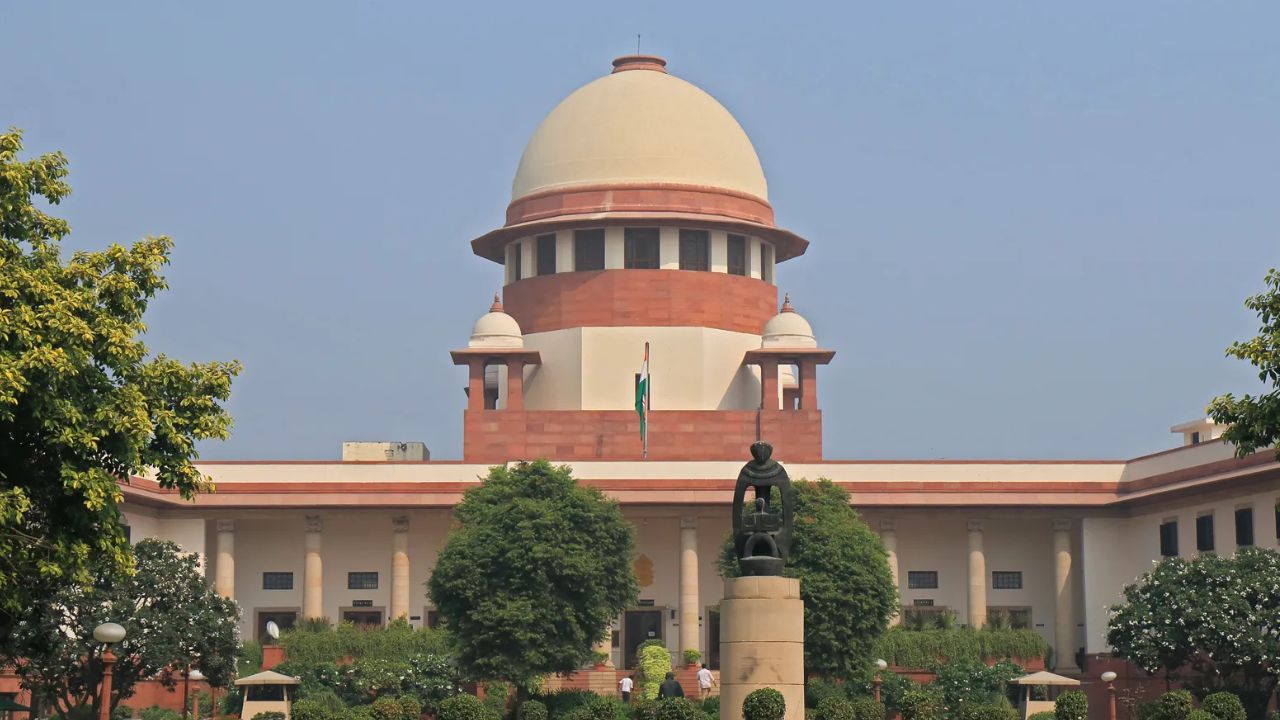
The Supreme Court on Monday stepped into the latest Karnataka-Tamil Nadu Cauvery water dispute, directing Karnataka to comply with the Cauvery Water Management Authority’s (CWMA) water release order.
New Delhi: The Supreme Court on Thursday took a major step in the student protest violence controversy by forming a five-member High-Powered Enquiry Committee to investigate allegations of police excess, clashes between protesters and security forces, and harassment claims involving women participants.
The Bench of Chief Justice of India (CJI) Surya Kant, Justice Joymalya Bagchi and Justice V Mohana appointed former Supreme Court judge Justice R Subhash Reddy as the head of the inquiry panel that will examine the events surrounding student demonstrations at Delhi’s Jantar Mantar and other locations.
The five-member committee includes former Punjab and Haryana High Court Chief Justice Ravi Shankar Jha, former Delhi High Court judge Justice Shalinder Kaur, former CBI Director Rishi Kumar Shukla and retired Meghalaya Director General of Police Dr L R Bishnoi. The committee has been asked to conduct an independent fact-finding investigation and submit its interim report at the earliest.
The order, which was passed on a batch of petitions related to alleged police action and protest-related violence, reignited a nationwide debate over the balance between maintaining public order and protecting citizens’ constitutional right to peaceful protest.
The Apex Court noted that allegations made by both sides required a neutral investigation to establish facts and determine accountability. Petitioners had alleged that police and security agencies used excessive force during demonstrations, including allegations of lathi charge, tear gas deployment, pellet gun use and electric baton usage. They also raised concerns over alleged harassment, targeted violence and misconduct against women protesters during the demonstrations.
Authorities, however, presented a different side of the events, alleging violence by protesters, injuries suffered by police personnel and damage to public property. The Supreme Court decided that claims from both protesters and security agencies required detailed examination through an independent mechanism.
The committee will examine whether security agencies followed legal procedures and the principle of proportionality while handling the demonstrations. The inquiry will look into whether crowd-control measures were justified, whether excessive force was used and whether officers followed established guidelines during arrests and dispersal operations.
The panel will also investigate allegations against protesters, including attacks on police personnel, damage to public property and injuries caused during clashes. The committee’s role will be to identify facts, examine evidence and determine whether any individual or authority crossed legal boundaries.
One of the most sensitive aspects of the Supreme Court probe involves allegations of harassment, molestation and targeted violence against female protesters. The Court has directed that these complaints should receive priority during the investigation.
The committee will also examine allegations of online harassment, privacy violations and possible secondary victimisation of vulnerable participants after the protests. The issue has added a major gender rights angle to the larger debate surrounding protest management and police accountability.
The Apex Court has directed authorities to preserve all available evidence connected with the protests. The inquiry panel will examine CCTV footage, drone recordings, body camera videos, wireless communication records and PCR call details.
The committee has also been empowered to seek assistance from forensic experts, technical specialists and other professionals for evidence analysis. The use of digital records is expected to play an important role in reconstructing the sequence of events and identifying responsibility.
The case is linked to the student-led CJP protest movement that emerged over alleged examination paper leaks and concerns regarding the education system. The demonstrations gained momentum after protests spread from Delhi to other parts of the country.
A march towards Parliament became a major flashpoint after clashes were reported between protesters and security personnel. Videos from the incident circulated widely on social media, triggering public debate over police response and protest handling. The controversy eventually reached the Supreme Court through multiple petitions seeking accountability and guidelines for managing large-scale demonstrations.
The Supreme Court’s intervention has revived a broader constitutional debate over the right to peaceful protest in India. The case involves a difficult balance between citizens’ freedom to express dissent and the government’s responsibility to maintain law and order.
The inquiry panel will examine whether restrictions imposed during protests were reasonable and whether preventive measures affected the fundamental right to peaceful assembly. The committee will also look into the use of prohibitory orders under Section 163 of the Bharatiya Nagarik Suraksha Sanhita (BNSS), 2023, and whether such restrictions were applied proportionately.
The Supreme Court clarified that the formation of the inquiry committee will not prevent authorities from taking departmental or administrative action against police personnel if violations of service rules are established. The committee’s findings and internal disciplinary proceedings will operate independently. This means officers accused of misconduct may face action even while the larger judicial inquiry continues. The Bench directed the panel to submit its interim findings at the earliest and listed the matter for further hearing on September 10, 2026.

