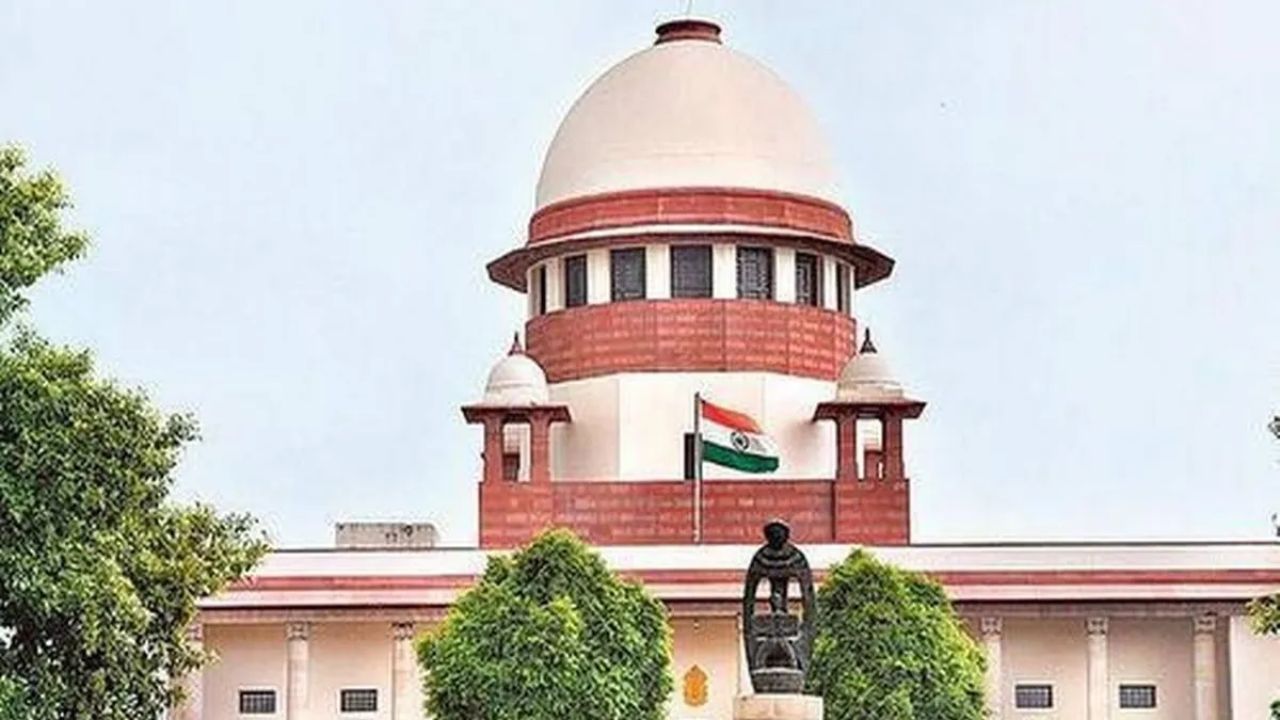
Supreme Court gives nod to Election Commission of India's (ECI) decision to use the 2002 electoral roll as the reference point for the ongoing Special Intensive Revision (SIR) of electoral rolls in Sikkim
New Delhi: The Supreme Court on Monday refused to interfere with the Election Commission of India's (ECI) decision to use the 2002 electoral roll as the reference point for the ongoing Special Intensive Revision (SIR) of electoral rolls in Sikkim. The court declined a plea seeking the use of the 1993 electoral roll instead, allowing the revision process to continue on the basis of the 2002 voter list.
The Bench of Chief Justice of India (CJI) Surya Kant, Justice Joymalya Bagchi and Justice V Mohana considered the challenge against the ECI’s decision to rely on the 2002 electoral roll as the qualifying baseline for determining voter eligibility during the SIR exercise.
The petition was filed by a Sikkim-based organisation, which sought special consideration for the state and argued that an earlier electoral roll from 1979, 1983, 1988 or 1993 should be used as the reference point instead of the 2002 roll. The petitioners contended that Sikkim has a unique demographic and constitutional background, and that changes in population patterns over the years made the 2002 electoral roll an unsuitable basis for verifying eligible electors.
The Supreme Court, however, refused to intervene in the matter and allowed the Election Commission to proceed with the SIR using the 2002 electoral roll as the baseline.
The petitioners argued that the 1993 electoral roll would provide a more appropriate historical reference for identifying genuine electors in Sikkim. They claimed that the state’s demographic profile was different from other parts of the country and that population data did not always correspond with electoral records.
The plea questioned the rationale behind selecting 2002 as the reference year and argued that earlier intensive revisions conducted in Sikkim could have been considered for the exercise.
However, the Commission informed the court that a Special Intensive Revision had already been conducted in Sikkim in 2002 and that the latest available SIR electoral roll was being used as the reference document.
The ECI also informed the Bench that the process of examining claims and objections was already underway and that the final electoral roll was scheduled to be published on September 6.
During the hearing, Justice Joymalya Bagchi observed that it was not disputed that an SIR exercise had taken place in Sikkim in 2002. The court questioned why the reference point should be shifted back to 1993 when the Election Commission had already conducted a revision exercise in 2002.
The Bench also noted that adopting 1993 as the baseline could create an uneven approach compared to the SIR process being carried out in other states.
The CJI questioned the basis of the challenge, observing that political parties and other stakeholders in Sikkim had not approached the court against the Election Commission’s decision. The Court noted that no major stakeholder from the state had opposed the use of the 2002 electoral roll, making it difficult to find grounds for judicial intervention.
The Election Commission informed the Supreme Court that the selection of 2002 was based on the fact that it was the last available SIR electoral roll in Sikkim. The poll body maintained that the decision was part of a uniform approach being followed for electoral roll revision and was essentially an administrative and policy matter.
The Apex Court accepted the Election Commission’s explanation and observed that the choice of reference year did not require judicial interference at this stage. The Court also indicated that the petitioner could continue to raise concerns with the appropriate authorities under the existing electoral framework.
The Special Intensive Revision (SIR) is a detailed exercise undertaken to verify and update voter lists. The process aims to identify eligible voters while removing names that may no longer qualify due to reasons such as death, permanent migration, duplicate entries or other legally recognised grounds.
The Election Commission has been conducting the SIR process in Sikkim as part of its broader electoral roll management exercise. The Office of the Chief Electoral Officer, Sikkim has already released documents related to the 2026 SIR, including draft electoral rolls, claims and objections lists and other election-related material.
The dispute over the reference year gained importance because of Sikkim’s distinct constitutional and demographic history. The petitioners argued that the state required special consideration due to changes in population patterns and electoral data over decades.
The choice of qualifying electoral roll determines how voters establish their connection with existing electoral records and plays an important role in the verification process. With the Supreme Court refusing to replace the 2002 roll with the 1993 list, the existing SIR framework in Sikkim will continue without any modification.
The Sikkim case comes amid wider judicial scrutiny over the Election Commission’s authority and procedures related to intensive electoral roll revisions. In previous proceedings concerning SIR exercises in other states, the Supreme Court has clarified that removal of a name from an electoral roll does not automatically amount to a determination of citizenship.
The court has also maintained that the Election Commission’s responsibility of preparing electoral rolls is separate from the statutory process of deciding citizenship. The Sikkim proceedings add another layer to the ongoing legal discussion over electoral verification, voter inclusion and procedural safeguards.
With the Supreme Court declining to alter the reference year, the Election Commission and state electoral authorities can continue the SIR process using the 2002 electoral roll. The claims and objections process will continue as per the electoral framework, allowing individuals to raise concerns regarding inclusion, exclusion or corrections in the voter list. The final electoral roll is expected to be published after completion of the revision process.

