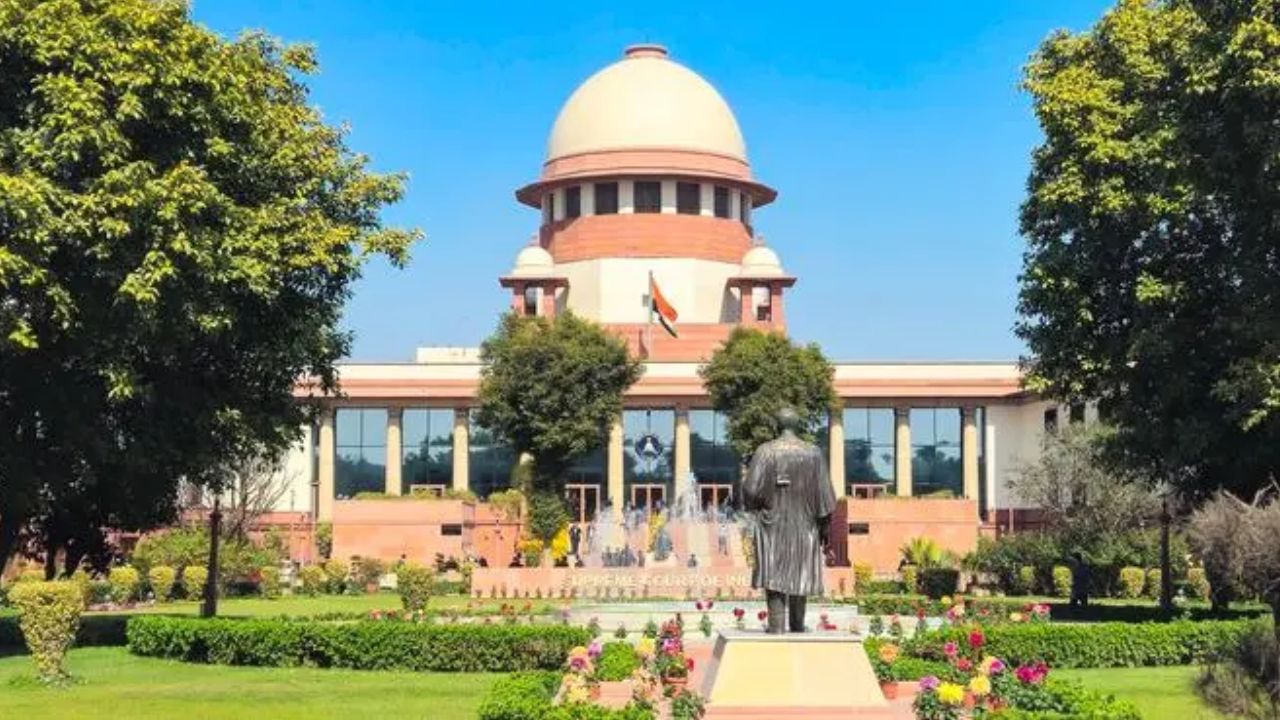
Supreme Court verdict clears the way for bike taxi operations in Karnataka. (Img: X)
New Delhi: The Supreme Court on Friday rejected the petition filed by the State of Karnataka and allowed bike taxi service aggregators, such as Rapido, Ola and Uber, to operate taxis as commercial passenger transport vehicles, subject to applicable registration, permits and regulatory requirements.
The Bench of Justice Satish Chandra Sharma and Justice N Kotiswar Singh upheld the Karnataka High Court's January 23, 2026 order, marking a significant development in India's app-based mobility sector, particularly for commuters seeking affordable transportation and improved last-mile connectivity in congested urban centres.
During the hearing, Justice Sharma recalled an interaction with young women who had visited his office and explained that they depended on bike taxis because conventional cab services were expensive. He referred to their response when asked why they did not use auto-rickshaws, highlighting the substantial difference in commuting costs.
The Bench also questioned Karnataka's concerns about traffic congestion, observing that motorcycles generally occupy less road space than cars. The proceedings highlighted the potential of bike taxis to address urban mobility challenges, particularly for students, working professionals and daily commuters.
A single-judge Bench of the Karnataka High Court had earlier directed bike taxi operators to suspend services until the state government formulated a comprehensive regulatory policy. The restrictions were challenged by Ola, Uber and Rapido, alongside motorcycle owners and the Bike Taxi Welfare Association.
On January 23, 2026, the Division Bench of then Chief Justice Vibhu Bakhru and Justice CM Joshi overturned the restrictions. It held that motorcycles could be registered as transport vehicles and operated as contract carriages, subject to applicable regulatory conditions.
The High Court also directed authorities to consider applications for motorcycle registration and the issuance of permits for commercial passenger transportation. The Karnataka government subsequently approached the Supreme Court, challenging the decision through a special leave petition.
The state government argued that bike taxi operations raised concerns about passenger safety, insurance coverage, traffic management and the absence of adequate regulatory safeguards. It maintained that motorcycles and motor cabs were distinct categories under the Motor Vehicles Act and that existing aggregator regulations did not specifically provide for bike taxi services.
Karnataka also relied on a 2019 expert committee report examining road safety, congestion and pollution-related concerns. The government indicated that it was willing to consider permitting bike taxis in other parts of the state but remained opposed to their operation in Bengaluru. The Supreme Court, however, declined to interfere with the High Court's ruling.
Five associations representing conventional auto-rickshaw and taxi operators also challenged the High Court's decision. They argued that allowing bike taxis without imposing comparable regulatory obligations could create an uneven competitive environment for traditional transport operators.
Their objections centred on licensing requirements, operating costs and the possibility of app-based motorcycle services gaining an advantage over established commercial transport providers. The Supreme Court's decision leaves the High Court's framework intact, while preserving the state's authority to prescribe appropriate regulatory conditions.
The judgment has been welcomed by ride-hailing platforms, which consider it an important step towards regulatory clarity for India's bike taxi industry. Rapido co-founder Pavan Guntupalli described the decision as a landmark moment for the sector, highlighting the contribution of bike taxis to reducing commuting difficulties, improving first- and last-mile connectivity and generating flexible earning opportunities for captains.
He also emphasised that the verdict recognises the role of two-wheelers in India's evolving mobility ecosystem. Rapido expressed its willingness to work with the Karnataka government to develop a framework focused on safe, responsible and regulated expansion. Uber also welcomed the ruling, describing bike taxis as an important mobility alternative in congested cities.
During the proceedings, aggregators submitted that nearly 4.5 lakh passengers had benefited from bike taxi services in Karnataka. They relied on an earlier unchallenged High Court ruling and Central Government notifications issued in 2004 and 2024 to support their position that motorcycles could be deployed as taxis.
The Centre also confirmed before the Bench that motorcycles could be used for taxi services under its notifications. This submission became an important element of the legal debate concerning the classification and commercial use of two-wheelers under the Motor Vehicles Act.
On June 16, 2025, the state government prohibited app-based ride-hailing aggregators from operating bike taxi services. The restrictions followed concerns about passenger protection, insurance and the absence of a comprehensive regulatory framework. Subsequently, the Karnataka High Court's single-judge Bench directed operators to suspend services until a policy was introduced.
On January 23, 2026, the Division Bench overturned the restrictions and directed authorities to consider applications for motorcycle registration and commercial permits. The state government challenged this decision before the Supreme Court, which dismissed its appeal on November 20, 2026.

