 English
 English

Strength of Supreme Court Judges to be increased
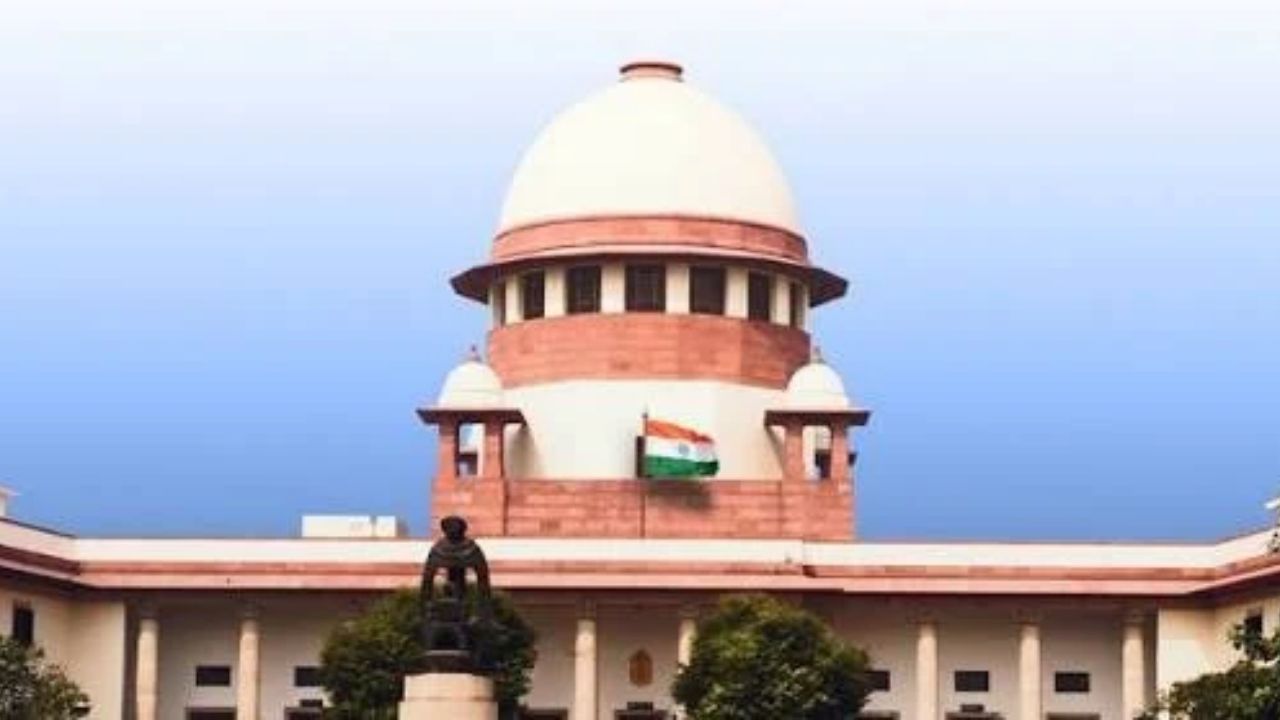
New Delhi: In a Union Cabinet meeting chaired by Prime Minister Narendra Modi, a proposal to increase the number of judges in the Supreme Court was approved. The 'Supreme Court (Number of Judges) Amendment Bill, 2026' will now be introduced in Parliament. Through this legislation, the number of judges in the Supreme Court will be raised from 33 to 37. If the Chief Justice is also included in this count, the total number of judges in the country's apex court will reach 38.
The Central Government asserts that, given the increasing burden of cases and the backlog of pending litigation, this decision was absolutely essential. However, this move has once again ignited a major debate within the country regarding the judicial system, the mounting pressure on courts, and the persistent issue of delayed justice.
In his popular show The MTA Speaks, senior journalist Manoj Tibrewal Aakash offers a clear and incisive analysis of the approval of the proposal to increase the number of judges in the Supreme Court.
In this exclusive analysis, we will see how the Supreme Court of India originally came into existence. What was the judicial landscape like prior to independence? At what intervals were the number of judges increased in the post-independence era? Which government added how many judges, and-fundamentally-why does the country find it necessary to expand the Supreme Court every few years?
If we turn the pages of history, the concept of a Supreme Court in India evolved during the period of British rule. During the British era, the ultimate authority over Indian courts rested with the Privy Council in London. The final appeals against the verdicts delivered by Indian courts were lodged there. However, as the demand for a robust constitutional framework within India grew, the need for a centralized apex court began to be increasingly felt.
The Government of India Act of 1935 paved the way for the establishment of a Federal Court in India, and in 1937, the Federal Court of India came into existence. It was this very Federal Court that subsequently laid the foundation for the Supreme Court of independent India. Then came 26 January 1950—the post-independence era—when the Constitution of India came into force, and on that very day, the Supreme Court of India was formally constituted.
Article 124(1) of the Constitution stipulated that there shall be a Supreme Court of India, comprising a Chief Justice and a number of other judges as determined by Parliament. Initially, the Supreme Court consisted of a total of just eight judges, including the Chief Justice—that is, one Chief Justice and seven other judges.
During that era, the country's population was smaller, the volume of litigation was limited, and the judicial system was not as extensive as it is today. However, India gradually began to transform. Democracy took root and strengthened. Awareness regarding fundamental rights grew among the people. New laws were enacted. Disputes between the States and the Centre increased. The volume of economic, social, and constitutional matters began to rise rapidly.
Consequently, the pressure on the Supreme Court also began to mount. In light of this mounting pressure, Parliament enacted "The Supreme Court (Number of Judges) Act, 1956" in that year. Through this legislation, the maximum permissible number of judges in the Supreme Court was increased. At that time, the number of judges—excluding the Chief Justice—was fixed at 10. However, within just a few years, even this number proved insufficient. Consequently, an amendment was introduced in 1960, and the number of judges was raised from 10 to 13. This marked a period during which the constitutional framework of independent India was evolving rapidly. Subsequently, the country witnessed several phases of political and constitutional upheaval.
In 1975, the 'Emergency' was imposed across India; questions were raised regarding the role of the judiciary; and following the end of the Emergency, demands to further strengthen the judiciary gained momentum. Finally, in 1977, through the "Supreme Court (Number of Judges) Amendment Act," the number of judges was increased from 13 to 17. 2008: The UPA Government's Decision
However, an interesting fact is that until 1979, the Cabinet had limited the working strength of the Supreme Court to 15 judges. Subsequently, at the request of the then Chief Justice, this restriction was lifted. Then came 1986. India was changing rapidly. The number of pending cases in the courts was on the rise. At that juncture, another major amendment was enacted, and the number of judges in the Supreme Court was increased from 17 to 25.
Subsequently, in 2008—during the tenure of the UPA government—yet another amendment was introduced. The number of judges in the Supreme Court was raised from 25 to 30. The government stated that the volume of pending cases was growing rapidly and that this measure was essential to alleviate the burden on the judiciary.
Then, in 2019, the Narendra Modi government took another step. An amendment was passed in Parliament, and the number of judges was increased from 30 to 33. That is—excluding the Chief Justice—there would be 33 judges, bringing the total count to 34. Now, in 2026, a new amendment has once again been proposed. The Union Cabinet has approved "The Supreme Court (Number of Judges) Amendment Bill, 2026." Under this legislation, the number of judges—excluding the Chief Justice—will be raised from 33 to 37. Consequently, the total strength will reach 38.
The government's rationale is clear: the burden of litigation in the country is constantly rising. Hearings by Constitutional Benches are facing delays. Thousands of cases have been pending for years. In such a scenario, the appointment of additional judges will enable the Supreme Court to function more effectively and ensure that people receive justice more expeditiously. The government has also clarified that the expenditure incurred on the salaries, staff, and other amenities for the new judges will be met from the Consolidated Fund of India.
However, the issue is not merely about numbers; it concerns the overall capacity of the judicial system. This is because, in India, a backlog of millions of cases persists not only in the Supreme Court but also in the High Courts and lower courts. In many instances, people spend their entire lives making rounds of the courts. Experts opine that while increasing the number of judges is undoubtedly a necessary step, it is not the sole solution. Enhancing digital infrastructure within courts, implementing e-court systems, ensuring timely appointments, filling vacant posts, and undertaking procedural reforms are equally crucial.
Today, India stands as the world's largest democracy, with a population exceeding 1.4 billion. New types of legal disputes are constantly emerging. Cybercrime, data privacy, artificial intelligence, digital transactions, electoral transparency, environmental issues, religious disputes—virtually every major issue eventually finds its way to the Supreme Court.
This is precisely why the role of the Supreme Court has become far more expansive than ever before. Today, the Supreme Court does not merely interpret the law; rather, it frequently delivers landmark verdicts that shape the political and social trajectory of the nation. Be it the establishment of the 'Basic Structure' doctrine of the Constitution in the 'Kesavananda Bharati' case, the Ayodhya verdict, the historic ruling on the Right to Privacy, or judgments on matters such as Section 377 and 'Triple Talaq'—the Supreme Court has, time and again, steered the course of Indian democracy.
However, underlying these historic verdicts lies a stark reality: the burden of work on the Court has been steadily mounting. Often, the very constitution of a Constitutional Bench takes months, primarily due to the unavailability of a sufficient number of judges.
This is precisely why successive governments have, from time to time, increased the number of judges. Yet, another pertinent question arises: will India require regional benches of the Supreme Court in the future? Is it truly necessary to bring every single case all the way to Delhi? Are structural reforms required to make justice more accessible to the common citizen? This debate continues to this day. However, the narrative is not limited merely to increasing the number of judges. The fundamental question is this: has the ever-increasing burden on the Supreme Court now evolved into a warning sign for the judiciary as a whole? The statistics are startling.
In 2019, when approximately 59,000 cases were pending before the Supreme Court, the government increased the number of judges from 31 to 34. Yet, even after this measure, the mountain of pending cases did not diminish; instead, it continued to grow. By 2025, the number of pending cases in the Supreme Court had crossed the 90,000 mark, and by 2026, this figure had reached nearly 93,000. In other words, within a span of just seven years, there has been an increase of approximately 56 percent in the number of pending cases before the Supreme Court.
Consequently, the question being raised is whether simply increasing the number of judges is sufficient, or if there is a need to comprehensively re-evaluate the country's entire judicial architecture. For the situation is dire not only in the Supreme Court; the condition of the High Courts and the lower courts is equally critical. Across the country's High Courts, approximately 30 percent of the judicial posts currently lie vacant. Approximately 334 posts are vacant. Meanwhile, in the district courts, more than 4,700 posts remain unfilled. And most significantly, the Supreme Court itself has requested the government to appoint more judges. According to sources, the Supreme Court had sought not just 4, but 10 additional judges.
In other words, the Top Court desired that the total strength reaches 43. The reason behind this is also quite intriguing. Currently, more than 1,200 cases are pending before three-judge Constitution Benches in the Supreme Court. Over 160 cases are awaiting a five-judge bench. Dozens of cases are pending before seven-judge benches—and nearly 45 cases are also awaiting a verdict for years before nine-judge Constitution Benches.
The situation in the High Courts and lower courts is equally dire. This implies that even the hearings for the country's most critical constitutional matters are facing prolonged delays. And this is precisely where the real debate begins: Does India now need to move beyond merely increasing the number of judges and instead undertake a structural overhaul of its judiciary? Should regional benches of the Supreme Court be established? Should courts operate in two shifts? Should the integration of technology and Artificial Intelligence into the judicial process be expanded? For another crucial fact is that, today, India has only approximately 22 judges per million people—whereas, back in 1987, the Law Commission had recommended raising this figure to 50 judges per million.
Yet, nearly four decades later, India has failed to reach even half of that target. In other words, in the world's largest democracy, the pressure on the judiciary continues to mount relentlessly. This is why the decision to increase the number of judges in the Supreme Court is viewed not merely as an administrative measure, but also as a stark indicator of the profound crisis confronting the Indian judicial system. The journey of India's Supreme Court—which began with just eight judges—is now poised to reach a strength of 38.
This represents not merely a numerical expansion, but rather the narrative of a transforming India—a nation where democracy has strengthened, civil liberties have expanded, and the responsibilities of the judiciary have multiplied manifold. All eyes now turn to Parliament, where the "Supreme Court (Number of Judges) Amendment Bill, 2026" is set to be introduced. If passed, this legislation will mark the opening of yet another new chapter in India's judicial history.
However, fundamental questions remain: Will ordinary citizens finally receive timely justice? Will the mounting burden of pending cases be meaningfully reduced? And is India’s judicial system adequately equipped to confront the challenges of the future? Only time will tell whether these expectations are fulfilled.