Protests have erupted across the country against the Transgender Persons (Protection of Rights) Amendment Bill, 2026. The community asserts that this bill undermines the right to self-gender identity and runs contrary to the Supreme Court’s 2014 verdict.
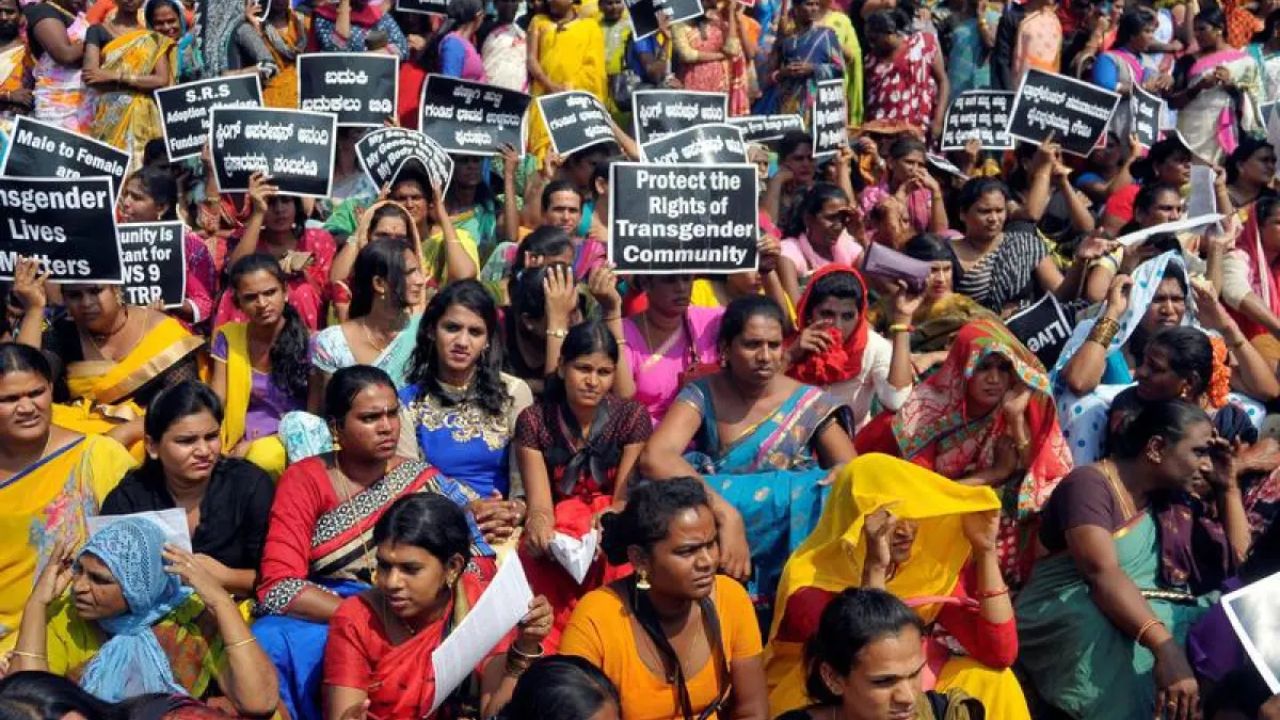
New Amendment Bill Sparks Controversy (Image Source: Internet)
New Delhi: Controversy surrounding the Transgender Persons (Protection of Rights) Amendment Bill, 2026, has intensified across the country. The transgender community and students have launched protests against this proposed bill—introduced by the central government—in several cities, including New Delhi, Pune, Hyderabad, and Kolkata.
Critics argue that this bill undermines the right of transgender individuals to a "self-perceived gender identity" and, therefore, must be withdrawn, reports Dynamite News correspondent.
On this issue, members of the transgender community are citing the landmark verdict in the NALSA v. Union of India case. In this historic ruling, the Supreme Court affirmed that the right to determine one's own gender identity is an integral part of an individual's personal liberty—a fundamental right enshrined under Article 21 of the Constitution.
The community contends that the new amendment could potentially erode this fundamental right.
Civil society groups, lawyers, doctors, and social activists are mobilizing across various cities to protest against this bill.
In cities such as Guwahati, Chennai, Varanasi, and Bengaluru, activists are planning to write letters to Members of Parliament (MPs), conduct awareness campaigns, and organize public meetings.
Additionally, an online petition demanding the withdrawal of the bill has been launched and has already garnered thousands of signatures.
In Karnataka, organizations representing the transgender community have written an open letter to Prime Minister Narendra Modi to register their opposition to the proposed amendment.
The letter warns that if enacted, this legislation could jeopardize the rights of millions of transgender individuals and reverse the progress achieved thus far.
During a press conference held in New Delhi, representatives of the transgender community and social organizations asserted that the proposed amendment is both discriminatory and unjust.
Some activists argue that the proposed definition restricts transgender identity by linking it to specific traditional communities—such as Hijra, Kinnar, Aravani, etc.—whereas it is not necessarily the case that every transgender individual belongs to a specific community.
Several student organizations have also opposed this bill and have demanded that the government withdraw it. Social activists warn that if this amendment is enacted, it could have a significant impact on the rights and identity of transgender people.

