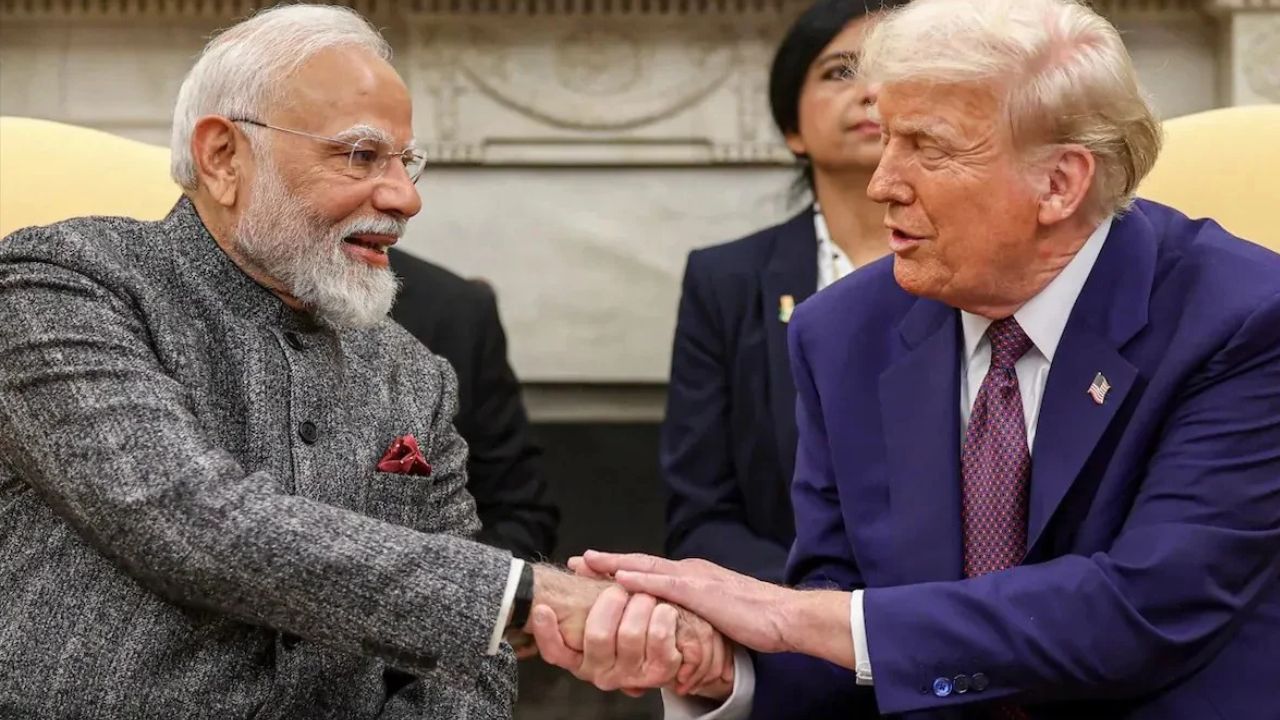
Prime Minster Narendra Modi And US President Donald Trump (Img: Pinterest)
New Delhi: India has responded after the United States moved ahead with legislation that could impose tariffs of up to 100% on countries continuing energy trade with Russia. The Indian Government has made it clear that protecting the country’s energy needs and economic interests will remain a key priority.
The development has brought India’s Russian oil imports, US trade policy and global energy politics back into focus, as Washington looks to increase pressure on countries maintaining economic ties with Moscow.
The US House of Representatives has approved a bill linked to Russia sanctions that proposes giving the American President greater powers to impose additional tariffs on countries purchasing Russian oil and gas.
The move comes amid continued efforts by the US and its allies to restrict Russia’s energy revenues following the ongoing geopolitical tensions in Europe.
India, one of the world’s largest energy consumers, has emerged as a major buyer of Russian crude in recent years due to competitive pricing and supply availability.
Responding to questions over the latest US move, Indian officials said the country’s energy decisions are guided by national priorities, market conditions and the requirement to ensure stable fuel supplies for citizens.
India has consistently maintained that affordable and reliable energy access is essential for economic growth, industrial development and meeting the needs of a growing population.
The government has also highlighted the importance of maintaining multiple sources of energy supply to reduce risks linked to global market fluctuations.
Russian crude exports became a significant part of India’s energy basket after global energy markets witnessed major disruptions. Discounted Russian oil supplies helped Indian refiners manage costs while maintaining fuel availability.
However, Western countries have repeatedly criticised energy purchases from Russia, arguing that such trade supports Moscow’s financial capacity.
The latest tariff development comes at a time when India and the US are working through several trade and strategic issues.
While both countries share strong economic and diplomatic ties, differences over tariffs, market access and energy imports have occasionally created challenges in bilateral relations.
The proposed tariff mechanism would still require further decisions before any action is implemented.
For India, the challenge lies in balancing international partnerships with domestic energy requirements.
As crude oil prices and geopolitical uncertainties continue to influence global markets, New Delhi’s approach reflects the wider challenge faced by emerging economies — securing affordable energy while navigating changing global alliances.

