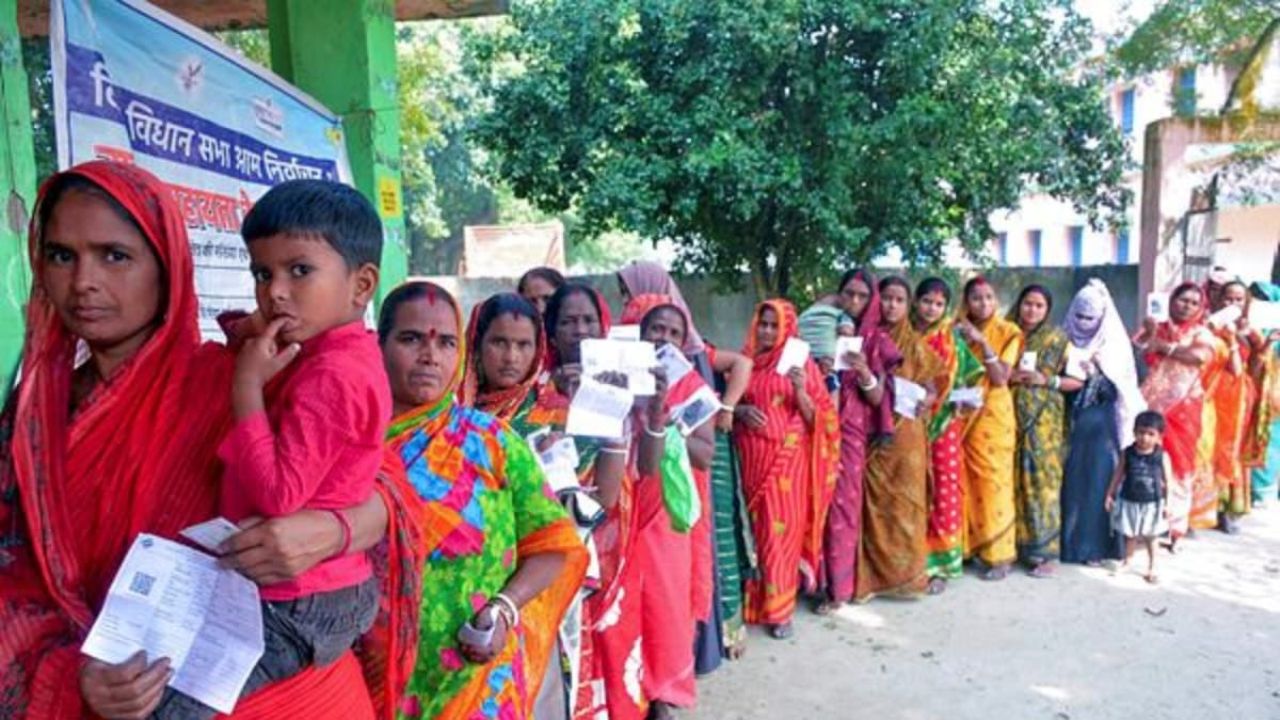
Over 3 million extra votes cast
Kolkata: A striking electoral trend has emerged after the second phase of the West Bengal Assembly elections, where the state recorded an unprecedented voter turnout despite a significant fall in the total number of registered voters.
According to Election Commission data, West Bengal has seen a reduction of around 5.1 million voters compared to the previous election cycle. However, in a surprising contrast, the number of actual votes cast has increased by more than 3 million, pushing turnout figures to historic highs.
By the end of polling in the second phase, voter turnout stood at 92.63 percent. When combined across both phases, the overall turnout reached 92.93 percent-reportedly the highest ever recorded in any state Assembly election in India.
Election officials and analysts suggest that this surge indicates unusually high voter engagement this time. A notable number of voters who typically abstain from participating appear to have turned up at polling stations in large numbers, significantly boosting overall figures.
Data shows that nearly 2.1 million of the additional votes were cast during the first phase alone. On average, this translated to roughly 10,000 extra votes per Assembly constituency. In the first phase constituencies, the increase was even sharper at about 14,237 additional votes per seat, while the second phase saw an average rise of 6,615 votes per constituency.
The political implications of this turnout spike remain uncertain. With exit polls presenting mixed predictions-some favoring the BJP and others suggesting a continued edge for the Trinamool Congress-the race remains highly competitive.
While high turnout is often interpreted as a sign of anti-incumbency, electoral history in India shows it does not always translate into a change of government. Ruling party leaders point to previous elections where strong participation still resulted in their victory, arguing that higher turnout does not automatically indicate dissatisfaction with incumbents.
On the other hand, the opposition has cited the 2011 West Bengal election-when an 84.33 percent turnout ended the Left Front’s 34-year rule-as evidence that record participation can signal political change.
With record-breaking participation and contrasting interpretations from political stakeholders, attention now shifts to the counting of votes. Whether this unprecedented turnout favors continuity or change will only become clear when the final results are declared.
Location : West Bengal
Published : 30 April 2026, 1:35 PM IST
Topics : Assembly Elections 2026 Impact Results Votes Cast West Bengal Polls West Bengal Assembly Elections

