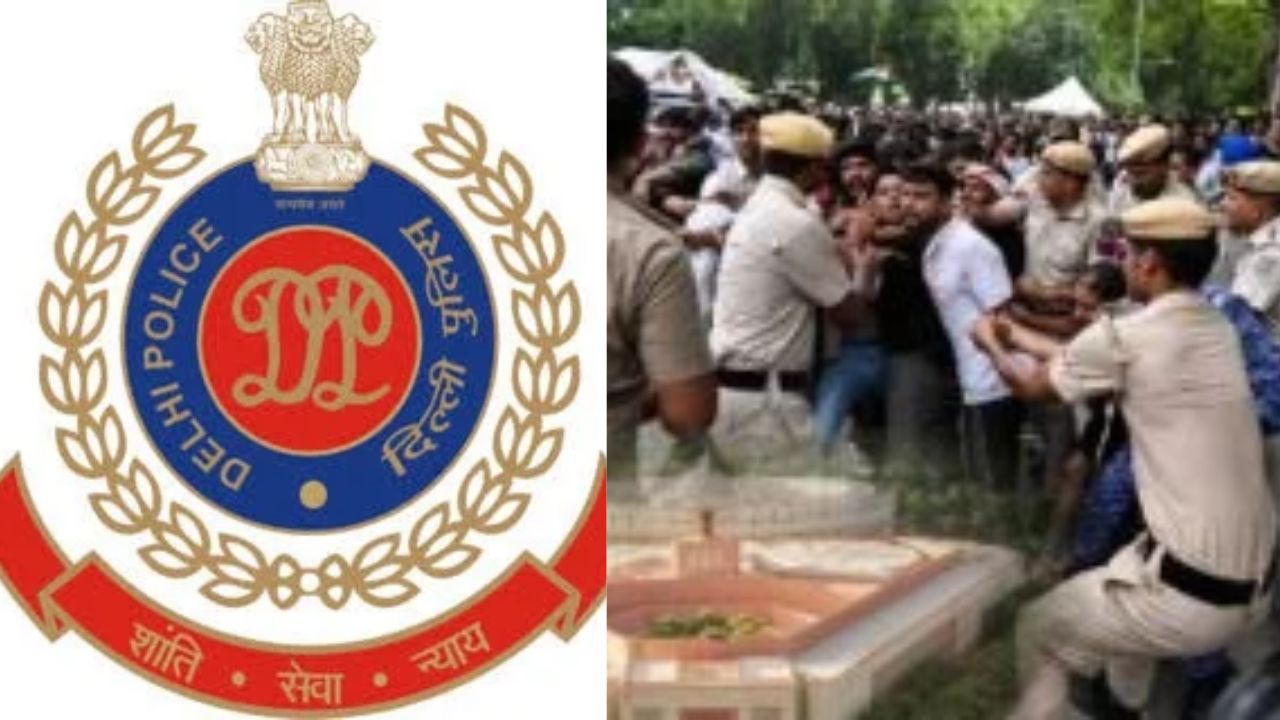
Delhi Police issues new advisory after Jantar Mantar protest
New Delhi: A single angry reaction, a few seconds of footage and a viral clip can now shape public opinion within hours. After the Jantar Mantar protest controversy, Delhi Police has issued fresh guidelines asking officers to remain calm, avoid unnecessary confrontations and ensure that their reactions do not become social media content.
The advisory highlights how policing has changed in the digital era, where every protest site is surrounded by cameras and every interaction between protesters and security personnel can quickly become part of a larger online debate. The new guidelines focus on emotional discipline, professional conduct, crowd management and handling camera-savvy protesters in an increasingly connected society.
Delhi Police has introduced a new approach for managing protests in the national capital, with officers being advised to focus on restraint, communication and controlled responses rather than emotional reactions.
The guidelines, prepared after reviewing recent protest situations, have been shared with all 15 districts of Delhi Police along with Railway Police and Metro security units.
The advisory comes amid growing challenges for law enforcement agencies, where protests are no longer limited to physical gatherings. Smartphones, live recordings and social media platforms now play a major role in shaping public perception.
Police personnel have been informed that their expressions, body language and responses during demonstrations can influence the entire narrative surrounding an incident. The objective is to ensure that individual reactions do not overshadow the larger responsibility of maintaining public order.
The advisory reflects the changing nature of protests, particularly among younger participants who frequently use smartphones to record interactions with authorities.
For Gen Z protesters, mobile phones have become tools of documentation, communication and public messaging. A short video recorded during a confrontation can be edited, shared widely and generate national attention within minutes.
Delhi Police has therefore emphasised that officers must understand the impact of digital platforms while performing crowd management duties. The focus is not only on controlling physical situations but also on preventing unnecessary escalation in the online space.
The guidelines instruct police personnel to avoid heated debates and prolonged conversations with protesters attempting to trigger emotional responses.
Officers have been advised not to react to personal remarks, provocative questions or statements designed to create anger, sympathy or confrontation.
Instead, personnel have been encouraged to maintain silence or use brief professional communication while continuing their official responsibilities.
The approach aims to prevent minor exchanges from turning into larger controversies that can affect law-and-order operations and public perception.
One of the major concerns highlighted in the advisory is the growing influence of social media during protests.
Police personnel have been cautioned against actions that could become viral content, including shouting, aggressive gestures, pushing away cameras or reacting strongly to slogans, mockery and provocative behaviour.
Even seemingly harmless interactions, such as protesters offering flowers, sweets, water bottles or tea, have been mentioned in the guidelines.
Officers have been advised to handle such situations politely because visible anger or rejection can easily become a widely circulated video.
The message is clear: maintaining composure is now an essential part of modern policing.
The advisory also includes specific directions for handling women participants during demonstrations.
Male personnel have been advised to avoid unnecessary physical contact with women protesters, while women police officers should manage such interactions wherever required.
The instructions aim to ensure sensitivity, accountability and adherence to proper procedures during crowd-control operations.
Along with maintaining law and order, the guidelines underline the humanitarian role of police personnel during demonstrations.
Officers have been instructed to assist protesters who fall sick, faint, suffer injuries or require immediate medical attention.
The advisory recommends helping arrange ambulances, clearing emergency routes and assisting elderly citizens, children separated from their families and people facing difficulties during protest situations.
The emphasis is on ensuring that police actions reflect both authority and public service.
The new guidelines encourage officers to use respectful language while managing protest situations.
Police personnel have been advised that patience, communication and cooperation can often reduce tension more effectively than aggressive crowd-control methods.
The advisory promotes a people-centric policing approach where officers focus on controlled responses and maintaining public trust.
In the digital age, respectful communication has become a key tool for preventing conflicts and improving the relationship between citizens and law enforcement.
The advisory follows the July 20 protest march towards Parliament from Jantar Mantar, which witnessed clashes between protesters and security personnel.
The incident triggered widespread discussions over protest management, police response and the use of force during demonstrations.
Delhi Police had stated that more than 118 personnel, including senior officers and women personnel, were injured during the incident. Around 60 protesters were also reported injured.
Authorities maintained that police action was taken to control the situation and denied allegations of excessive force.
The controversy increased focus on how security agencies handle large public gatherings in an era of instant digital reporting.
The latest advisory reflects a broader transformation in law enforcement strategies where technology, public communication and reputation management have become important parts of policing.
A short video recorded at a protest site can influence public sentiment, trigger political reactions and create nationwide discussions within hours.
For police agencies, maintaining discipline, transparency and restraint has become as important as managing crowds.
The Delhi Police guidelines indicate a shift towards a modern policing model where emotional intelligence, communication skills and digital awareness play a crucial role.
The implementation of these guidelines will be closely monitored during future protests and public gatherings in Delhi.
As political demonstrations, student movements and social campaigns increasingly operate in a highly connected digital environment, police departments are focusing on balancing security requirements with public confidence.
The new advisory signals Delhi Police’s attempt to strengthen protest management practices while ensuring that officers remain calm under pressure and avoid situations that can create unnecessary controversy.

