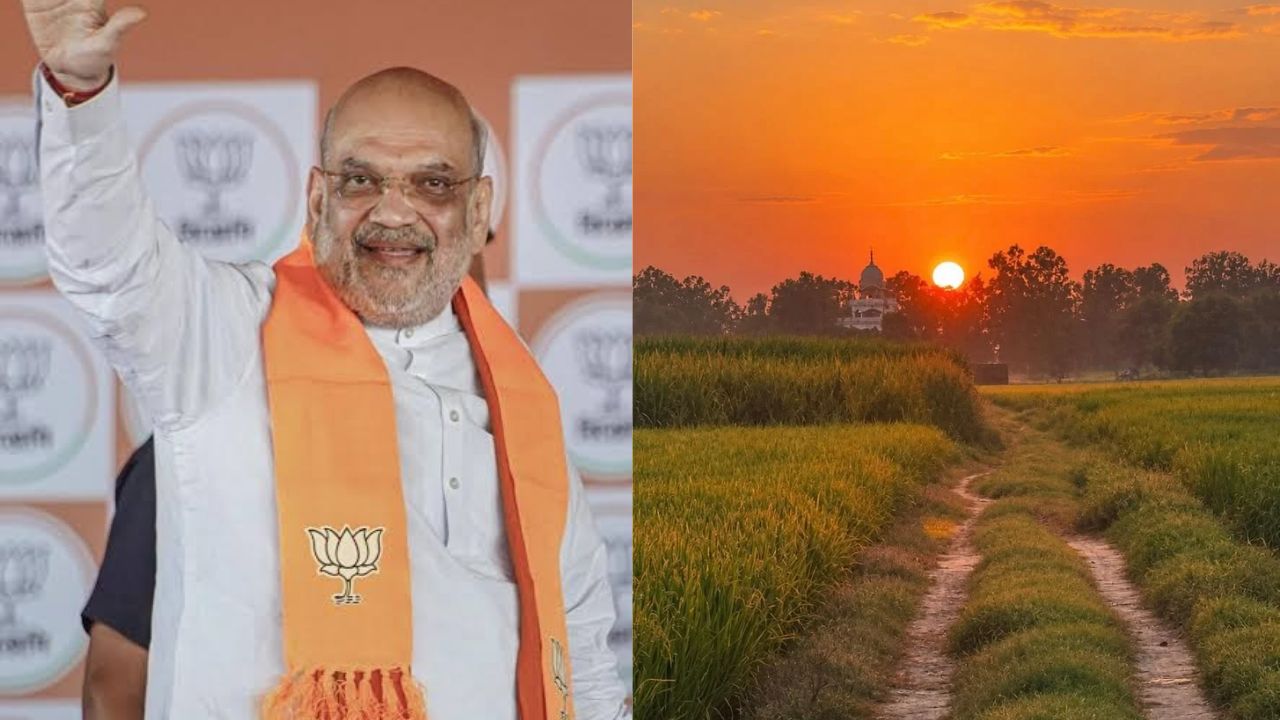
Amit Shah is set to visit Punjab on October 20 to meet families affected by three high-profile deaths amid the state’s drug crisis. (Img: X)
New Delhi: Union Home Minister Amit Shah is set to visit Punjab on October 20 to meet families who have lost loved ones amid the state’s drug crisis, bringing the issue back to the centre of political debate. The visit comes amid three recent drug-related deaths, a Centre-led push for reports from Punjab authorities, and intensifying preparations for the 2027 Assembly elections.
Amit Shah’s visit will take him to Mansa, Dirba in Sangrur and Gurdaspur, where the deaths have raised questions about the safety of people opposing drug trafficking and the effectiveness of efforts to curb narcotics.
The visit carries significance beyond the meetings with bereaved families. It comes days after the Union Ministry of Home Affairs sought detailed reports from the Punjab government on the three cases, while the BJP, the ruling Aam Aadmi Party (AAP) and the Congress have sharpened their criticism of one another over drugs, law and order and political accountability.
One of the most prominent cases is the killing of anti-drug activist Parvinder Singh Jhota in Mansa. Jhota had campaigned against the alleged sale of drugs, and his death has triggered public anger and demands for justice. His family and supporters have sought accountability, turning the case into a focal point of the wider debate over drug trafficking and the risks faced by those who challenge it.
In Sangrur, Shah is expected to meet the family of Gulzar Singh, who reportedly died by suicide after raising concerns about drug availability in his village. The incident came amid a public confrontation during a government event in Dirba in the presence of Punjab Finance Minister Harpal Singh Cheema. The circumstances surrounding the death have become politically contentious, with questions raised about the treatment of people who speak out against the drug trade.
The third case concerns Bikramjit Singh of the Gurdaspur district area, whose death has also drawn attention amid concerns about drug-related violence. Allegations linking the case to opposition to drug sales have become part of the public debate, although the circumstances and motive must be established through the investigation.
The Union Ministry of Home Affairs has written to Punjab Chief Secretary seeking detailed reports on the three cases. The intervention has added a central-government dimension to a controversy that was already drawing public attention and political criticism.
The reports are expected to help establish the facts surrounding the deaths and the actions taken by state authorities. The cases differ in their circumstances, and allegations linking them to opposition to drug trafficking must be assessed individually through the relevant investigations.
The controversy has also sharpened the debate between the Centre and the Punjab government over responsibility for controlling narcotics. Drug trafficking in the border state involves law enforcement, intelligence coordination, border security, local policing and public-health challenges, making accountability a key issue for both governments.
Shah’s visit will be his second to Punjab in less than a month. On September 30, he addressed a rally in Jalandhar linked to the BJP’s Nasha Mukt Punjab campaign. The party is expected to intensify its anti-drug messaging as it prepares its political strategy for the 2027 Punjab Assembly elections.
The BJP has accused the AAP government of failing to tackle the drug problem and protect people affected by it. By meeting the families, Shah is expected to bring national attention to their cases and reinforce the party’s argument that the state government must be held accountable for the situation.
For the families, however, the central concern is likely to remain more immediate: clarity over the deaths, accountability for those responsible where wrongdoing is established, and effective action against drug networks. The political significance of the visit does not diminish the need for thorough investigations and outcomes that can be independently assessed.
The ruling AAP has questioned the Centre’s criticism, asking how drugs continue to enter Punjab when the Border Security Force, which guards much of the international border, operates under the Union government. AAP has also argued that the Centre’s intervention comes amid the state government’s own anti-drug campaign.
The Congress, meanwhile, has accused the BJP of using public anger and sympathy surrounding the deaths to strengthen its electoral position in Punjab. The party has also criticised what it sees as inconsistency in the BJP’s approach to protests and public dissent elsewhere in the country.
The competing claims reflect a wider political contest over who should be held responsible for the drug crisis. For residents and affected families, the key test will be whether the political exchanges lead to stronger enforcement, credible investigations and sustained action against the supply and distribution of narcotics.

