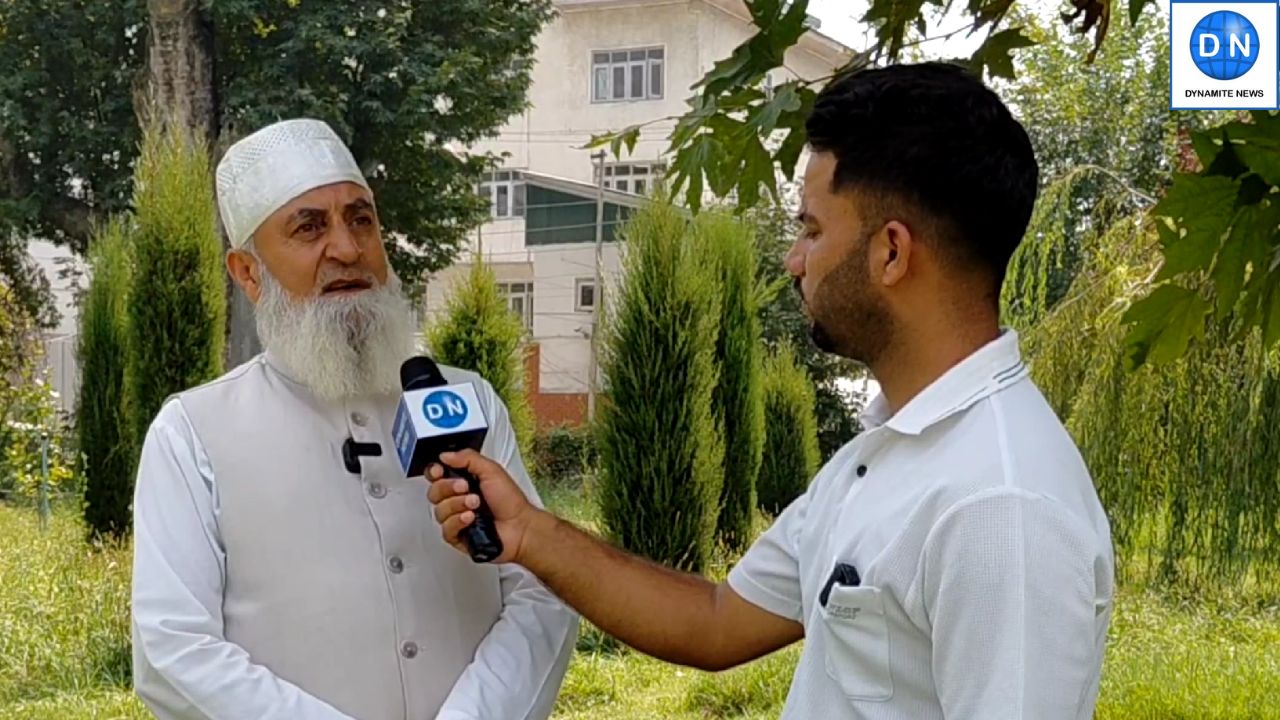
Social activist Ashraf Azad launches sharp attack on the Omar Abdullah-led government over 6.83% electricity hike
Srinagar: A political storm has erupted in Jammu and Kashmir after a 6.83 per cent increase in electricity tariffs, with social and political activist Ashraf Azad launching a sharp attack on the Omar Abdullah-led government. Azad has questioned the administration’s policy decisions, alleging that people who expected relief from rising expenses are now facing higher electricity bills and increased financial pressure.
The tariff hike has emerged as a major public issue in Jammu and Kashmir, where electricity costs, unemployment and economic challenges remain key concerns among citizens. The controversy has intensified the political debate over governance, public welfare policies and the government’s response to everyday problems faced by residents.
The increase in power tariffs has triggered concerns among households, particularly poor families, middle-class consumers and small businesses that depend heavily on electricity for daily activities. Ashraf Azad has alleged that the latest tariff revision reflects a disconnect between government promises and ground realities. He claimed that people were expecting affordable electricity measures and financial relief, but instead they are now dealing with higher power expenses.
The issue has quickly turned into a political flashpoint, with questions being raised over consumer protection, subsidy mechanisms and the government’s approach towards managing public utility costs. Targeting the Omar Abdullah administration, Azad alleged that the government has failed to address core public issues despite expectations of better governance and development after coming to power.
He raised concerns over the absence of effective welfare schemes for economically weaker sections and said that the common people are struggling due to increasing financial challenges. According to Azad, the government needs to focus on inclusive development, stronger social security measures and policies that directly benefit ordinary citizens instead of adding economic pressure on households.
Srinagar: Social & political activist Ashraf Azad has accused the Omar Abdullah-led J&K government of “backstabbing” people over the 6.83% electricity tariff hike. Azad said the government had promised free electricity but instead increased the burden on consumers. He also raised… pic.twitter.com/viRH1v6KlD
— Dynamite News (@DynamiteNews_) August 25, 2026
Along with the electricity tariff issue, Azad highlighted unemployment as one of the biggest challenges facing Jammu and Kashmir. He said that a large section of educated youth continues to search for stable employment opportunities and demanded stronger job creation policies from the administration.
The activist argued that employment generation, skill development initiatives and expansion of economic opportunities should remain top priorities for the government to address youth frustration and improve public confidence. The unemployment issue has remained a sensitive political subject in Jammu and Kashmir, with youth employment frequently becoming a key agenda point in political discussions.
Azad also criticised the delay in Urban Local Body (ULB) and Panchayat elections, raising concerns over grassroots democratic representation in the region. He alleged that postponement of local elections has weakened the connection between elected institutions and citizens. According to him, effective local governance is essential for addressing civic issues and ensuring public participation in decision-making.
The delay has added another dimension to the political debate, with demands growing for clarity on the election roadmap and restoration of democratic processes at the local level.
Azad accused the administration of creating a situation where bureaucratic functioning appears to be dominating democratic expectations. He argued that people voted for an elected government with hopes of visible development, accountability and immediate solutions to public problems. However, he claimed that many issues continue to remain unresolved at the ground level. His remarks have intensified the opposition narrative around governance, accountability and public participation in Jammu and Kashmir.
For ordinary residents, the electricity tariff increase has become a direct financial concern as higher power bills can impact monthly household budgets. At the same time, unemployment and delayed local elections have added to public discussions about government priorities and administrative performance.
The controversy highlights the growing demand for citizen-focused policies, economic relief measures and stronger accountability mechanisms in Jammu and Kashmir. The electricity tariff hike issue is expected to remain a major political talking point in Jammu and Kashmir.
With public concerns around affordability, jobs and governance continuing to dominate discussions, the Omar Abdullah administration faces the challenge of balancing economic decisions with public expectations.

