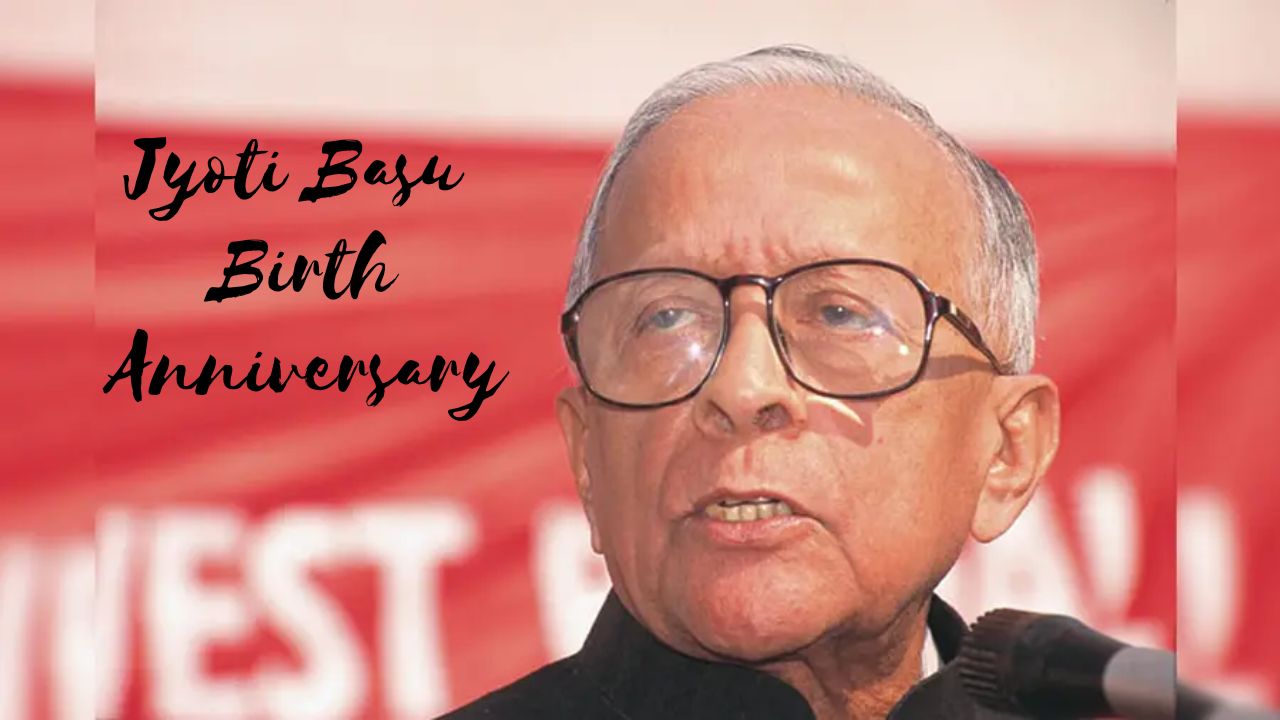
Jyoti Basu Birth Anniversary (Img: Dynamite News)
Kolkata: On the birth anniversary of former West Bengal Chief Minister Jyoti Basu, attention once again turns to the legacy of the Left Front, which governed the state uninterrupted from 1977 to 2011. Led initially by Basu and later by Buddhadeb Bhattacharjee, the Left Front remains the world's longest-serving democratically elected communist government.
Its 34-year tenure transformed West Bengal in several ways, earning praise for land reforms and rural development while drawing criticism for industrial decline and growing political centralisation.
One of the Left Front government's most significant achievements was Operation Barga, launched in 1978. The programme recorded and protected the rights of sharecroppers (bargadars), reducing the risk of eviction and improving access to institutional credit.
The government also redistributed surplus agricultural land among landless families, helping expand rural ownership and agricultural productivity.
Agricultural growth accelerated during the first two decades of Left rule, supported by irrigation, high-yield seed varieties and government-backed farm initiatives. During this period, West Bengal transitioned from a food-deficit state to a food-surplus one.
Poverty also declined steadily between 1977 and 2011, while literacy improved through campaigns under the National Literacy Mission. Urban residents also benefited from more reliable electricity supply and greater stability in the academic calendar.
Despite early gains, critics argue that the Left Front struggled to adapt its economic policies to changing realities.
Industrial investment slowed as labour unrest, frequent trade union activity and an uncertain investment climate discouraged private sector expansion. Key industries such as jute, textiles and engineering lost competitiveness, while large-scale manufacturing generated few new jobs.
Observers also point to increasing political influence over local administration, trade unions, educational institutions and panchayats, which opponents said weakened governance and institutional independence.
By the late 2000s, slowing agricultural growth, limited employment opportunities and controversies surrounding land acquisition had eroded public support for the Left Front.
In 2011, the Trinamool Congress led by Mamata Banerjee ended the Left's 34-year rule, marking a major political shift in West Bengal.
Even decades after his tenure, Jyoti Basu remains one of India's most influential political leaders. His government is remembered both for pioneering land reforms that reshaped rural Bengal and for economic policies that continue to spark debate over their long-term impact on the state's industrial and political landscape.
Location : New Delhi
Published : 8 July 2026, 1:15 PM IST
Topics : Jyoti Basu birth anniversary Jyoti Basu legacy Left Front government Operation Barga West Bengal Left rule

