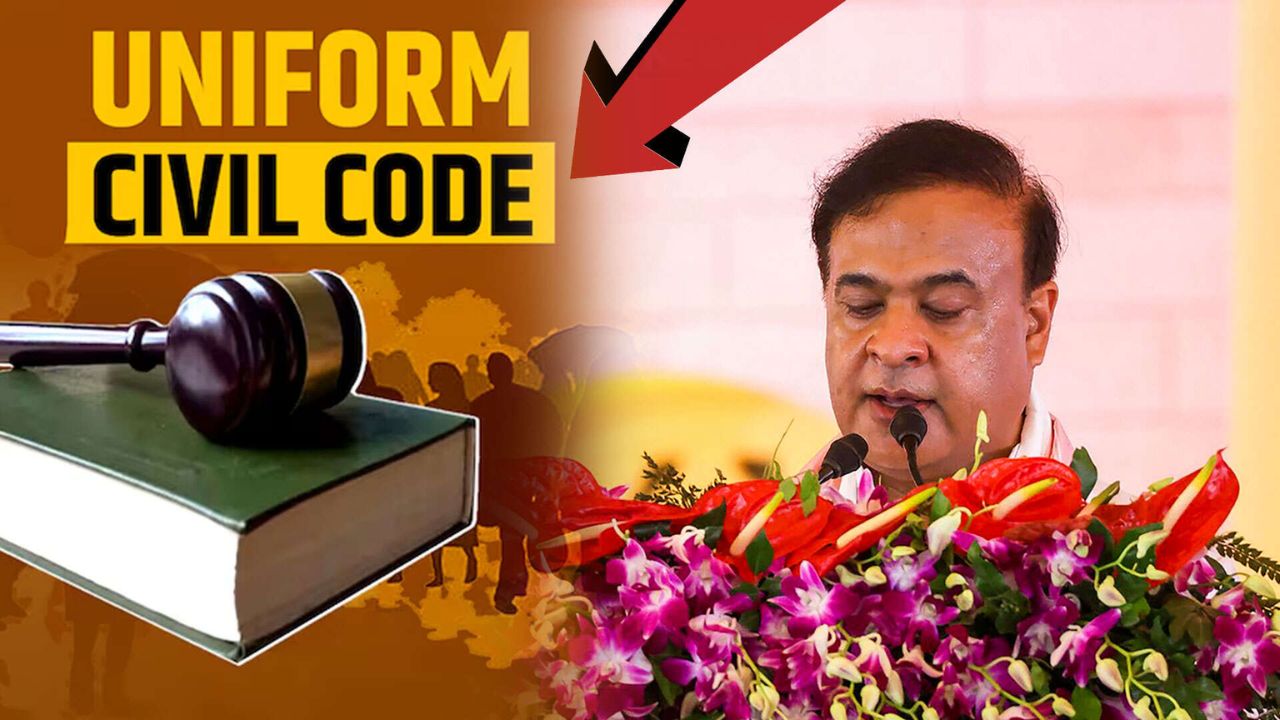
Assam govt tables UCC Bill in state Assembly (Img: Internet)
Guwahati: The Assam government on Monday introduced the Uniform Civil Code (UCC) Bill in the state assembly, making Assam the third state in the country to formally table such legislation.
The bill, titled The Uniform Civil Code, Assam 2026 Bill, was introduced by Assam Parliamentary Affairs Minister Atul Bora on behalf of Chief Minister Himanta Biswa Sarma.
The tabling of the bill sparked protests inside the assembly, with opposition members objecting to its introduction and demanding that it should not be approved.
Himanta Biswa Sarma takes oath as Assam CM for 2nd consecutive term
Assembly proceedings witnessed protests from opposition MLAs soon after the bill was tabled. Legislators from opposition parties raised concerns over the proposed legislation, calling it controversial and socially sensitive.
Discussion and voting on the bill are expected to take place on Tuesday. The Uniform Civil Code seeks to establish a common set of personal laws governing matters such as marriage, divorce, inheritance, succession, adoption, live-in relationships and polygamy for all citizens, irrespective of religion.
Assam has now joined Uttarakhand and Gujarat in moving ahead with state-level UCC legislation.
Uttarakhand became the first state to pass a Uniform Civil Code law in February 2024, followed by Gujarat. Madhya Pradesh has also constituted a committee to prepare a draft for similar legislation. All these states are governed by the Bharatiya Janata Party (BJP).
The BJP had promised to introduce a Uniform Civil Code in Assam ahead of the 2026 Assembly elections. The Assam cabinet approved the legislation during its first cabinet meeting held on May 13 this year.
Uttarakhand Cabinet approves Uniform Civil Code manual
Speaking earlier about the proposed law, Chief Minister Himanta Biswa Sarma had said tribal communities residing in both hill and plain areas would remain outside the purview of the UCC, similar to exemptions provided in Uttarakhand and Gujarat.
At present, personal laws in India are governed by religious customs and community-specific legal frameworks. These laws regulate issues such as marriage, divorce, maintenance, adoption and inheritance. The Uniform Civil Code proposes a common legal framework applicable equally to all citizens, regardless of religious identity.
The issue has remained politically and socially sensitive for decades, with supporters calling it a step toward equality while critics argue it could affect religious freedoms and cultural practices.

