Delhi Police told the court on Saturday that the demonstration resembled protests seen in Nepal
New Delhi: While seeking remand for the Indian Youth Congress (IYC) workers arrested over the shirtless protest at the AI Summit, Delhi Police told the court on Saturday that the demonstration resembled protests seen in Nepal.
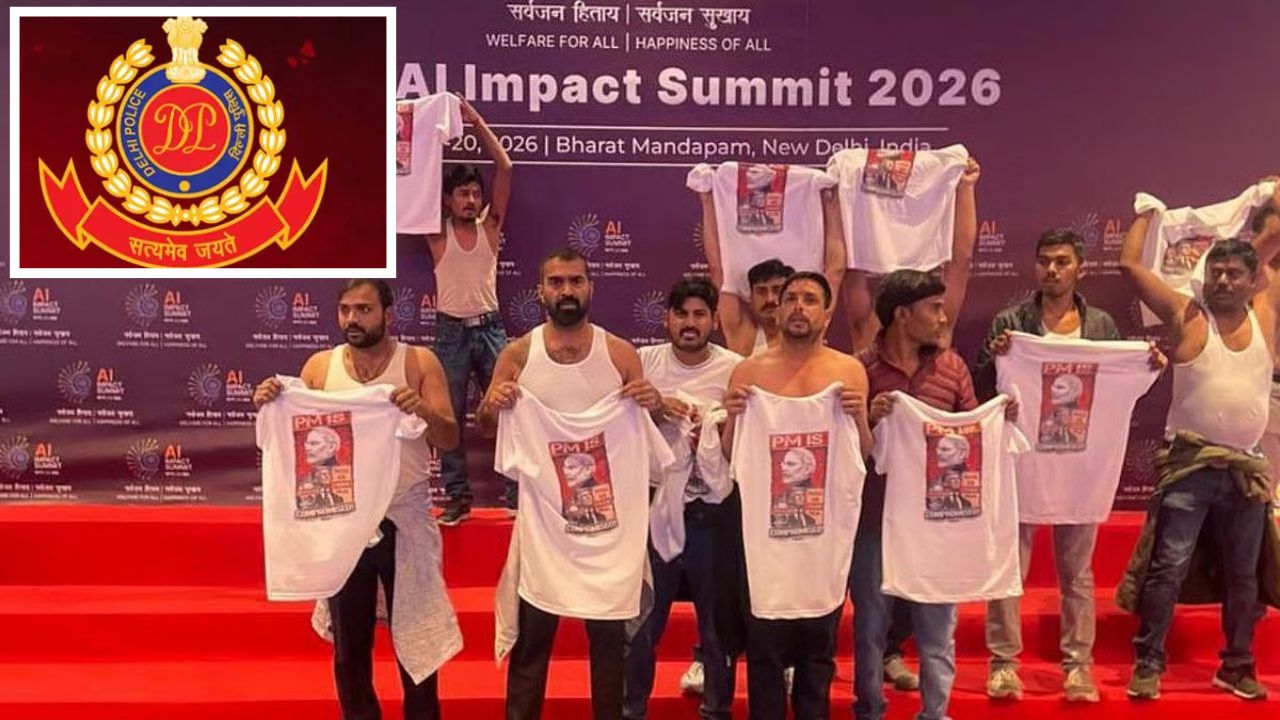
Tension erupted during the AI Impact Summit 2026 in New Delhi after members of the Indian Youth Congress staged a shirtless protest inside the venue. The demonstration took place at Bharat Mandapam, where global delegates had gathered for the high-profile technology event.
AI Summit 2026: BJP calls shirtless protest ‘brainless’ after disruption by youth Congress workers
Four Youth Congress workers Krishna Hari, Kundan Yadav, Ajay Kumar and Narasimha Yadav were arrested in connection with the protest. They were produced before the Patiala House Court on Saturday.
According to police, the accused walked through the exhibition area of the summit holding T-shirts carrying slogans criticising the government and the India-US trade deal. Security personnel quickly intervened and escorted them out of the venue.
Police sought five days of custody for the accused, arguing that further investigation is needed to identify others involved in planning the protest.
Investigators told the court that the demonstration was not spontaneous but carefully organised. Officials claimed the protesters travelled from different locations and arranged the printing of T-shirts carrying political slogans.
Police also alleged that anti-national slogans were raised during the protest in the presence of international dignitaries attending the summit.
According to investigators, at least three police personnel were injured while handling the situation. Authorities also said the mobile phones of the accused must be examined to determine whether they received external funding or instructions.
Police argued that custody was required to trace additional suspects who allegedly fled the scene and to uncover the larger network behind the protest.
Lawyers representing the accused contested the police version, claiming the protest was peaceful and within the constitutional right to dissent. They argued that the arrested workers are educated individuals affiliated with a political organisation and had not engaged in violence.
The defence also told the court that the charges were politically motivated and aimed at suppressing opposition voices. The court is now examining the remand request as the investigation into the controversial protest continues.

