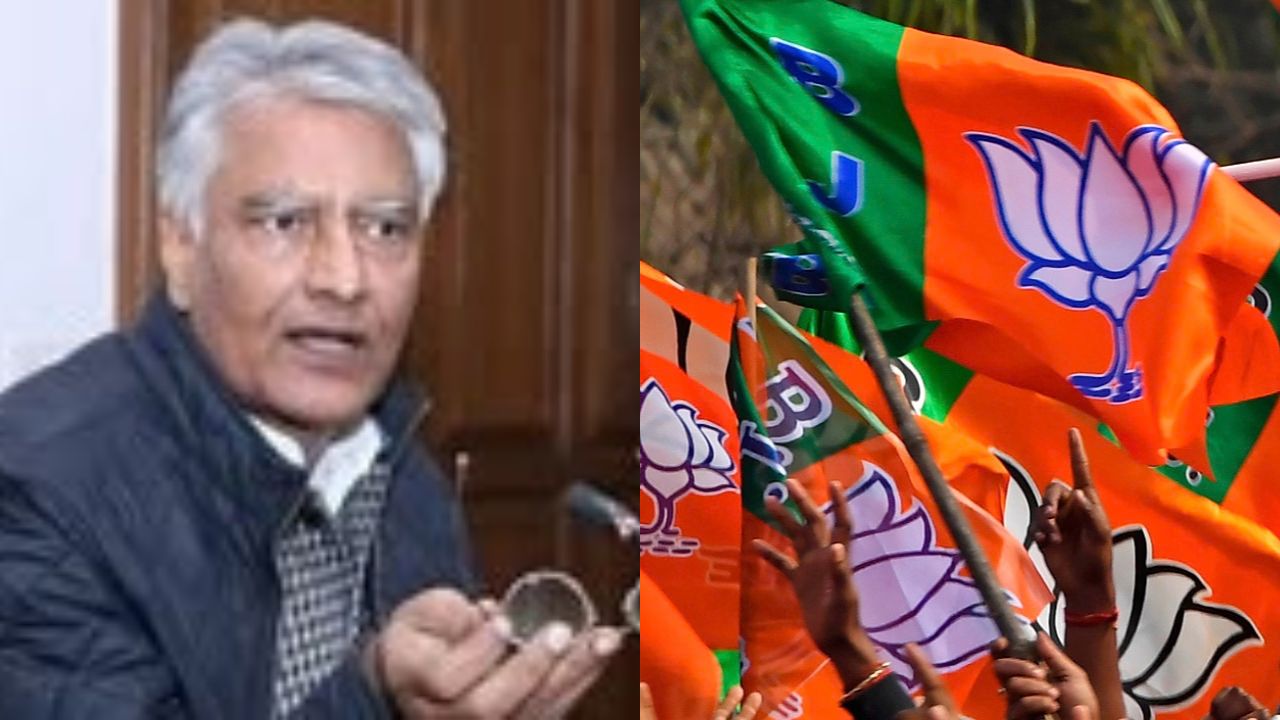
Senior Punjab BJP leader Sunil Jakhar seeks revival of BJP-SAD alliance, calling it necessary to safeguard Hindu-Sikh amity in Punjab. (Img: Pinterest)
Chandigarh: Senior Punjab BJP leader Sunil Jakhar has made a strong case for reviving the BJP's political understanding with the Shiromani Akali Dal (SAD), arguing that Punjab's fragile communal equilibrium and prevailing political climate call for a renewed effort to safeguard Hindu-Sikh amity.
In an interview with a leading English daily, Jakhar said any decision on a possible alliance ahead of the February 2027 Assembly elections must be guided by the larger interests of Punjab rather than narrow electoral calculations.
He cautioned that the state was witnessing attempts to revive sentiments reminiscent of the militancy years, warning that political forces seeking to polarise society could undermine the state's longstanding tradition of communal coexistence.
Jakhar maintained that a credible Panthic leadership was essential to addressing the concerns and aspirations of the Sikh community. He argued that the weakening of traditional Sikh institutions had created a vacuum that radical elements were increasingly attempting to occupy.
Referring to the BJP-SAD alliance of 1997-98, he said the partnership went beyond electoral arithmetic and represented a conscious political effort to preserve communal harmony when divisive forces threatened Punjab's social fabric.
He also expressed concern over the declining credibility of established Sikh institutions, observing that the failure of mainstream representatives to secure due recognition could alienate people and push them towards alternative voices claiming to represent their interests.
Addressing the BJP's renewed emphasis on the 1984 anti-Sikh violence, Jakhar said the objective should not be to reopen historical wounds but to remind people of the devastating consequences of communal discord. He pointed out that the violence had affected Punjab as a whole, with subsequent massacres claiming thousands of lives, including those of Hindus.
Drawing parallels between the political circumstances preceding the militancy period and the present situation, he cautioned against political rivalries and competing centres of authority being allowed to jeopardise the state's stability.
The BJP leader accused the Aam Aadmi Party (AAP) government and the Congress of competing to project themselves as more radical, alleging that such political posturing was detrimental to Punjab's interests.
He asserted that opposition to separatist ideology must remain unequivocal, adding that national integrity and Punjab's welfare should take precedence over individual political considerations. Jakhar also criticised the state government's handling of law and order, alleging that its policies had contributed to an environment in which extremist tendencies were gaining visibility.
Turning to the state's economic position, Jakhar questioned the financial sustainability of the welfare commitments made by the AAP and Congress. He cited the Punjab government's acknowledged liabilities of approximately Rs 32,000 crore towards employees, alongside mounting public debt and financial stress within the state's power sector.
He argued that neither party had adequately explained the funding mechanism for its welfare promises, warning that a return of the AAP government could eventually put its much-publicised freebie schemes at risk. Jakhar suggested that a BJP-led government would be better positioned to coordinate with the Centre, leverage central schemes and revive Punjab's economy.
On Punjab's persistent drug crisis, Jakhar attributed the failure of successive governments to address the problem to shortcomings in political commitment, administration and social intervention. He alleged that the proliferation of synthetic and pharmaceutical-based narcotics had compounded the crisis, while the easy availability of drugs continued to undermine the state's youth.
Emphasising that short-term enforcement drives would not resolve the problem, he called for a comprehensive strategy combining rehabilitation, employment generation and sustained efforts to restore opportunities for young people. He also referred to Union Home Minister Amit Shah's proposed two-year timeframe for tackling the drug menace, stressing the need for consistent implementation.
Responding to concerns surrounding the BJP's political positioning in Punjab, particularly after the now-repealed farm laws, Jakhar maintained that the party's record should be assessed through its initiatives concerning the Sikh community.
He cited the Kartarpur Corridor, the commemoration of Guru Tegh Bahadur's martyrdom at the Red Fort, initiatives facilitating the Hemkund Sahib pilgrimage and national recognition of the sacrifices of the Sahibzadas as examples of the Centre's engagement with Sikh heritage.
He also said that Union Home Minister Amit Shah had categorically acknowledged Sikhism as a distinct religion, addressing apprehensions about its separate religious identity.
Jakhar further alleged that the criminalisation of politics had emerged as a major challenge under the AAP government. He criticised the alleged political legitimisation of individuals with criminal backgrounds, arguing that such developments undermined public faith in democratic institutions.
He also questioned statements attributed to senior AAP leaders about employing any means necessary to secure electoral victories, expressing concern over their implications for political ethics.
On whether he would contest the forthcoming Assembly elections or emerge as the BJP's chief ministerial candidate, Jakhar said he had no personal ambitions in that regard. Maintaining that the state's peace and stability were more important than individual political aspirations, he said he would abide by the party leadership's decision.
He also referred to former Punjab Chief Minister Captain Amarinder Singh as a leader capable of taking different sections of society along. Jakhar concluded that Punjab required political leadership capable of rising above partisan considerations, restoring public confidence and steering the state away from its present challenges.

