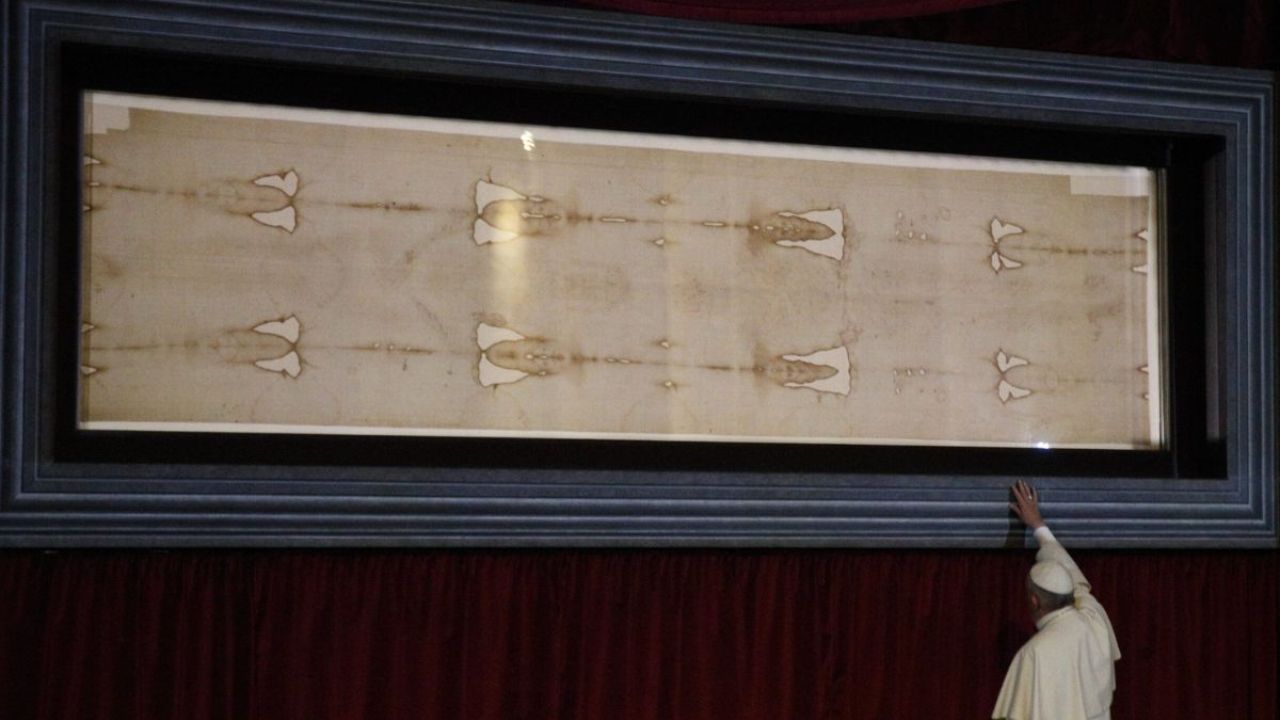
Shroud of Turin (Image Source: Internet)
New Delhi: A recent scientific study has brought the fresh attention towards the mysterious Shroud of Turin, a centuries old linen cloth that many believe was used to wrap the body of Jesus Christ after his crucifixion. Long regarded as one of the most debated religious artifacts in the world, the shroud has once again become the focus of global interest this time due to new DNA findings that hint at possible connections to ancient India.
Scientists from the University of Padova studied samples taken from the cloth back in 1978. Their analysis found that the nearly 40% of the human DNA present on the shroud is linked to Indian populations. This has led experts to believe that the linen or yarn used to make the cloth may have come from Indus Valley.
Researcher Gianni Barcaccia had earlier suggested a connection between the shroud and India in 2015. The latest study builds on the that idea, confirming that the cloth carries a wide mix of DNA from different time periods and regions. Scientists noted that the shroud has preserved genetic traces from many sources due to its long history and exposure to different environments.
Apart from human DNA researchers discovered the traces from various animals. These include domestic animals like cats and dogs, farm animals, and even wild animals such as deer and rabbits. surprisingly, DNA from some fish species, including grey mullet and Atlantic cod, was also found on the cloth.
Experts have suggested a few possible explanations. One theory is that the Romans may have imported linen or yarn from the Indus Valley region, which carried Indian DNA and another possibility is that people of Indian origin may have come into contact with the cloth over centuries leaving behind genetic traces. However, researchers also pointed out that the shroud has been handled by many people over period, making it difficult to identify its original DNA.
The Shroud of Turin first appeared in historical records in France in 1354. Today, it is kept at the Cathedral of Saint John the Baptist in Italy, where it attracts millions of visitors. Despite decades of research the true origin and authenticity of the shroud remain a topic of debate, with this new study adding another layer to its mystery and curiosity.

