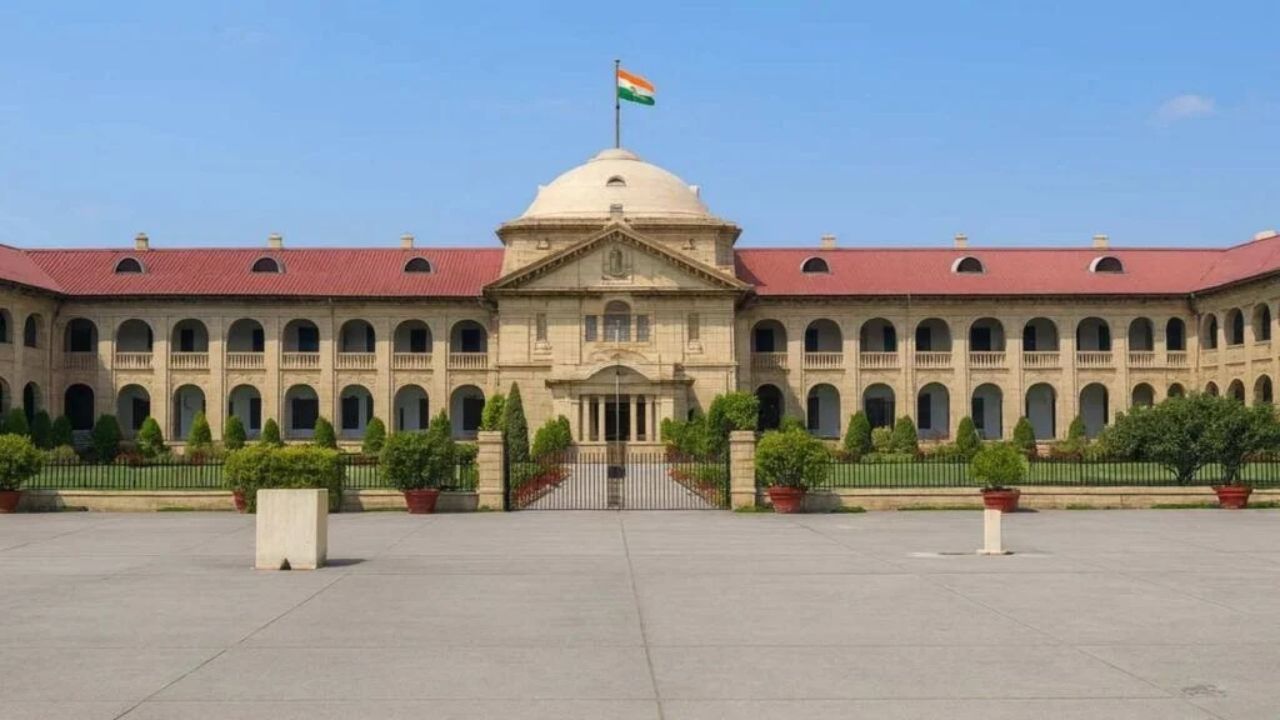
Allahabad High Court sets a three-month deadline for Uttar Pradesh’s long-awaited panchayat elections. (Img: Pinterest)
Prayagraj: The Allahabad High Court has directed the Uttar Pradesh government and the State Election Commission to complete the state’s three-tier panchayat elections within three months, delivering a significant ruling on local governance, electoral preparedness and the tenure of outgoing village heads. The court has also upheld the government’s decision to retain outgoing gram pradhans as administrators until the elections are completed.
The October 14 ruling brings the long-delayed rural elections back into focus, with voter-list preparation, Other Backward Classes (OBC) reservation and the electoral calendar emerging as critical issues. It has also triggered questions over whether the compressed panchayat election schedule could complicate preparations for the Uttar Pradesh Assembly elections expected in 2027.
The Division Bench of Justice Ajit Kumar and Justice Garima Prasad delivered the order after hearing the connected petitions for approximately three hours. The court declined to invalidate the state government’s administrative arrangement, while directing the authorities to ensure that the electoral process is completed within the stipulated period.
The court’s decision provides relief to the state government on the contentious question of who should administer gram panchayats after the elected bodies complete their terms. The government had issued an order on May 25 appointing outgoing gram pradhans as administrators, a decision challenged through multiple petitions.
The petitioners had questioned the legality of allowing former elected representatives to continue exercising administrative responsibilities after the expiry of their elected tenure. However, the High Court rejected the petitions challenging the arrangement and left the government’s order unchanged.
Consequently, outgoing gram pradhans will continue functioning as administrators until the new panchayat bodies are elected. The arrangement will remain in place during the period leading up to the completion of the electoral process, subject to the court’s directions.
The ruling resolves the immediate legal challenge to the appointment mechanism but places the government and the State Election Commission under a firm deadline to complete the elections.
The High Court has directed the state government and the State Election Commission to complete elections to Uttar Pradesh’s three-tier panchayati raj institutions within three months. The exercise covers the rural local-government structure, including gram panchayats, kshetra panchayats and zila panchayats.
The elections had initially been proposed for April to June 2026. However, delays linked to election preparedness and the OBC reservation framework had raised concerns about whether the process could be completed within the expected timeline.
The latest order makes the preparation of electoral schedules, finalisation of voter lists, reservation-related decisions and coordination between the state government and election authorities particularly important.
The three-month deadline also means that the authorities will have to address administrative and logistical requirements within a compressed period. These include election notifications, nomination procedures, polling arrangements, deployment of personnel, security planning and the counting of votes.
The actual polling dates will depend on the formal schedule issued by the competent authorities. The court’s deadline establishes the time frame for completing the election process; it should not be mistaken for an officially announced polling date.
The dispute over OBC reservation has been one of the central issues surrounding the delayed panchayat elections. Questions over the commission’s data collection and the adequacy of its report had emerged during earlier hearings.
According to the account of the proceedings, the court has directed that the OBC Commission continue its work without interruption. However, the panchayat election process will not be made dependent on the completion of the commission’s work. The elections are to proceed under the existing legal framework, with the applicable 27 per cent OBC reservation provision being followed.
The supplied account also indicates that the reservation-related process is to be addressed within six months. This creates an important distinction between the court’s three-month deadline for completing the elections and the separate time frame associated with the reservation exercise.
The precise implementation of reservation across individual panchayats will depend on the applicable rules, legal requirements and official notifications. The ruling therefore places the focus on ensuring that election preparations move forward while the relevant reservation-related work continues.
During the October 9 hearing, the High Court had expressed dissatisfaction with aspects of the OBC Commission’s report and the methodology used to collect information for determining reservation.
The court had raised concerns about whether the commission’s exercise adequately reflected ground realities. It questioned the limited public participation recorded during the process, particularly in Agra district.
According to the details cited during the proceedings, Agra has an OBC population exceeding three lakh. Despite newspaper advertisements inviting participation, only 179 people reportedly approached the commission, and statements were recorded from just 29 individuals.
These figures prompted questions about the adequacy of the data collection exercise and whether the available information could provide a sufficiently representative basis for reservation-related decisions.
The issue is significant because the reservation framework determines the allocation of seats and eligibility for representation in local bodies. Any delay or uncertainty in finalising the applicable arrangements can affect the preparation of election notifications and the wider electoral schedule.
The latest ruling seeks to prevent the ongoing commission process from becoming a reason to indefinitely defer the panchayat elections, while allowing the commission to continue its assigned work.
The ruling followed the joint hearing of 11 petitions challenging aspects of the government’s handling of the panchayat election process. The group included six public interest litigations. The petitions questioned the delay in conducting elections and the decision to appoint outgoing gram pradhans as administrators after the elected bodies’ terms ended. The state government’s May 25 order was among the key decisions challenged before the court.
The matters were heard together by the division bench of Justice Ajit Kumar and Justice Garima Prasad, allowing the court to address the interconnected questions of administrative continuity and electoral deadlines through a common decision. The proceedings involved the Uttar Pradesh government and relevant panchayati raj authorities, along with district-level officials. The court’s final order has preserved the existing administrative arrangement while setting a time-bound requirement for completing the elections.
The principal petitioner, advocate Imtiaz Hussain, had approached the High Court seeking directions to ensure that the State Election Commission finalised and issued a comprehensive election programme before the tenure of the panchayats expired.
The petition argued that the elections should have been completed by May 26, 2026, or earlier. The court had previously sought an affidavit from the State Election Commission on whether it was prepared to conduct the elections within the constitutional time frame.
The proceedings focused on Article 243E of the Constitution, which provides that every panchayat ordinarily continues for five years from the date appointed for its first meeting unless dissolved earlier under the applicable constitutional provisions.
The petitioners argued that the constitutional framework required timely elections and did not permit indefinite extensions through administrative arrangements. The court had asked the election authorities to explain the reasons for the delay and place a finalised election programme on record before the next hearing.
The State Election Commission, meanwhile, had argued that Section 12-BB of the Uttar Pradesh Panchayat Raj Act, 1947, places responsibility for issuing the notification specifying the dates for ordinary elections or by-elections of gram pradhans on the state government, in consultation with the commission. The latest ruling addresses the larger dispute by setting a clear deadline for the completion of the election process.
Following the ruling, petitioner Imtiaz Hussain said that several petitions challenging the appointment of administrators had been filed before the Lucknow bench and subsequently clubbed with the matters heard by the Allahabad High Court.
Those challenges were rejected in the final decision, while the court fixed the three-month deadline for conducting the elections. Hussain also indicated that the practical challenge would now be whether the authorities could complete the entire process within the prescribed period.
Another petitioner, Rai Sahab Yadav, said the government had cited the incomplete commission report and unfinished work relating to the reservation framework as reasons for the delay. According to his account, the court had directed the authorities to proceed with the elections within three months while the reservation-related work continued within the specified time frame.
The petitioners’ position highlights the difference between securing a judicial deadline and ensuring that all administrative and legal requirements are met before polling. The next stage will depend on the government’s response, the election commission’s preparedness and the publication of the official schedule.
The state government has legal options if it considers the High Court’s deadline difficult to implement. One possibility would be to approach the Supreme Court through a special leave petition challenging the relevant parts of the ruling.
The government could also seek interim relief, including a stay of the order or additional time to complete the election process. Any such request would have to be supported by legal grounds and evidence explaining why compliance within three months is not feasible.
Possible administrative issues could include the status of voter lists, election logistics, the availability of security personnel and the completion of legally required reservation-related procedures. Whether any of these grounds would justify an extension would be a matter for the competent court to determine.
The government could alternatively seek appropriate relief from the High Court, including clarification, modification or review where legally maintainable. A request to extend the deadline to four to six months would not automatically be accepted; the court would have to assess the reasons and applicable legal provisions.
Panchayati Raj Minister Om Prakash Rajbhar welcomed the High Court’s decision but indicated that the option of approaching the Supreme Court remained available to the government. Any further legal challenge or extension of the deadline would depend on the steps actually taken and the subsequent orders of the court.
One of the most significant political questions emerging from the judgment concerns the relationship between the panchayat election schedule and preparations for the 2027 Uttar Pradesh Assembly elections.
The panchayat elections had been proposed for April to June 2026 but are now subject to a three-month completion deadline. The resulting administrative pressure could lead to questions about the deployment of election personnel, security arrangements, government machinery and political campaign planning as the state moves closer to the next Assembly election cycle.
However, the High Court’s order does not, by itself, establish that the Assembly elections will be postponed. Panchayat elections and Assembly elections are separate electoral exercises governed by their respective constitutional and legal frameworks.
Any change to the Assembly election schedule would require action by the competent authorities under the applicable law. The impact of the panchayat election deadline will depend on the final polling calendar, administrative arrangements and any subsequent judicial directions.
For now, the immediate legal obligation concerns completing the three-tier panchayat elections within the period prescribed by the High Court. Whether the state government challenges the order, seeks additional time or proceeds with preparations will determine the next phase of the dispute.
The High Court’s ruling has set a clear direction for the next phase of Uttar Pradesh’s panchayat election process. The central question is now whether the authorities can complete the electoral exercise within three months while meeting the applicable constitutional, administrative and reservation-related requirements.

