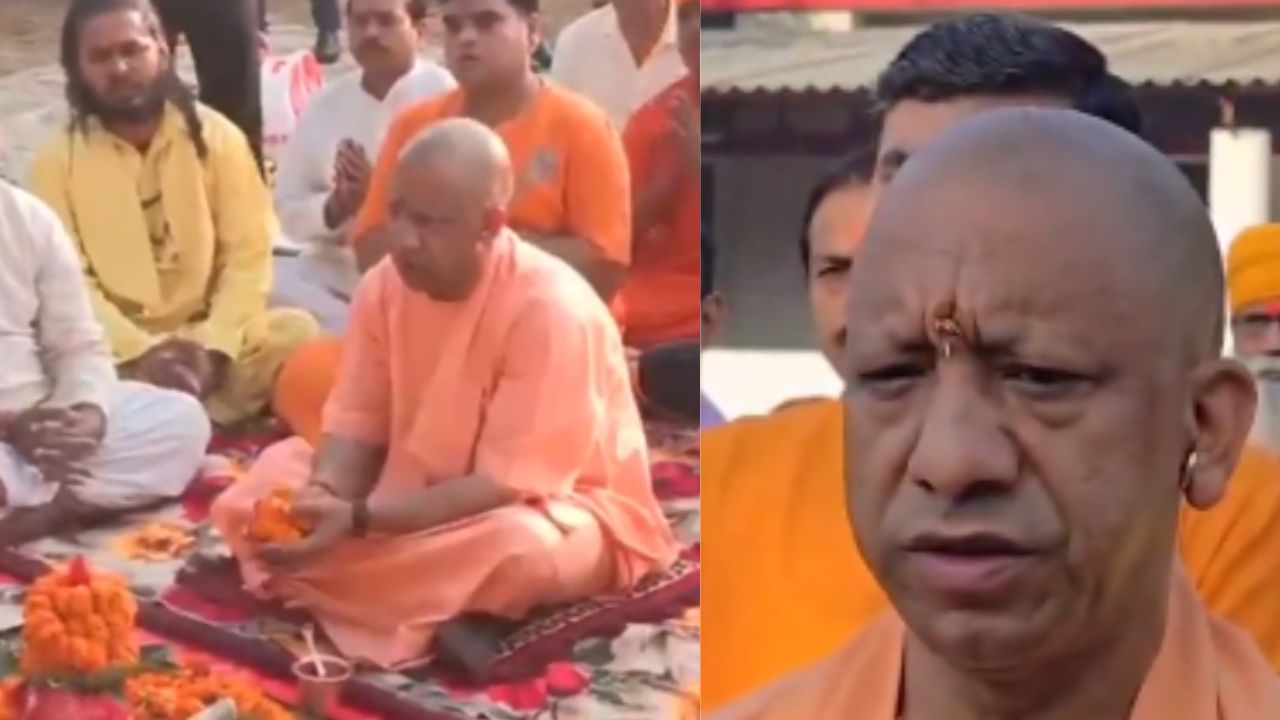
Yogi Adityanath performs Go Puja at the Gorakhnath Temple gaushala in Gorakhpur on Govardhan Puja. (Img: X)
Gorakhpur: Uttar Pradesh Chief Minister and Gorakshapeethadhishwar Yogi Adityanath performed Govardhan Puja at the gaushala of Gorakhnath Temple in Gorakhpur on Monday morning, observing the traditional rituals amid the chanting of Vedic mantras. The ceremony, held during the five-day Diwali festival period, also provided an occasion for the Chief Minister to outline the state government's initiatives for cow protection, cattle welfare and the economic support of farmers.
After performing Go Puja, Adityanath adorned the cows and cattle with garlands, applied tilak on their foreheads and prayed for the happiness and prosperity of the people of Uttar Pradesh. He personally fed jaggery and bananas to the animals and was seen affectionately calling several cows and cattle by their names before approaching and showering them with affection.
The Chief Minister, who has been in Gorakhpur since Sunday, the day of Diwali, extended his greetings and best wishes to the people of the state and cattle rearers on the occasion of Govardhan Puja. He emphasised the need to protect cows under all circumstances, improve indigenous cattle breeds and ensure greater prosperity for people engaged in animal husbandry.
Interacting with the media after the puja, Adityanath said the Uttar Pradesh government was implementing an extensive programme for the protection and welfare of destitute cattle through more than 7,700 gaushalas across the state. According to the Chief Minister, these facilities currently house more than 16 lakh destitute cattle.
He said the government's initiatives were designed to strengthen the tradition of cow protection while ensuring that abandoned cattle received shelter, care and dignified treatment. The Chief Minister outlined three key forms of support being implemented by the state government. These include government-run shelters for destitute cattle, financial assistance to farmers who take responsibility for such animals, and the provision of lactating cows to undernourished families.
Explaining the Sahbhagita Scheme, Adityanath said farmers who adopted cattle from government-run destitute cow shelters were provided financial assistance of Rs 1,500 per cow every month to meet their upkeep and maintenance expenses. A farmer can take responsibility for up to four cows under the scheme, making it possible to receive monthly assistance of up to Rs 6,000.
The initiative is intended to encourage community participation in cattle protection while providing an additional source of income support to rural households. It also seeks to reduce the number of abandoned cattle by transferring their care to farmers willing to maintain them.
The Chief Minister said undernourished families were also being provided one lactating cow each from destitute cattle shelters so that they could access fresh milk. These households receive financial assistance of Rs 1,500 per cow every month. Adityanath maintained that farmers and economically vulnerable families had benefited from these welfare measures on a substantial scale.
The Chief Minister also explained the administrative framework through which the state operates its cattle shelters in rural and urban areas. In rural regions, the Animal Husbandry Department manages cow shelters, while in urban areas, the Urban Development Department operates facilities known as Kanha Upvan.
He said the government's objective was to ensure that cattle were not abandoned on roads or left to damage agricultural crops. Instead, they should be accommodated in safe facilities and provided proper care. Adityanath said destitute cow shelters had been established to address this challenge and were now functioning as an important component of the state's cattle-protection programme.
The initiative also has implications for rural livelihoods and agricultural productivity, as stray cattle can cause crop damage and create difficulties for farmers, particularly during the cultivation and harvesting cycles.
Speaking about the religious and cultural significance of Govardhan Puja, Adityanath said cows and cattle had traditionally occupied an important position in India's agriculture-based economy and spiritual practices. He described the cow as an important symbol of prosperity and said Go Seva, or service to cows, was associated with the four Purusharthas of Hindu philosophy: Dharma, Artha, Kama and Moksha.
The Chief Minister said the tradition of honouring and caring for cattle was carried forward through Govardhan Puja, observed on the day after Diwali. He maintained that sincere efforts towards cattle protection and welfare could contribute to social well-being and prosperity. His remarks placed the festival within the broader context of India's agrarian traditions, where cattle have historically played a role in farming, dairy production and rural household economies.
Adityanath also appealed to people across Uttar Pradesh to follow traditional practices of serving animals as part of their everyday lives. Referring to an established Indian custom, he said the first morsel of food should be offered to a cow and the last to a dog. He urged families to make arrangements to set aside a portion of their food for both animals, describing the practice as a meaningful act of service.
The Chief Minister further encouraged people who were unable to maintain cattle themselves to contribute to charitable gaushalas and participate in organised cow-welfare activities. He said such contributions would allow citizens to support cattle protection even if they did not have the resources or facilities to rear cows at home.

