English
 English

Nvidia CEO Jensen Huang faces renewed scrutiny as China rejects allegations of an espionage operation targeting the technology executive. (Img: X)
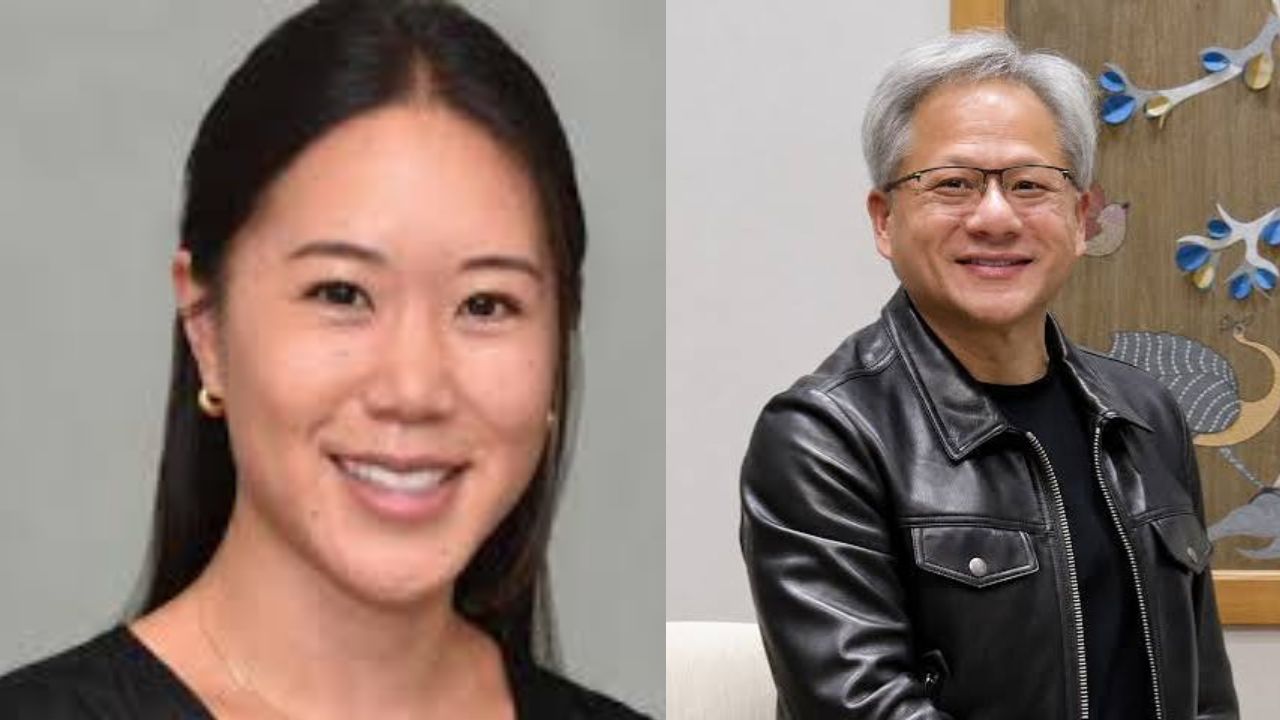
Beijing: China has strongly rejected allegations that its intelligence apparatus attempted to recruit an executive to gather information on Nvidia chief executive Jensen Huang, describing the espionage narrative as an unsubstantiated smear campaign against Beijing. The denial comes as the US semiconductor giant launches an independent investigation into reports of a suspected foreign intelligence operation involving Alice Huang, a former executive at Singapore-based data centre company Megaspeed.
The controversy has placed Nvidia's leadership, corporate governance and sensitive semiconductor business dealings under renewed scrutiny, raising questions about potential intelligence risks, the security of proprietary information and the increasingly complex intersection of artificial intelligence, geopolitics and US-China technology competition.
The developments also come after Jensen Huang acknowledged being unfaithful to his wife in a message to Nvidia employees, apologising to his family and colleagues without identifying the woman involved. Nvidia's board has said it has no reason to believe that US national security interests or the company's confidential information have been compromised, but has decided to examine the available evidence.
China on Monday rejected claims that Beijing was behind an alleged intelligence operation targeting Nvidia's chief executive. Foreign Ministry spokesperson Guo Jiakun dismissed the reports as baseless allegations intended to malign China.
Beijing's response follows media reports suggesting that Alice Huang, a former executive associated with Singapore-based data centre company Megaspeed, was allegedly recruited by China's Ministry of State Security to obtain information about Jensen Huang and Nvidia.
The allegations have drawn attention to the possibility of foreign intelligence agencies exploiting corporate relationships and personal associations to access sensitive information in the semiconductor industry. However, the claims remain allegations, and the available information does not establish that confidential Nvidia data was obtained or transferred.
China had previously rejected the reporting by The New York Times concerning the alleged relationship between Jensen Huang and Alice Huang, as well as claims that she was acting on behalf of Beijing.
Chinese state-affiliated media have largely echoed the government's position, with some portraying the reports as an attempt to undermine improving US-China relations. The state-owned Global Times suggested that elements opposed to better diplomatic ties between Washington and Beijing were attempting to create tensions through covert political manoeuvres.
Nvidia's board has initiated an independent investigation following reports that its chief executive may have been targeted by a foreign intelligence operation. The probe is expected to examine the circumstances surrounding Huang's reported association with Alice Huang, the nature of their interactions and whether any sensitive corporate or strategic information could have been exposed.
Jensen Huang has supported the investigation and agreed to cooperate with the board's review. The company has maintained that it currently has no reason to believe that its trade secrets, proprietary technology or US national security interests have been compromised.
The central issues include whether Huang was aware of any alleged intelligence-gathering activity, whether any confidential information was accessed and whether the company's business relationships created potential vulnerabilities.
The controversy has also raised broader corporate governance questions for Nvidia, particularly given the company's strategic importance to the global artificial intelligence ecosystem and its position at the centre of the US-China technology rivalry.
George Chen, a partner and chair of digital practice at Washington-based consultancy The Asia Group, has stressed that determining whether Huang knew about any alleged espionage activity and whether strategically sensitive information was compromised would require evidence rather than speculation.
The controversy has also brought Megaspeed under the spotlight. The Singapore-based data centre company purchases Nvidia's artificial intelligence processors and has reportedly faced scrutiny over suspicions that it may have helped Beijing gain access to advanced chips subject to US export restrictions.
The allegations are particularly sensitive because high-performance AI accelerators have become a strategic technology asset amid intensifying competition between the United States and China. Washington has imposed restrictions on the export of advanced semiconductor technology to China, seeking to limit Beijing's access to computing capabilities that could strengthen its artificial intelligence, military and advanced research programmes.
Any suspected circumvention of these controls can trigger regulatory scrutiny, export-control investigations and national security concerns. However, the allegations surrounding Megaspeed should not be treated as established findings of wrongdoing.
The case highlights the growing compliance challenges facing semiconductor manufacturers, distributors, data centre operators and technology intermediaries operating across international markets.
The espionage allegations have emerged against the backdrop of Jensen Huang's efforts to secure greater access to the Chinese market for Nvidia's advanced processors. Huang has repeatedly advocated easing restrictions on semiconductor exports to China, arguing that access to the market is commercially important for American technology companies and that US firms should remain competitive in the global AI industry.
His lobbying efforts reportedly contributed to US President Donald Trump allowing Nvidia to sell its H200 processors to China this year. However, it remains uncertain whether Beijing will permit Chinese companies to purchase these chips in substantial quantities. Nvidia disclosed in a regulatory filing in August that sales to China remained limited, partly because of restrictions imposed by the Chinese government.
Although the H200 is not Nvidia's most advanced processor, it remains a powerful AI accelerator with significant applications in data centre computing, large-scale model training and artificial intelligence infrastructure.
Huang had also previously lobbied for permission to sell Nvidia's H20 processors to China. These chips were specifically designed for the Chinese market to comply with US export-control requirements while retaining capabilities relevant to AI workloads.
The continuing restrictions illustrate the complicated regulatory environment confronting Nvidia as it attempts to balance commercial expansion, US national security requirements and Beijing's technology policies.
The controversy also affected investor sentiment, with Nvidia shares falling approximately 5 per cent in pre-market trading on Monday, reflecting the sensitivity surrounding Nvidia's corporate leadership, regulatory exposure and business operations in China. As one of the world's most valuable publicly traded companies, alongside technology giants Apple and Microsoft, Nvidia occupies a pivotal position in global financial markets.
The company's valuation is closely linked to demand for AI infrastructure, advanced processors and data centre investments. Any development involving export restrictions, regulatory investigations, leadership controversies or potential security vulnerabilities can therefore attract significant investor attention. While the reported share-price decline coincided with the controversy, it does not by itself establish that the allegations were responsible for the entire market movement.
The controversy has also acquired a personal dimension after Jensen Huang acknowledged to Nvidia employees that he had been unfaithful to his wife. In his message, Huang apologised to his family and colleagues but did not identify the woman involved. The disclosure followed reports concerning his alleged relationship with Alice Huang, whose professional association with a company operating in the AI infrastructure supply chain has drawn attention in the ongoing investigation.
The reported personal relationship and the alleged intelligence operation are separate issues, although their intersection has intensified scrutiny of the Nvidia chief's conduct and professional associations. The board's investigation is expected to focus on whether the circumstances created any corporate security risks, rather than relying on speculation surrounding Huang's personal life.
The episode underscores how the semiconductor industry has become a major arena of geopolitical competition between Washington and Beijing. Advanced AI chips are no longer viewed merely as commercial computing components. They are increasingly regarded as strategic assets with implications for economic competitiveness, technological sovereignty, military applications and national security.
Nvidia's dominance in AI accelerators has made the company particularly important to this contest. Its processors power data centres and advanced computing systems used to develop and operate increasingly sophisticated AI models. As the United States tightens controls on advanced chip exports and China seeks to strengthen its domestic semiconductor ecosystem, companies operating across the technology supply chain face heightened scrutiny over ownership structures, commercial partnerships, end-users and cross-border transactions.
For Nvidia, the immediate challenge is to establish whether the reported allegations have any substantive corporate or security implications while maintaining investor confidence and navigating an increasingly restrictive international technology environment. The outcome of the board's investigation could have implications beyond the personal controversy surrounding its chief executive, particularly if it identifies weaknesses in corporate information security or business-partner oversight.