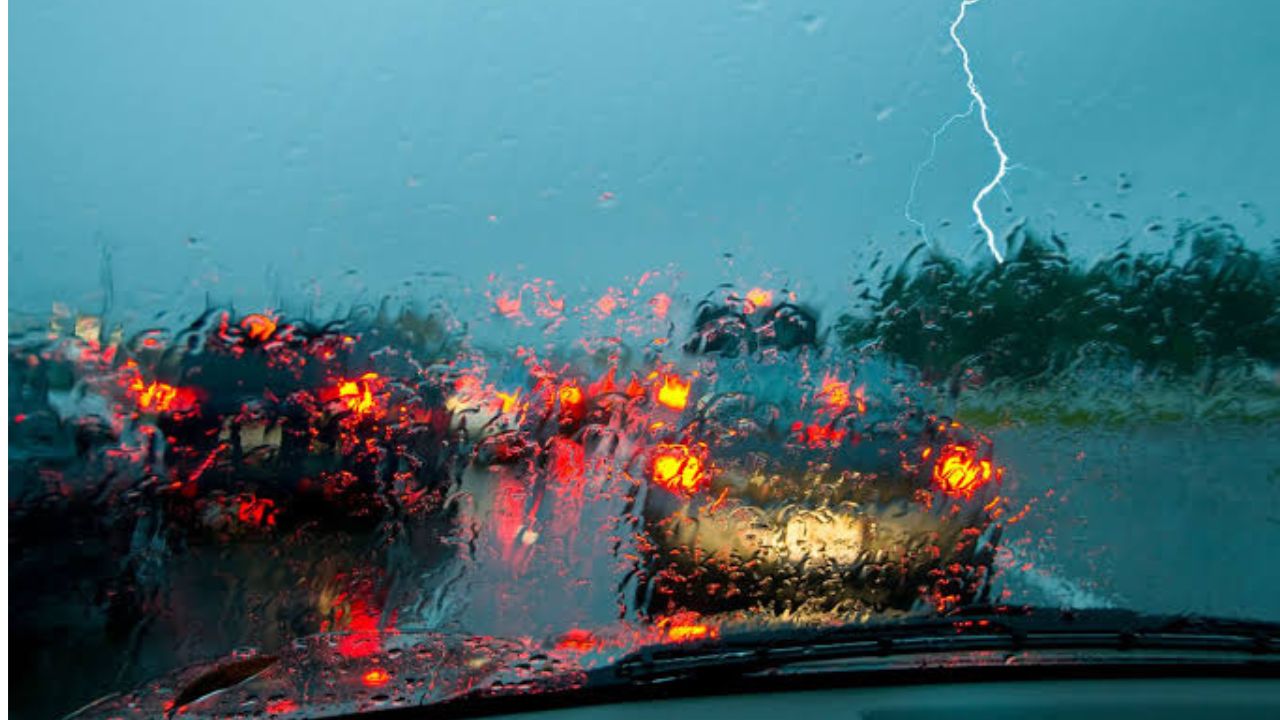
How to drive safe in rain (Soucre Pinterest)
New Delhi: Heavy rain has once again waterlogged large stretches of the country, snarling traffic and testing the patience of commuters. For many, driving or riding through flooded streets feels unavoidable — but doing so carries real risks: skidding, stalled engines, and in the worst cases, accidents. Traffic experts say the smartest move is simple: stay off the road when the rain is at its worst. When that isn't possible, a few precautions can make all the difference.
Not all floodwater looks the same, and that's the problem — a stretch that seems just a few inches deep can hide potholes, open manholes or crumbling road edges. Even shallow water moving fast enough can pull a vehicle off course. If there's another route, take it.
Speeding through a waterlogged patch might feel like the quickest way through, but it isn't. It throws up waves that can flood engines — yours and everyone else's nearby — and puts pedestrians at risk too. Ease off the accelerator and leave extra distance from the vehicle ahead.
Also Read: Nissan Tekton enters India’s SUV race, targets Creta and Duster
Once you're committed to crossing water, resist the urge to brake or hit the gas repeatedly. A low gear and a steady, unhurried pace reduce the chance of water working its way into the engine or exhaust.
This is the one rule people most often get wrong in the panic of the moment. A stalled engine that's taken in water can be badly damaged by a restart attempt. Push the vehicle clear if you can, switch on hazard lights, and call for roadside help instead.
Bikes and scooters have far less margin for error in the rain. Riders are better off skipping flooded stretches altogether, and when they can't, a certified helmet, rain gear with reflective strips, and slower speeds through turns go a long way. Wet tarmac cuts tyre grip sharply and lengthens braking distance, so there's little room for last-minute manoeuvres.
Worn tyres, weak brakes, and faulty lights turn a routine monsoon drive into a gamble. A quick check of tread depth, tyre pressure, headlights, indicators and wipers before heading out can prevent a lot of trouble later — especially since visibility drops fast once the rain picks up.
Sudden braking on a wet road is a fast way to skid. Gentle, gradual pressure works better, and if the vehicle has ABS, holding steady pressure during an emergency stop is more effective than pumping the brakes.
Rain makes it harder to spot pedestrians and cyclists, especially near schools, markets and bus stops, where someone can step out from behind a parked vehicle with almost no warning. Slowing down in these areas isn't optional.
Waterlogging often means getting stuck in traffic for far longer than expected. A flashlight, phone charger, drinking water, a basic first-aid kit, a tow rope and a list of emergency numbers are worth keeping in the car. Topping up fuel before it drops below half a tank is a small habit that pays off during long, unpredictable jams.
Monsoon driving comes down to patience and preparation. Skip travel during severe weather warnings where possible, keep an ear out for local traffic updates, and never assume floodwater is safer than it looks. A little caution goes a long way toward keeping both people and vehicles safe this season.

