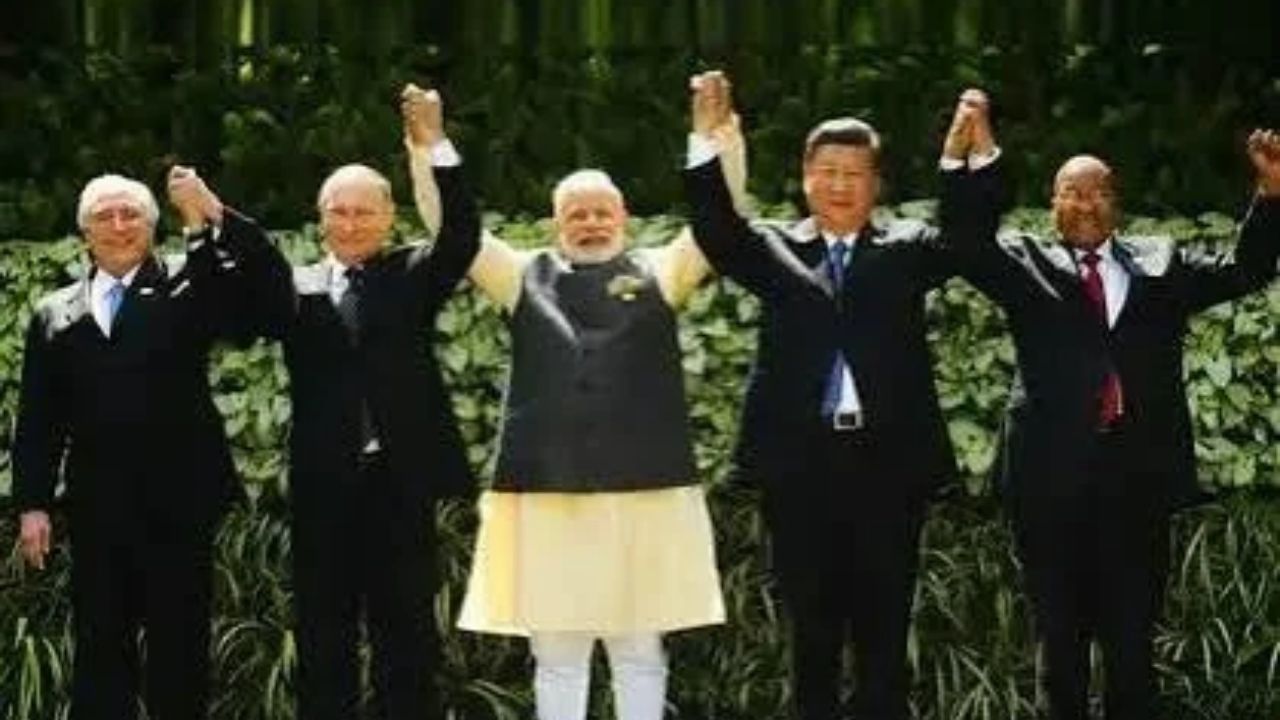
India pushes new economic opportunities for exporters and entrepreneurs through BRICS. (Img: X/Google)
New Delhi: The global economic landscape is witnessing a major transformation as BRICS shifts its focus towards business growth, trade expansion and financial cooperation, with India emerging as a key force behind the bloc’s economic roadmap.
While BRICS has often been discussed in the context of global geopolitics, its latest economic direction highlights a more practical ambition — creating better opportunities for companies, exporters, manufacturers and small businesses across emerging markets.
India is leading efforts to make trade easier, improve access to finance and strengthen the ability of developing economies to participate in global value chains. The focus is not only on increasing trade volumes but also on ensuring that smaller businesses become active players in international commerce.
The new economic approach reflects a changing global environment where countries are seeking stronger supply chains, diversified markets and financial systems that provide businesses with greater flexibility.
Micro, small and medium enterprises are emerging as one of the biggest focus areas in the BRICS economic strategy. MSMEs are among the largest contributors to employment, innovation and local economic growth, but many businesses struggle to expand internationally due to limited access to affordable credit, delayed payments and complex export procedures.
India has pushed for solutions that can help smaller companies overcome these challenges and become part of global trade networks. The emphasis is on creating better financing mechanisms, improving credit assessment systems and using technology to connect businesses with international opportunities. For millions of entrepreneurs, easier access to capital could mean the difference between operating locally and entering global markets.
One of the biggest challenges for exporters worldwide is managing cash flow. Businesses often face delays between shipping products and receiving payments, creating pressure on working capital. BRICS is exploring financial mechanisms that can help companies unlock funds faster and maintain smoother operations.
Invoice financing and digital trade platforms are gaining importance as possible solutions for improving liquidity for exporters. Such mechanisms could particularly benefit smaller manufacturers and suppliers that have strong products but lack large financial reserves.
For India, strengthening trade finance aligns with its broader goal of increasing exports, expanding manufacturing capacity and helping Indian companies compete globally.
The future of international trade will depend heavily on speed, technology and financial connectivity. BRICS countries are working towards improving trade systems through digital platforms, easier documentation processes and stronger cooperation between financial institutions.
The objective is to reduce unnecessary barriers and create smoother cross-border business transactions. For companies operating across emerging markets, faster payments and simplified trade processes could open new business opportunities in manufacturing, technology, agriculture, healthcare, energy and services.
Another major economic development within BRICS is the growing discussion around local currency trade. However, the focus is not on replacing the existing global financial system overnight. Instead, the approach is to create more payment options for businesses involved in international trade.
Greater use of national currencies could help companies reduce transaction challenges, improve flexibility and explore alternative settlement mechanisms.
For India, this could create greater opportunities for the rupee in global trade while giving businesses additional options for cross-border payments. The strategy represents diversification rather than a sudden shift away from established financial systems.
India’s experience in building one of the world’s largest digital payment ecosystems has strengthened its position in discussions around future financial connectivity. Technology-driven payment systems have shown how digital infrastructure can make transactions faster, more accessible and more transparent.
However, connecting payment networks between different countries requires cooperation on cybersecurity, financial regulations, compliance standards and risk management. India’s digital capabilities could play an important role as BRICS explores new models for international payment cooperation.
The next phase of global economic competition will depend heavily on supply chain strength. BRICS is focusing on helping emerging economies move towards higher-value manufacturing, technology-driven production and stronger industrial capacity.
The goal is to ensure that developing countries are not limited to supplying raw materials but become important participants in global manufacturing networks. India has placed strong emphasis on expanding manufacturing, attracting investment and improving export competitiveness.
A stronger BRICS supply chain network could create new opportunities for businesses across sectors including electronics, pharmaceuticals, automobiles, renewable energy and technology.
Industrial zones and economic corridors are becoming important tools for attracting investment and strengthening exports. Special Economic Zones can provide businesses with better infrastructure, simplified regulations and improved access to international markets.
For emerging economies, these zones can become centres of manufacturing, innovation and global business partnerships. India’s experience with industrial corridors and export-focused manufacturing hubs could offer valuable lessons for other BRICS economies.
The ability to participate in global value chains will determine the future competitiveness of economies. BRICS is working towards improving cooperation in technology transfer, infrastructure development, manufacturing capacity and trade facilitation.
For India, deeper integration into global supply chains remains a major economic priority. The country aims to become a stronger manufacturing hub while creating opportunities for domestic companies to connect with international markets.
The global economy is currently facing multiple challenges, including supply chain disruptions, trade tensions, inflation pressures and changing investment patterns.
Businesses are searching for more reliable markets, stronger financial networks and new growth opportunities. BRICS is attempting to respond to these challenges by creating a more connected economic ecosystem for emerging economies. The success of this vision will depend on how effectively policies translate into benefits for companies, exporters and entrepreneurs.
India is positioning itself as one of the key architects of BRICS’ economic future. The country’s approach focuses on practical outcomes — stronger exports, better financing, digital innovation and greater participation of smaller businesses in global commerce.
By promoting MSME growth, trade connectivity and technology-based solutions, India is attempting to transform BRICS from a political grouping into a stronger economic platform. The coming years will determine how successfully this vision creates measurable opportunities for businesses across emerging markets.
The next challenge for BRICS will be implementation. Businesses will closely watch whether improved financing systems, smoother payments and stronger trade partnerships can translate into real economic gains.
For India, the opportunity is significant. A stronger BRICS economic network could help Indian exporters access new markets, attract investment and strengthen the country’s position in the global economy.
As economic influence gradually shifts towards emerging markets, India’s role in shaping the BRICS business roadmap could become one of the defining economic stories of the decade.

