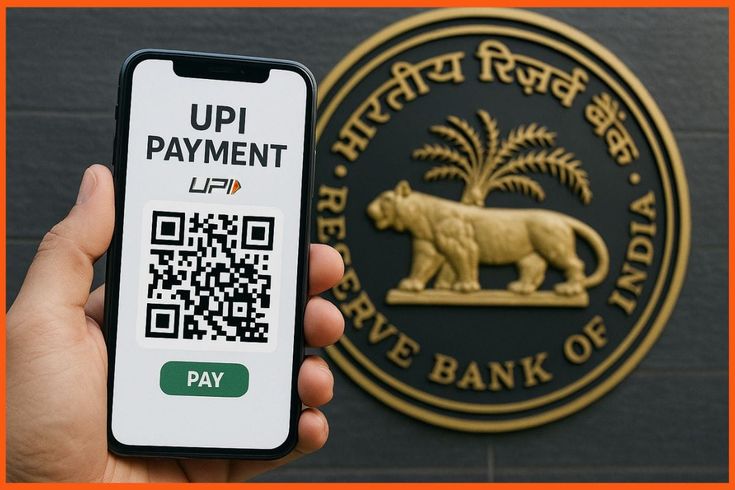
RBI and NPCI may need to clarify whether banks can charge for higher-value UPI payments. (Image: Google)
New Delhi: The government has confirmed that UPI transactions up to Rs 2,000 will remain free, but questions remain over whether banks can charge for higher-value payments.
The government’s clarification on UPI charges has settled one part of the debate but left another important question unanswered: Can banks impose charges on UPI transactions above Rs 2,000? Financial experts tracking the issue believe the Reserve Bank of India (RBI) and National Payments Corporation of India (NPCI) may need to provide a clear regulatory direction to remove uncertainty over the issue.
The concern is not that every UPI payment above Rs 2,000 will automatically become chargeable. Instead, the key issue is whether individual banks could have the discretion to impose charges on such transactions.
The Finance Ministry has notified that banks and system providers cannot impose charges on UPI transactions of up to Rs 2,000. The same protection also applies to payments made through RuPay debit cards. According to a Gazette notification dated September 14, banks and system providers cannot directly or indirectly charge a person for making or receiving a payment through a RuPay debit card or a UPI transaction of up to Rs 2,000.
The move provides clarity for small-value digital payments and reinforces the government’s push towards wider adoption of digital transactions.
The bigger uncertainty concerns transactions exceeding the Rs 2,000 threshold. While the government has clarified the position for transactions up to Rs 2,000, no final decision has been taken on whether charges could apply to higher-value transactions, particularly merchant payments. Experts argue that the absence of a specific regulatory direction could leave room for different interpretations by banks and payment system providers.
This is why a clear notification or direction from the RBI or NPCI could become important in ensuring that the rules are interpreted and implemented uniformly across the banking system.
Financial experts believe banks should not be left to independently determine whether UPI charges can be imposed above the specified threshold. The government has already indicated in Parliament that person-to-person, or P2P, UPI transactions should remain free. However, experts believe a formal regulatory framework would provide greater certainty to customers, banks and payment service providers.
A uniform direction could also prevent differences in charging practices across banks and reduce confusion among millions of UPI users.
The issue has also been compared with online NEFT transactions, where customers generally do not bear charges under the prevailing RBI framework for online transfers. Experts questioning the possibility of UPI charges argue that the treatment of digital payment systems should remain consistent and transparent.
The comparison has added another dimension to the debate over whether users should face charges for higher-value UPI transactions, particularly as UPI has become one of India’s most widely used digital payment platforms.
The latest notification has removed uncertainty over UPI transactions up to Rs 2,000, but the position on higher-value payments remains a key issue. A clear clarification from RBI and NPCI could determine whether banks have any discretion to levy charges on transactions above Rs 2,000 and, if so, under what conditions. For consumers and merchants, the issue is significant because UPI has become deeply integrated into everyday payments, from retail purchases and bills to online commerce and person-to-person transfers.
Until the regulatory position is made explicit, the possibility of different interpretations around higher-value UPI transactions is likely to remain a subject of financial and banking debate.

