English
 English

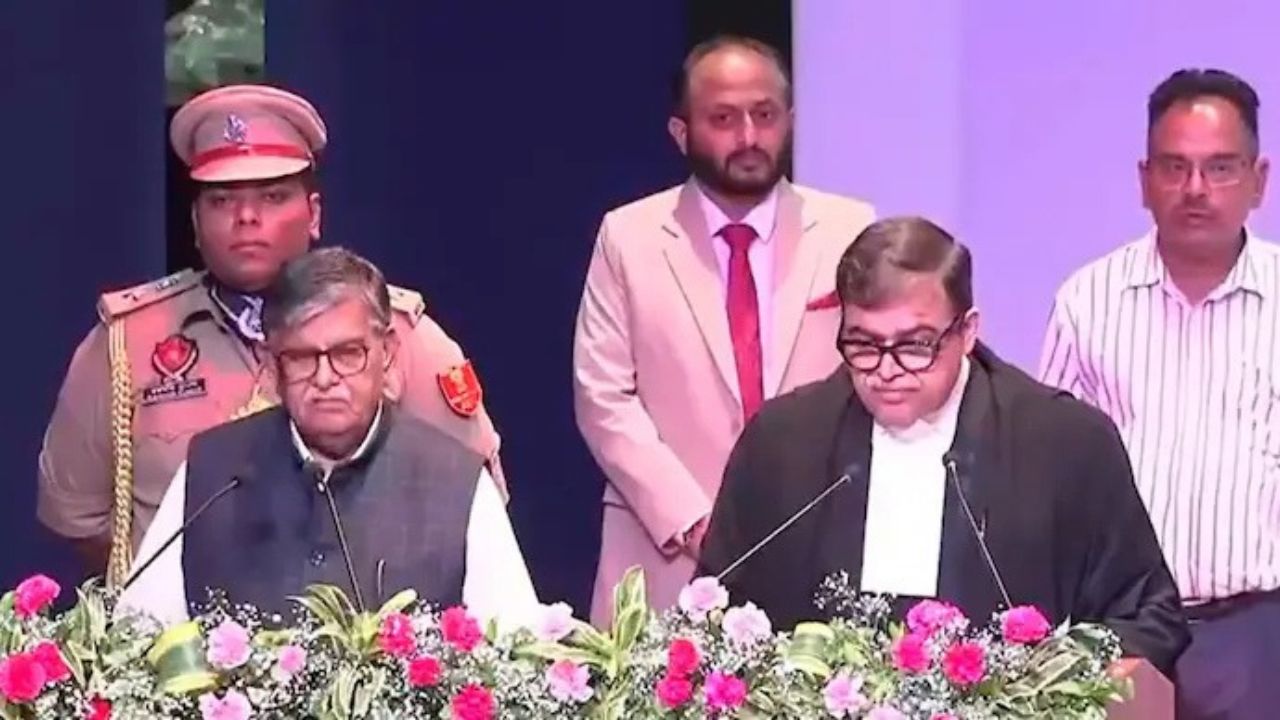
P&H High Court’s observation puts Muslim Personal Law and choice of spouse in focus.. (Img: Pinterest)
Chandigarh: The Punjab and Haryana High Court has observed that a Muslim boy or girl who has attained puberty is competent under Muslim Personal Law to enter into a marriage and is entitled to choose a spouse of their own volition.
The Court made the observation while hearing a petition filed by a Muslim couple seeking protection of their life and personal liberty after their marriage allegedly triggered opposition from the woman’s family.
Justice Vikram Aggarwal was dealing with the plea of a 26-year-old man and a 17-year-old girl, who had approached the High Court apprehending threats after solemnising their Nikah.
The petitioners submitted that their marriage had been performed in accordance with Muslim rites and ceremonies after the woman had left her parental home. They contended that, having attained puberty, she possessed the requisite capacity under Muslim Personal Law to contract a marriage.
The Court examined the principles governing matrimonial capacity under Mohammedan Law and noted the settled proposition that a Muslim of sound mind who has attained puberty is competent to enter into a marriage contract.
Referring to Article 195 of Mulla’s Principles of Mohammedan Law, the Court noted that where there is no material to establish the precise age at which puberty was attained, a presumption operates that it is attained upon completion of 15 years.
The High Court also took note of its earlier jurisprudence, including the decision in Kammu v. State of Haryana, which recognised that a Muslim boy or girl attaining puberty is at liberty to marry a person of their choice in accordance with the governing principles of personal law.
The Court observed that once the legal requirement relating to attainment of puberty is satisfied, the choice of the individual cannot be overridden merely because a guardian or family member disapproves of the matrimonial decision.
The petitioners had asserted that the opposition from the woman’s relatives had created a genuine apprehension regarding their safety, compelling them to seek police protection and subsequently invoke the High Court’s jurisdiction.
The Court also referred to Gulam Deen v. State of Punjab, reiterating that in a petition seeking protection, the principal issue before the constitutional court is the preservation of the petitioners’ life and personal liberty.
Such proceedings, the Court noted, do not necessarily require a conclusive adjudication on every aspect concerning the validity of the marriage. The immediate concern is whether persons approaching the Court face a credible threat requiring intervention by the State authorities.
The State, during the hearing, was unable to effectively controvert the factual assertions advanced by the petitioners or the legal precedents relied upon in support of their plea.
Without embarking upon a final determination of the matrimonial relationship, the High Court disposed of the petition and directed the Senior Superintendent of Police (Rural), Ludhiana, to consider the representation submitted by the couple and take appropriate action in accordance with law.
The Court thus confined its adjudication to the couple’s claim for protection, leaving any wider questions concerning the legal validity or consequences of the marriage open for determination in appropriate proceedings, if required.
The ruling underscores that family opposition cannot, by itself, operate as a licence to threaten or endanger individuals who invoke their constitutional right to life and personal liberty. At the same time, the Court’s observations arose within the specific context of Muslim Personal Law and a petition seeking protection, rather than a comprehensive pronouncement on the statutory regime governing child marriage in India.