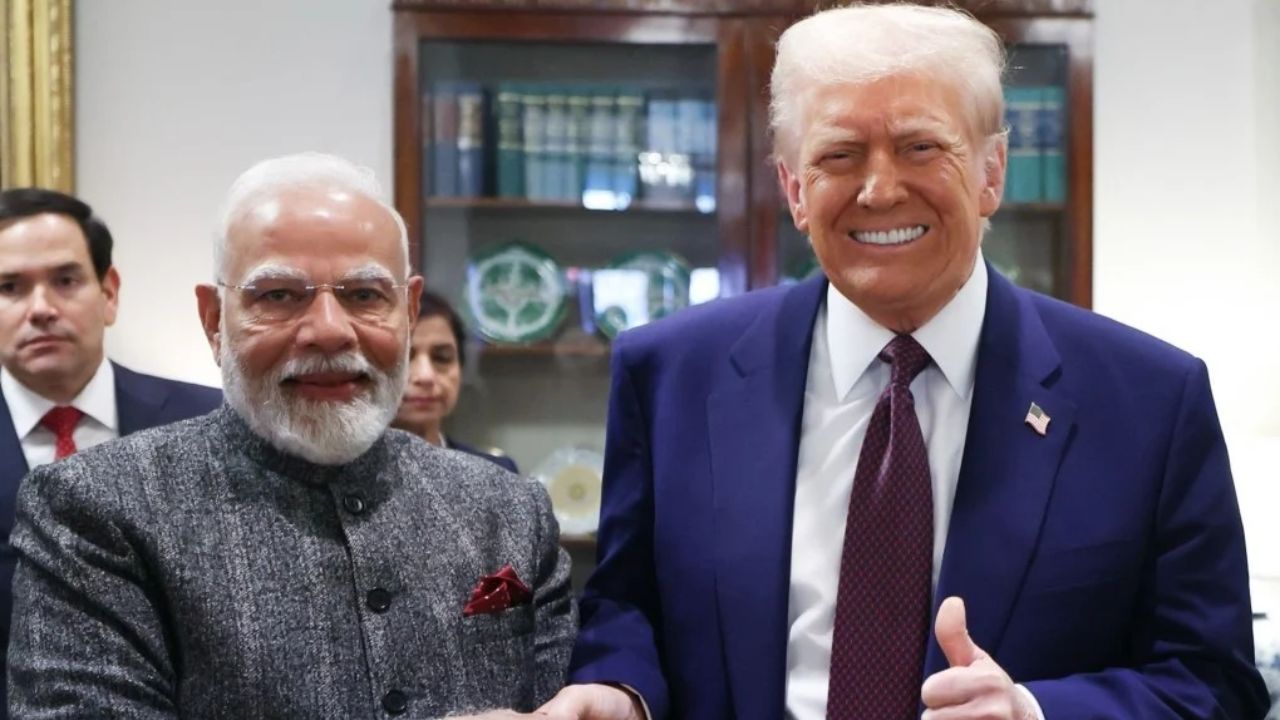
President Donald Trump claims a deep friendship with Indian Prime Minister Narendra Modi
New Delhi: Under the interim bilateral trade agreement announced by India and the United States, India has not opened its market to imports of American soyabean, corn (maize), fuel ethanol, cotton, dairy, or poultry products. This signals that New Delhi has held firm on protecting sensitive agricultural sectors, particularly those linked to genetically modified crops and food safety concerns.
Instead of broad liberalisation, India has chosen a selective approach, allowing reduced or zero tariffs on certain American agricultural products that are considered less threatening to domestic farming.
Under the decisive leadership of PM @NarendraModi ji, India has reached a framework for an Interim Agreement with the US. This will open a $30 trillion market for Indian exporters, especially MSMEs, farmers and fishermen. The increase in exports will create lakhs of new job… pic.twitter.com/xYSjxML6kt
— Piyush Goyal (@PiyushGoyal) February 7, 2026
India has agreed to grant greater market access to products such as Distiller’s Dried Grains with Solubles (DDGS), soyabean oil, red sorghum for animal feed, tree nuts, fresh and processed fruits, and wine and spirits. On paper, these items do not appear to directly compete with large-scale Indian farming, as domestic production in these categories is limited.
However, experts warn that the economic impact may still be significant, especially in livestock feed markets.
DDGS is a protein-rich byproduct left after ethanol is produced from corn or rice. It is widely used as a low-cost livestock feed ingredient. In India, poultry and cattle feed producers usually rely on de-oiled cakes derived from soyabean, cottonseed, groundnut, mustardseed, or rice bran, all of which are relatively expensive.
India to Cut Tariffs on US Products; Opposition Warns of Farmer Losses
DDGS imported from the U.S. is substantially cheaper, even after adjusting for protein content. Additionally, American DDGS has much lower aflatoxin levels than Indian-made DDGS, making it safer for poultry and dairy animals. This could significantly benefit India’s poultry, dairy, and aquaculture sectors by reducing feed costs and improving quality.
While livestock producers stand to gain, Indian soyabean farmers and processors may face pressure. Cheaper imports of DDGS and lower-duty soyabean oil could reduce domestic prices of soyabean oil and de-oiled cake. This could hurt farmers cultivating soyabean across nearly 13 million hectares, mainly in Madhya Pradesh, Maharashtra, and Rajasthan.
Piyush Goyal calls India–US trade deal historic; Says tariff cuts to boost exports
Domestic grain-based distilleries that sell DDGS as a byproduct may also lose competitiveness against cheaper U.S. imports.
India’s livestock sector may also benefit from imports of red sorghum, another low-cost animal feed ingredient. The U.S. dominates global sorghum exports, and cheaper access could help Indian feed manufacturers.
Similarly, tariff reductions on tree nuts like almonds, walnuts, and pistachios are unlikely to harm Indian farmers, as domestic production is minimal. In fact, India is already one of the largest markets for American tree nuts, and imports could increase further.
The joint statement mentions India’s willingness to address long-standing non-tariff barriers on U.S. agricultural products. Whether this includes easing restrictions on genetically modified crops or dairy imports remains unclear and will be closely watched in future negotiations.


