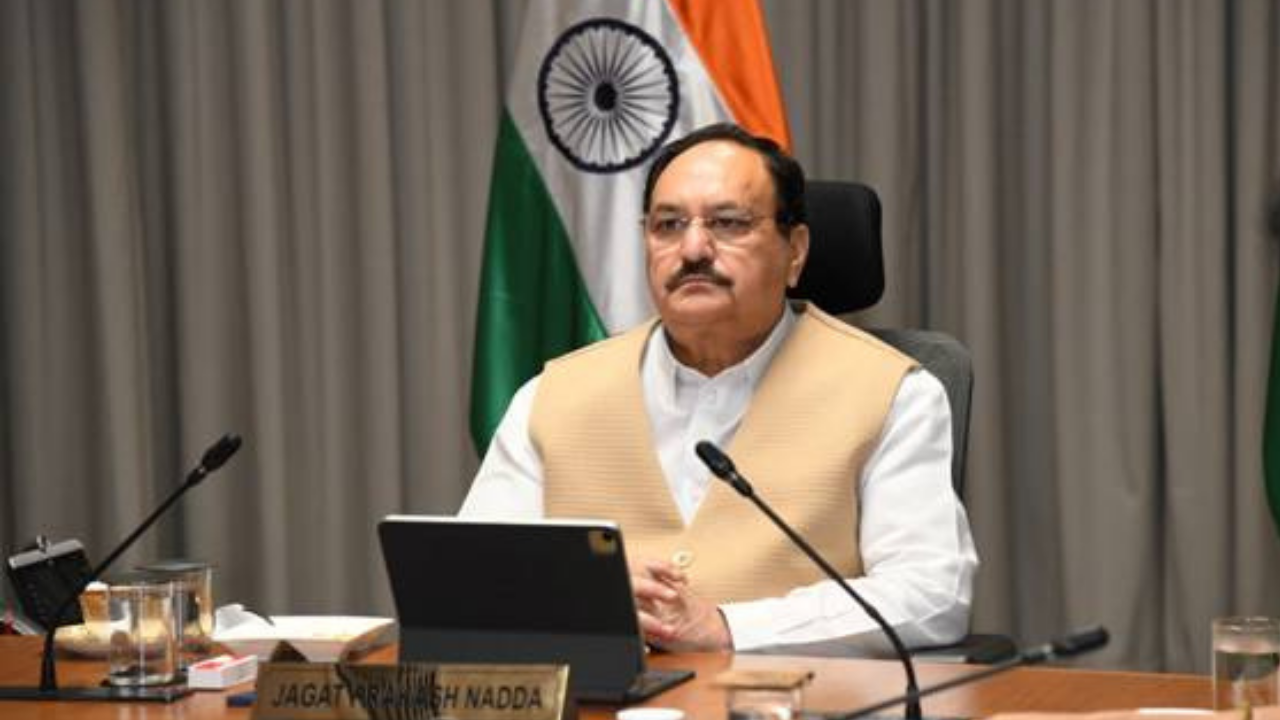
JP Nadda’s Big Health Mission: India’s Battle Against Cervical Cancer Begins
New Delhi: Union Health Minister Jagat Prakash Nadda on Monday reiterated India’s commitment to eliminating cervical cancer as a public health concern, underlining the government’s focus on prevention, vaccination, screening, early diagnosis and timely treatment.
Addressing a virtual press briefing at the World Health Organization headquarters, Nadda said protecting the health and dignity of women remains a national priority. He emphasised that India’s approach to cervical cancer is centred on strengthening preventive healthcare and expanding access to early detection and treatment.
The Health Minister pointed to the expansion of population-based screening under the National Programme for Prevention and Control of Non-Communicable Diseases. Cervical cancer screening through Visual Inspection with Acetic Acid (VIA) has been made available at Ayushman Arogya Mandirs and other healthcare facilities for women in the 30–65 age group.
According to the government, more than 86 million women have already undergone screening under the programme, marking a substantial expansion of efforts aimed at detecting the disease before it progresses to advanced stages.
Nadda also highlighted the country's nationwide Human Papillomavirus (HPV) vaccination initiative, which seeks to protect adolescent girls against the infection responsible for the overwhelming majority of cervical cancer cases.
The national HPV vaccination campaign was launched on February 28, with the government targeting approximately 12 million 14-year-old girls. The vaccine is being offered free of cost through designated government health facilities, with the programme being implemented on a voluntary basis and requiring parental consent.
The campaign represents an important shift towards prevention, particularly because HPV infection is a principal cause of cervical cancer. By combining vaccination during adolescence with screening later in life, India's strategy seeks to address the disease across different stages of the prevention and care continuum.
Nadda also drew attention to the role of digital systems in monitoring the vaccination programme. Vaccination events are being recorded through the U-WIN platform, while vaccine stocks and cold-chain movement are tracked through the Electronic Vaccine Intelligence Network (eVIN), enabling authorities to monitor implementation and supply chains more effectively.
The Minister acknowledged the contribution of frontline healthcare workers in taking the programme to communities, creating awareness and building confidence around vaccination and screening. Their role, he noted, remains critical to ensuring that public-health interventions translate into actual coverage at the grassroots level.
India's efforts are aligned with the WHO's global strategy for cervical cancer elimination. The WHO's 90–70–90 framework for 2030 envisages vaccination of 90 per cent of girls against HPV, screening of 70 per cent of women with a high-performance test by the ages of 35 and 45, and appropriate treatment for 90 per cent of women identified with cervical disease.
WHO Director-General Dr Tedros Adhanom Ghebreyesus, who also addressed the briefing, stressed the importance of sustained international cooperation and scientific innovation in tackling cervical cancer and other major public-health challenges.
Nadda's reaffirmation places India's cervical cancer strategy within a broader global health framework, with prevention and early intervention emerging as the central pillars of the country's response.
The government's approach combines adolescent HPV vaccination with population-level screening and access to treatment, seeking to reduce both the incidence of the disease and deaths resulting from delayed diagnosis.
Concluding his address, Nadda called for stronger international collaboration to accelerate efforts towards cervical cancer elimination, signalling India's intent to contribute to a coordinated global public-health response while expanding preventive healthcare domestically.

