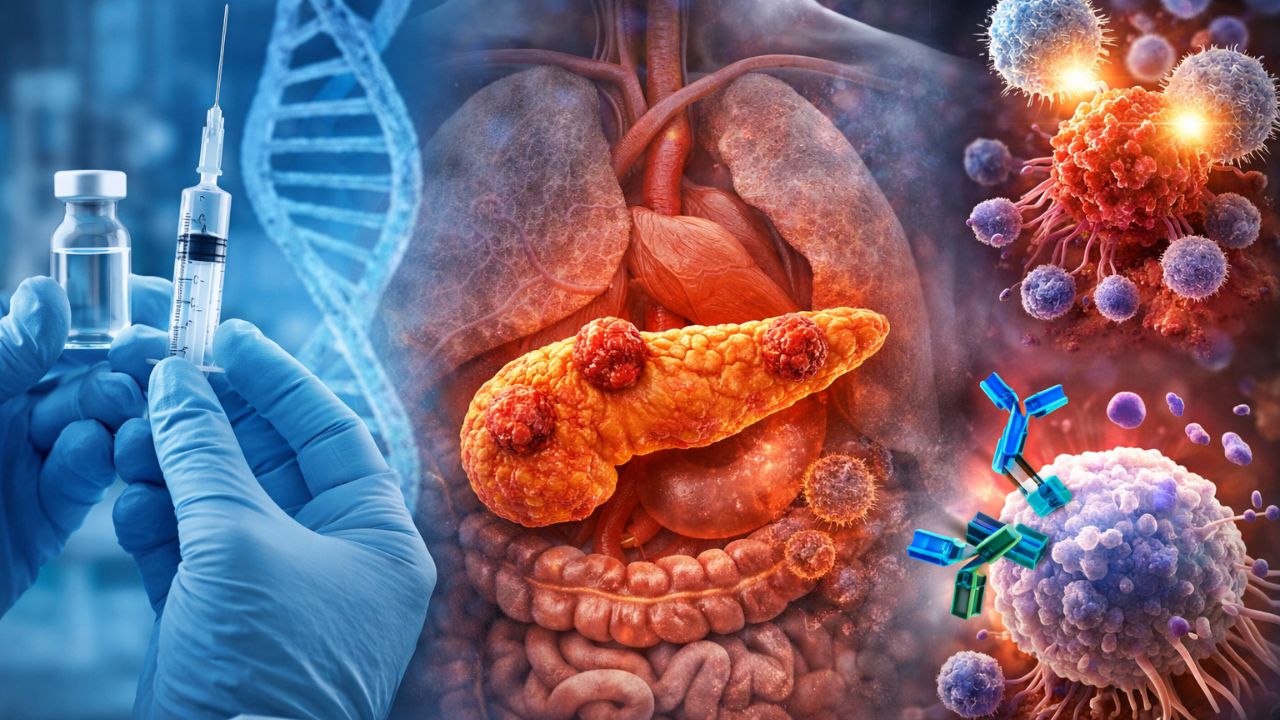
Breakthrough Hope for Pancreatic Cancer Treatment
New Delhi: Pancreatic cancer is considered one of the most lethal forms of cancer in the world. The biggest challenge with this disease is that it grows silently. In most cases, noticeable symptoms appear only when the cancer has already reached an advanced stage.
Because of this late detection, nearly 90% of patients diagnosed with pancreatic cancer do not survive beyond five years. For decades, doctors and researchers have struggled to find effective ways to detect and treat this aggressive disease early.
After years of limited progress, recent scientific research has started to offer new hope. Instead of relying only on chemotherapy, scientists are now focusing on strengthening the body’s immune system so it can recognize and destroy cancer cells on its own. This approach includes cancer vaccines and advanced immunotherapy, which are gaining attention as potential game-changers in cancer treatment.
School shaves heads to support cancer-stricken student; Emotional video goes viral
Researchers in Spain have developed a new combination therapy that has shown remarkable success in laboratory mice. This treatment completely eliminated pancreatic cancer tumors in mice and prevented the cancer from returning. Although the therapy has not yet been tested on humans, the results are promising enough to raise optimism among scientists that this approach could one day save lives.
Earlier, researchers in the United States also tested a personalized mRNA-based pancreatic cancer vaccine in a small group of human patients. Some patients showed encouraging immune responses, further strengthening the belief that vaccine-based treatments could transform pancreatic cancer care in the future.
The Spanish study was led by renowned scientist Mariano Barbacid and his team at the Spanish National Cancer Research Center (CNIO). Instead of relying on a single drug, the therapy combines three powerful approaches.
First, advanced immunotherapy boosts the immune system. Second, a cancer vaccine trains immune cells to recognize pancreatic cancer cells. Third, checkpoint inhibitors remove the natural “brakes” on the immune system, allowing it to attack cancer more aggressively.
Together, these methods break down the protective shield that tumors create around themselves. This enables T-cells to reach and destroy cancer cells effectively, preventing the tumor from coming back.
These 4 symptoms may signal Cervical cancer; Early testing can save lives
Around 90% of pancreatic cancer cases involve a mutated KRAS gene, which drives cancer growth. For nearly 50 years, there were no drugs that could directly target this gene. Although KRAS-targeting drugs were finally approved in 2021, tumors often developed resistance within months. Barbacid’s team tackled this by blocking the KRAS signaling pathway at three different points, reducing the chances of resistance.
Despite the exciting results, scientists stress caution. The therapy is not yet ready for human trials and requires further research and safety testing. Still, experts believe this breakthrough could mark the beginning of a new era in pancreatic cancer treatment.

