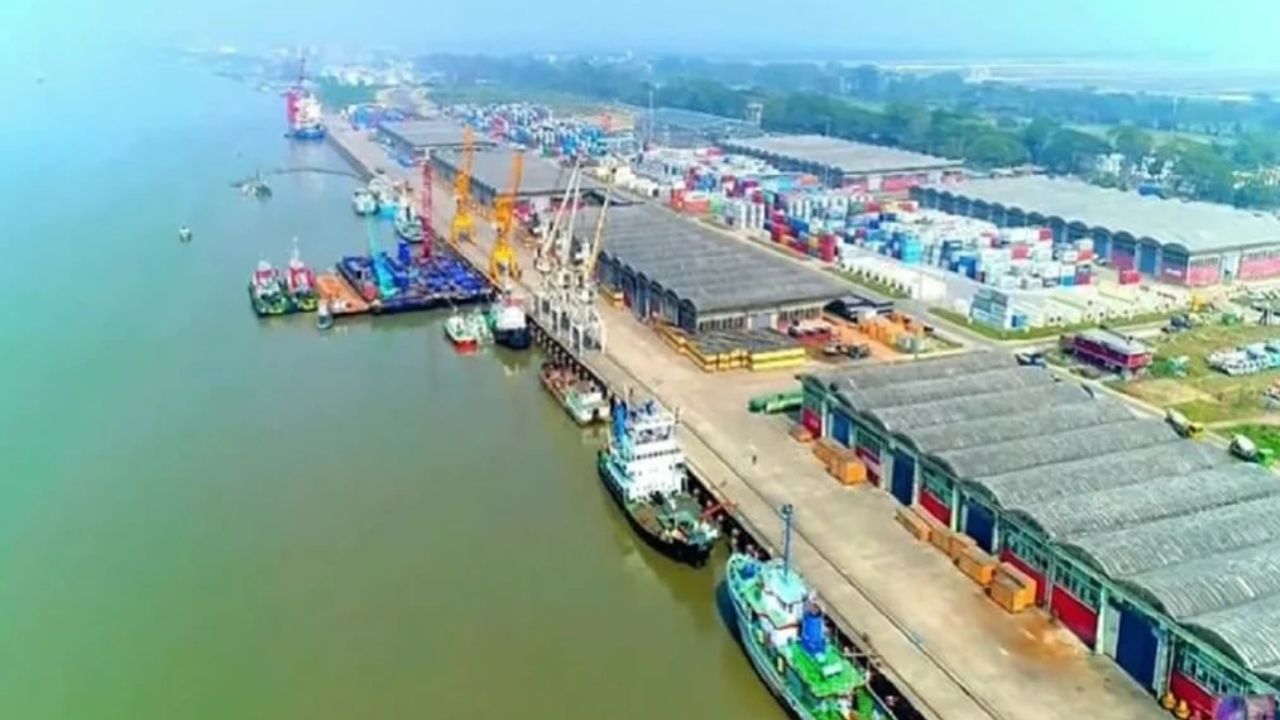
Bangladesh is diversifying its maritime partnerships as global port operators gain ground at Chattogram, while China continues to invest in Mongla Port and industrial infrastructure. (Images: X)
Dhaka/Beijing: Bangladesh’s evolving maritime infrastructure strategy is creating fresh competition among China and international port operators, as Dhaka seeks foreign investment while retaining control over critical trade infrastructure. A long-term agreement with Denmark-linked APM Terminals to develop and operate the Laldia Container Terminal at Chattogram Port highlights the country’s growing engagement with global logistics companies.
However, China continues to advance its own port modernisation and industrial projects, making Bangladesh’s approach more a case of strategic diversification than a complete shift away from Beijing.
The developments have drawn attention to the Bay of Bengal, a strategically important maritime region connecting South and Southeast Asia with major international shipping routes. Bangladesh’s decisions on port financing, terminal management and industrial infrastructure could influence regional trade dynamics, investment patterns and the strategic calculations of neighbouring countries, particularly India.
The Chittagong Port Authority signed a concession agreement with APM Terminals, a subsidiary of the Maersk Group, in November 2025 to develop and operate the Laldia Container Terminal under a public-private partnership framework. The project involves an investment exceeding US$550 million, with the company responsible for designing, financing, constructing and operating the facility.
The agreement provides for 30 years of terminal operations following the construction phase, with provisions linked to performance indicators. Bangladesh will retain ownership of the port, while the private operator will manage the terminal’s development and operations. The project is expected to strengthen container-handling capacity, improve logistics efficiency and attract foreign direct investment.
The agreement represents a significant step in Bangladesh’s efforts to bring international expertise into its maritime logistics sector. It also illustrates how the country is distributing operational responsibilities among foreign investors rather than relying exclusively on Chinese companies for port development.
Despite the expansion of international participation at Chattogram, China’s role in Bangladesh’s maritime infrastructure remains substantial. During Prime Minister Tarique Rahman’s June 2026 visit to China, the two countries agreed to advance the modernisation and expansion of Mongla Port, alongside cooperation on a Chinese economic and industrial zone in Chattogram. In October 2026, Bangladesh also signed a concessional loan agreement with China worth approximately US$335.78 million for the Mongla Port modernisation project. The proposed development includes additional container-handling infrastructure and cargo facilities intended to improve the port’s capacity.
Mongla is important to Bangladesh’s export-oriented economy, including its manufacturing and garment industries. Expanded port infrastructure could improve cargo movement, support industrial growth and create new opportunities for Chinese companies involved in construction, equipment supply and logistics.
Consequently, the agreement with APM Terminals at Chattogram should not be interpreted as evidence that Bangladesh has abandoned Chinese investment. Instead, the country appears to be pursuing multiple partnerships across different infrastructure projects.
Bangladesh’s engagement with foreign terminal operators extends beyond the Danish-linked Maersk Group. Saudi Arabia’s Red Sea Gateway Terminal has been involved in operating the Patenga Container Terminal at Chattogram, while international logistics companies have also secured opportunities to manage other facilities.
In November 2025, the Chittagong Port Authority signed a separate agreement with Switzerland-based Medlog SA for the operation of the Pangaon Inland Container Terminal. These arrangements underline Bangladesh’s broader interest in introducing international operational expertise into its port network. For Bangladesh, the potential benefits include improved terminal productivity, more efficient cargo handling, modern logistics systems and greater participation in international supply chains. Foreign operators can also bring technical expertise and investment that would otherwise require greater public expenditure.
However, the growing role of private operators also places greater importance on transparent concession agreements, effective regulation, labour safeguards and the protection of national interests.
The strategic importance of Bangladesh’s ports extends beyond commercial shipping. Chattogram and Mongla provide access to international maritime trade routes and are relevant to regional connectivity across the Bay of Bengal.
India has a particular interest in developments around Bangladesh’s maritime infrastructure because of the geographical proximity between the two countries and the importance of cross-border trade and transit connectivity. Improved port facilities in Bangladesh can potentially support regional commerce, including connectivity arrangements involving India’s northeastern states. At the same time, China’s expanding economic presence in the region has attracted scrutiny because commercial infrastructure can carry wider strategic implications. Port construction, equipment supply and terminal operations are not, by themselves, evidence of military access or naval ambitions. Any assessment of potential security implications must distinguish between commercial investment and demonstrable military arrangements.
Mongla’s role as a commercial port is therefore different from that of a naval facility. Similarly, the participation of multiple international operators at Chattogram does not automatically rule out future Chinese commercial involvement or establish that Beijing has suffered a decisive strategic defeat.
Bangladesh’s approach reflects the challenge of attracting capital and technology while maintaining flexibility in its foreign economic relationships. Chinese financing can support major infrastructure projects, while European-linked, Saudi and other international operators can introduce additional expertise and investment options. The key question is whether this diversification will translate into stronger bargaining power, more efficient ports and sustainable economic gains. The answer will depend on the terms of individual agreements, the performance of terminal operators, financing obligations and the government’s ability to oversee strategically important infrastructure.
For China, the Mongla project and industrial-zone cooperation provide continuing opportunities to deepen commercial ties with Bangladesh. For other international operators, the country offers access to a growing manufacturing and export market. For India, the evolving port landscape remains an important element of its wider economic and maritime engagement with its eastern neighbour.
Bangladesh’s port strategy is therefore better understood as an increasingly competitive investment landscape than as a straightforward victory for one geopolitical camp. The country is opening its infrastructure to multiple international partners while seeking to preserve control over its assets and maximise the benefits of its location along the Bay of Bengal.

