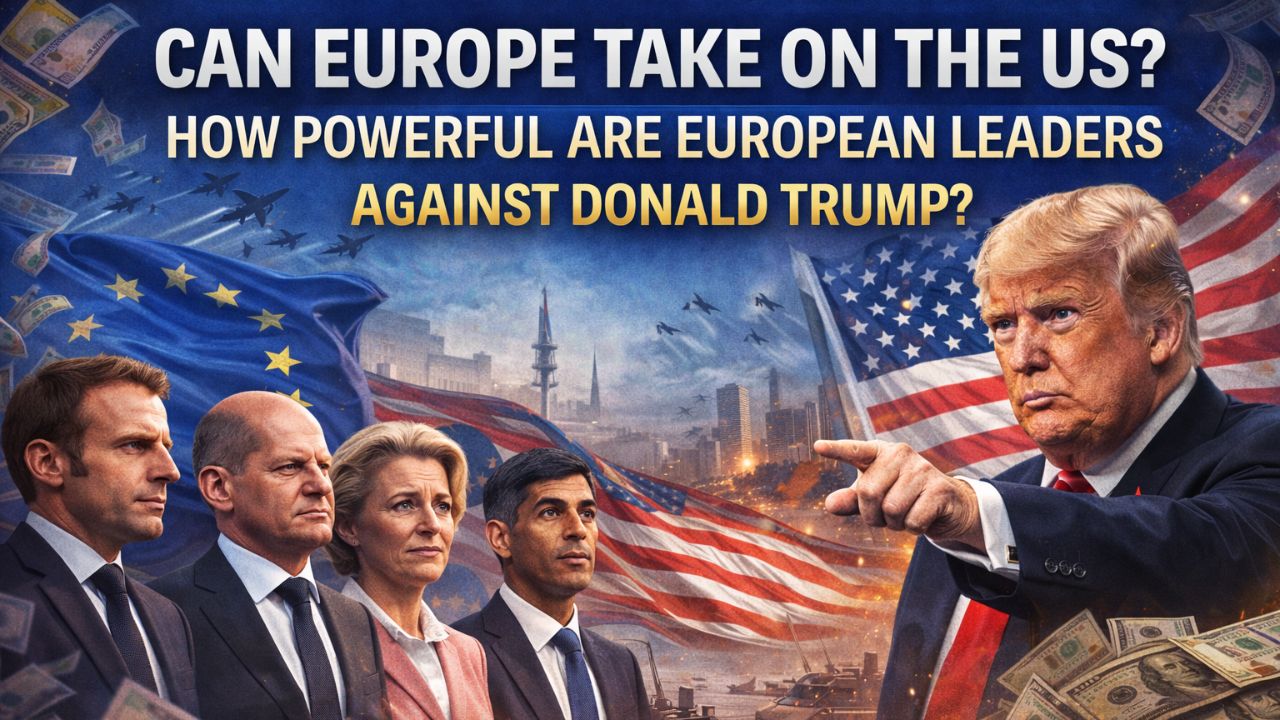
Europe vs. US: A battle of power
New Delhi: Tensions over Greenland have increased after US President Donald Trump threatened to apply economic and strategic pressure on European countries that oppose American control over the island.
Trump warned that a 10% tariff would be imposed from February 1, which could rise to 25% by June, targeting European economies. These threats have raised serious questions about whether Europe can collectively defend Greenland and how its strength compares to that of the United States.
One Image, Many Questions: Trump shares map showing Canada, Greenland and Venezuela as US territory
The European Union has 27 member countries, and 23 of them are also members of NATO, which gives Europe access to a collective defence system. However, when it comes to military spending and capability, there is a clear gap. The United States alone contributes about 42% of NATO’s total defence budget, making it the dominant military power within the alliance.
Although European countries together have more active military personnel than Russia, Europe lacks a single permanent and unified military command like NATO’s structure. This limits how quickly and effectively Europe can respond independently to major military threats.
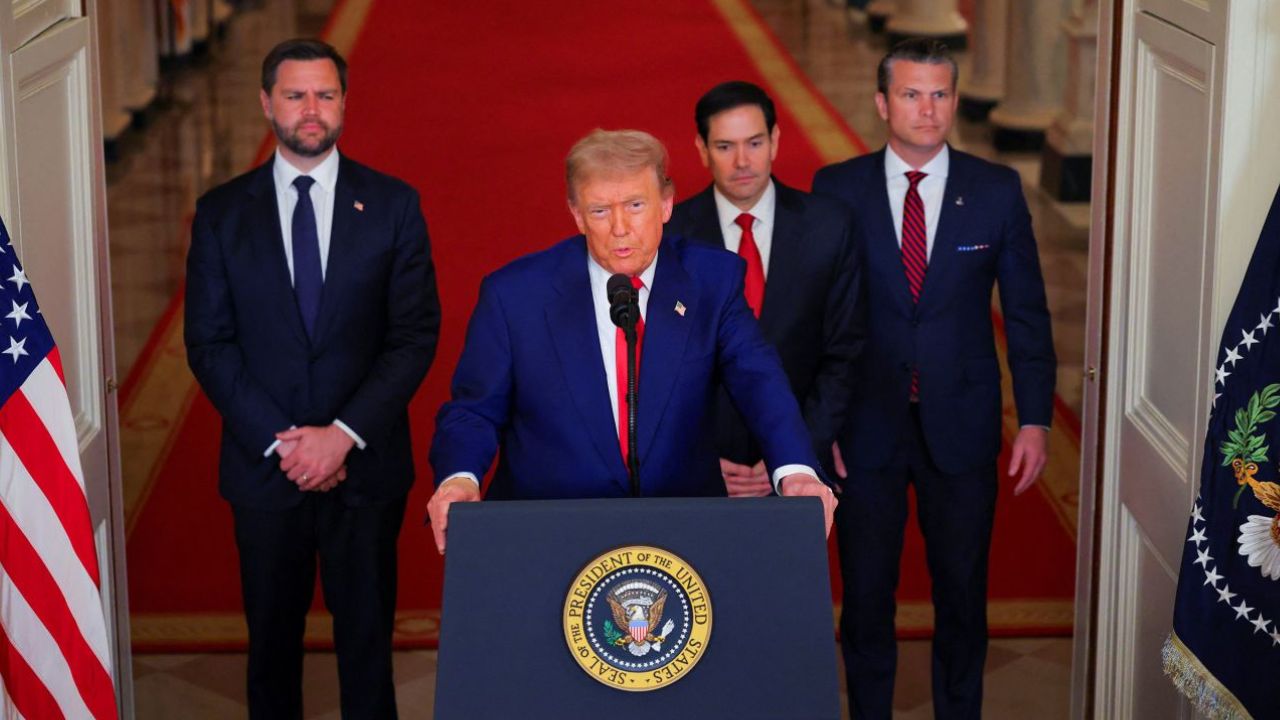
US President Donald Trump (Source: Internet)
Instead of responding with aggressive force, European nations have focused on unity and preparedness. Countries like France, Germany, Norway, and Sweden have begun deploying limited troops to Greenland. France has sent mountain warfare units, Germany has deployed reconnaissance teams, and Denmark has announced a permanent expansion of its Arctic forces. These steps signal political solidarity and readiness without provoking direct confrontation.
While Europe may lag behind the US militarily, it is economically strong and capable of responding firmly. The European Union is preparing counter-tariffs on American goods in response to Trump’s threats. Talks are underway to withdraw special trade benefits, including zero-duty imports of US lobster.
The EU is also considering activating its Anti-Coercion Instrument (2023). This powerful mechanism allows the bloc to impose tariffs, restrict trade, freeze investments, and penalize companies from countries that use economic pressure or blackmail.
Greenland row escalates as Trump targets eight European Nations with tariffs; Details here
Another major leverage point for Europe is regulation of American technology companies. With strict digital and competition laws already in place, the EU could impose heavy fines, operational restrictions, or even partial bans on companies such as Google, Meta, and X, increasing pressure on Washington.
Denmark has made it clear that Greenland is not for sale, and its future will be decided only by its people. Europe has united politically and framed the issue as one of sovereignty, not geopolitics. If the US were to attempt a military takeover, Denmark could invoke NATO’s Article 5, which treats an attack on one member as an attack on all.


