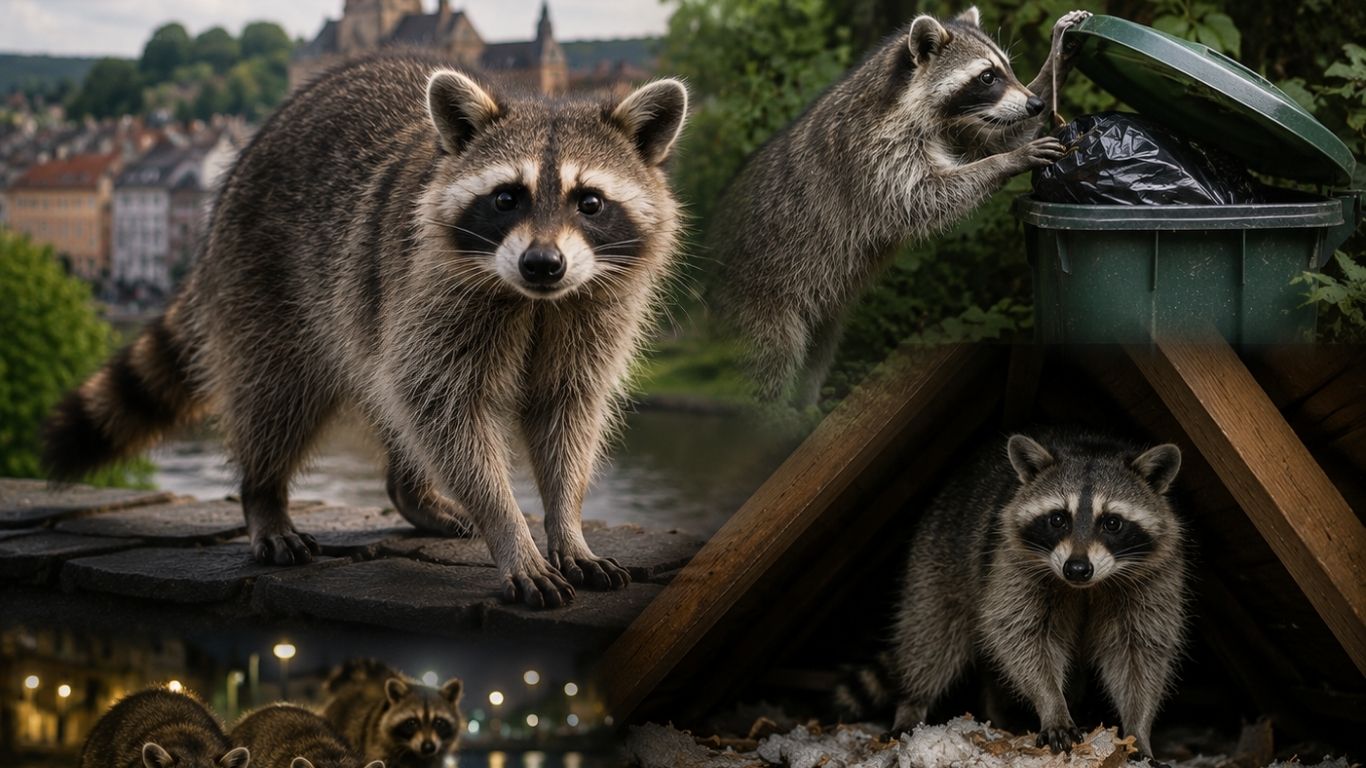
Germany raccoon population (Img AI Generated)
New Delhi: Germany’s raccoons have become one of the country’s most controversial wildlife species. Loved by some for their intelligence and charm, but disliked by others for causing damage, these animals have gained a reputation as urban “bandits” due to the dark markings around their eyes.
For years, a popular myth claimed that Nazi leader and war criminal Hermann Göring introduced raccoons into Germany. However, recent archival research and ecological studies suggest that this widely repeated story is largely inaccurate.
The origin of Germany’s raccoon population dates back to the 1930s near Kassel in central Germany. Historical records show that an application was made to release North American raccoons near Lake Edersee to “enrich the fauna” during the period when Göring was overseeing forestry and hunting.
However, researchers found no evidence that Göring personally ordered or participated in the release. According to archival investigations, the decision was an administrative matter handled by forestry officials rather than a political initiative.
In April 1934, two pairs of raccoons were released near Lake Edersee. Over the decades, their population expanded significantly, turning Kassel into what is now considered the “raccoon capital of Europe.”
Raccoons, known as “Waschbär” or “wash-bear” in German because of their habit of dipping food in water, are recognised for their intelligence, climbing ability and highly adaptable nature.
Researchers later discovered that Germany’s raccoon population did not originate only from the Lake Edersee release. DNA studies involving more than 400 raccoons found evidence of additional introductions, including populations in eastern Saxony and the Harz Mountains.
The animals have since spread across Europe, with populations reported in countries including the Netherlands, Czech Republic, Switzerland, Spain, Sweden and Greece.
Germany’s raccoon population is now estimated to be around two million, with thousands living in urban areas.
Raccoons have often been blamed for damaging homes, breaking into buildings and disturbing urban areas. Reports of raccoons entering hospitals, zoos and power facilities have added to their “troublemaker” image.
They are also known for creating communal toilet areas, which can cause problems when located near houses or buildings.
However, scientists say claims about their impact on Germany’s wildlife may be exaggerated. Wildlife ecologist Berit Michler, who led a decade-long study in Müritz National Park, said there is limited evidence that raccoons are causing major damage to native biodiversity.
Researchers argue that many negative stories about raccoons are based on assumptions rather than long-term scientific evidence.
The debate over raccoons remains intense in Germany. While some animal welfare groups believe the species should be protected, hunting organisations argue that raccoons can harm native wildlife.
Studies have shown that raccoons may eat bird eggs, amphibians and rare species such as European pond turtles. They can also carry parasites that may affect humans.
Germany’s hunting authorities have increased efforts to control raccoon numbers, with more than 250,000 animals reportedly killed annually.
Today, raccoons remain a divisive species in Germany — seen by some as clever urban survivors and by others as invasive animals requiring control.

