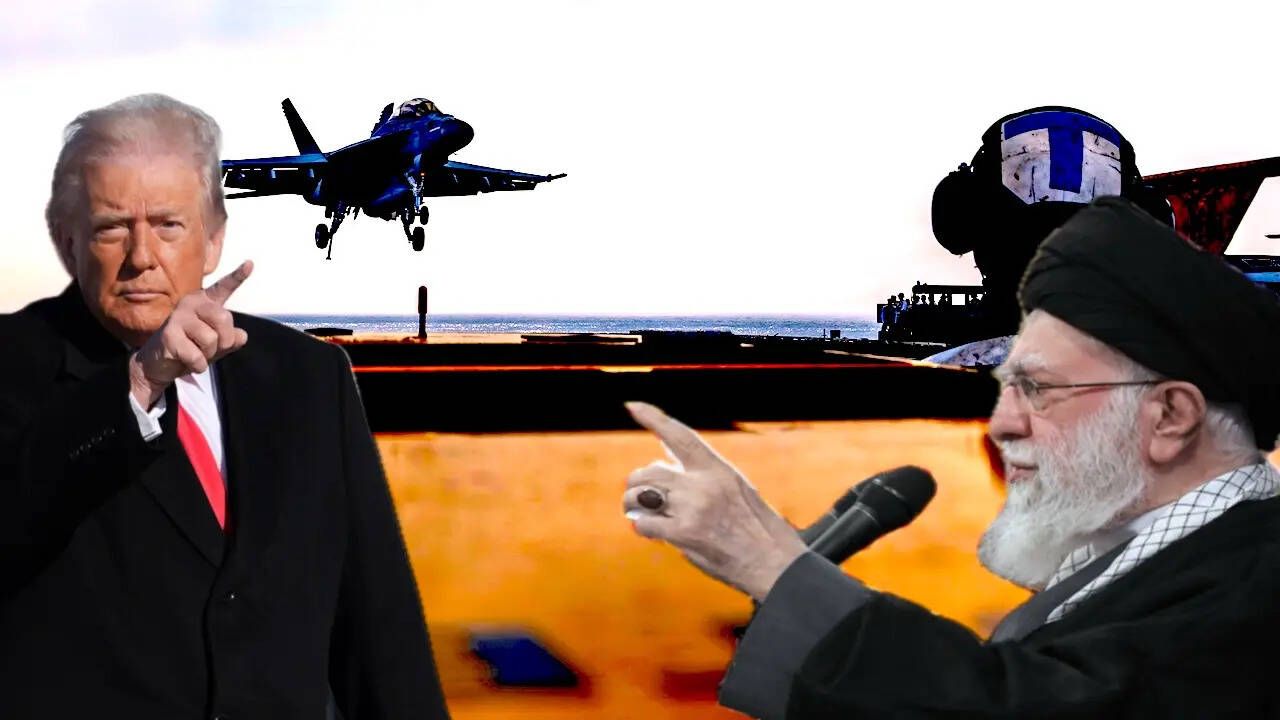
Khamenei issues stern warning to US
New Delhi: Tensions between Iran and the United States escalated sharply after Iran’s Supreme Leader Ali Khamenei issued a stark warning in response to American military deployments in the region. His remarks came after US President Donald Trump confirmed that additional American naval assets were being sent toward the Middle East.
In a televised statement shared by official Iranian channels, Khamenei dismissed US naval movements as intimidation tactics. Referring to reports of an approaching American warship, he said that while such vessels are dangerous, “more dangerous is the weapon that can send that warship to the bottom of the sea.”
Trump sends second warship to Middle East amid tensions with Iran
The statement is being widely viewed as a warning that Tehran is prepared to respond militarily if provoked. Iranian officials have accused Washington of increasing pressure through threats and force deployments while diplomatic efforts remain uncertain.
President Trump recently announced that the USS Gerald R. Ford, described as the world’s largest aircraft carrier, would be redeployed from the Caribbean to the Middle East. It is expected to join the USS Abraham Lincoln and other guided-missile destroyers already stationed in the region.
US forces have reportedly intercepted an Iranian drone near one of their vessels, further heightening tensions. Trump, however, maintained that military action could be avoided if Tehran agrees to what he called the “right deal” in ongoing negotiations.
In a parallel development, Iranian state media announced temporary restrictions in parts of the Strait of Hormuz for live-fire military drills. The strait is a critical global oil transit route, and any disruption could have far-reaching economic consequences.
Iran–US Tensions: Which Countries Have Closed Airspace Amid Fears of Attack on Tehran?
Analysts warn that even a brief closure of the waterway could shake global energy markets and deepen geopolitical instability.
The developments unfold as indirect nuclear talks continue in Geneva, with regional powers urging restraint. Gulf nations have cautioned that any military escalation could spiral into a wider conflict at a time when the Middle East remains fragile.
With warships on the move and rhetoric intensifying, the coming days are likely to test both diplomatic channels and regional stability.

