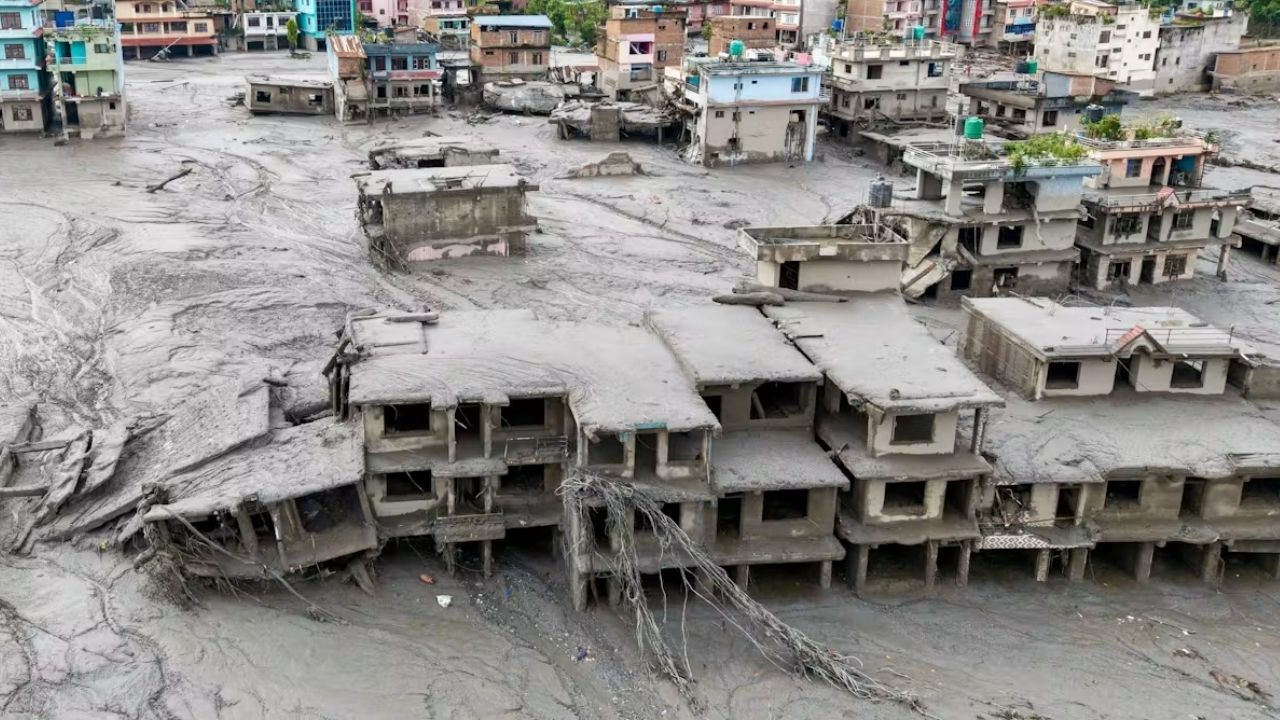
Nepal is battling one of its worst natural disasters (Img: X)
New Delhi: Nepal is battling one of its worst natural disasters after devastating flash floods triggered by an ice-rock avalanche killed at least 903 people, while thousands remain missing. Rescue operations are underway across flood-hit districts as authorities race against time to locate survivors and recover bodies.
The disaster, which struck along the Nepal-Tibet border on August 26, unleashed massive floods through the Bhotekoshi and Trishuli river corridors, sweeping away homes, roads, bridges and vital infrastructure.
Nepal authorities said hundreds of people are still unaccounted for, with rescue teams searching through debris and flooded areas. Families have gathered outside hospitals and rescue centres, hoping to find missing relatives.
Officials said the immediate priority remains rescuing trapped people, locating missing persons and providing emergency relief to survivors.
The disaster has severely affected Nepal’s hydropower sector, with more than 900 workers feared trapped inside tunnels at multiple hydropower projects.
Rescue teams from Nepal, India and other countries are working to reach workers trapped inside underground structures. Difficult terrain, rising water levels and damaged roads have slowed rescue efforts.
Authorities have issued fresh alerts after water levels in the Bhotekoshi River increased. Residents in vulnerable areas have been advised to remain cautious as officials warned of the possibility of further flash floods.
Chinese authorities also informed Nepal about increased water flow upstream, prompting fresh warnings in flood-affected regions.
India has stepped up assistance to Nepal, sending emergency supplies, forensic experts and specialised rescue teams.
According to the Ministry of External Affairs, 149 Indian nationals have been rescued, while hundreds of Indian citizens affected by the disaster remain under monitoring. India has dispatched more than 68 tonnes of relief material, including essential supplies and equipment to support rescue operations.
Nepalese scientists have suggested that the floods were triggered by a massive ice and rock avalanche in the Himalayas, rather than ordinary rainfall.
The collapse generated a powerful surge of water, mud and debris that travelled downstream, causing widespread destruction across villages and infrastructure.
As rescue teams continue operations, many families are struggling to locate their loved ones. Hospitals and morgues have been overwhelmed, with authorities facing challenges in identifying victims due to the condition of recovered bodies.
The Himalayan nation now faces a massive humanitarian challenge as rescue operations continue amid fears of more flooding.

