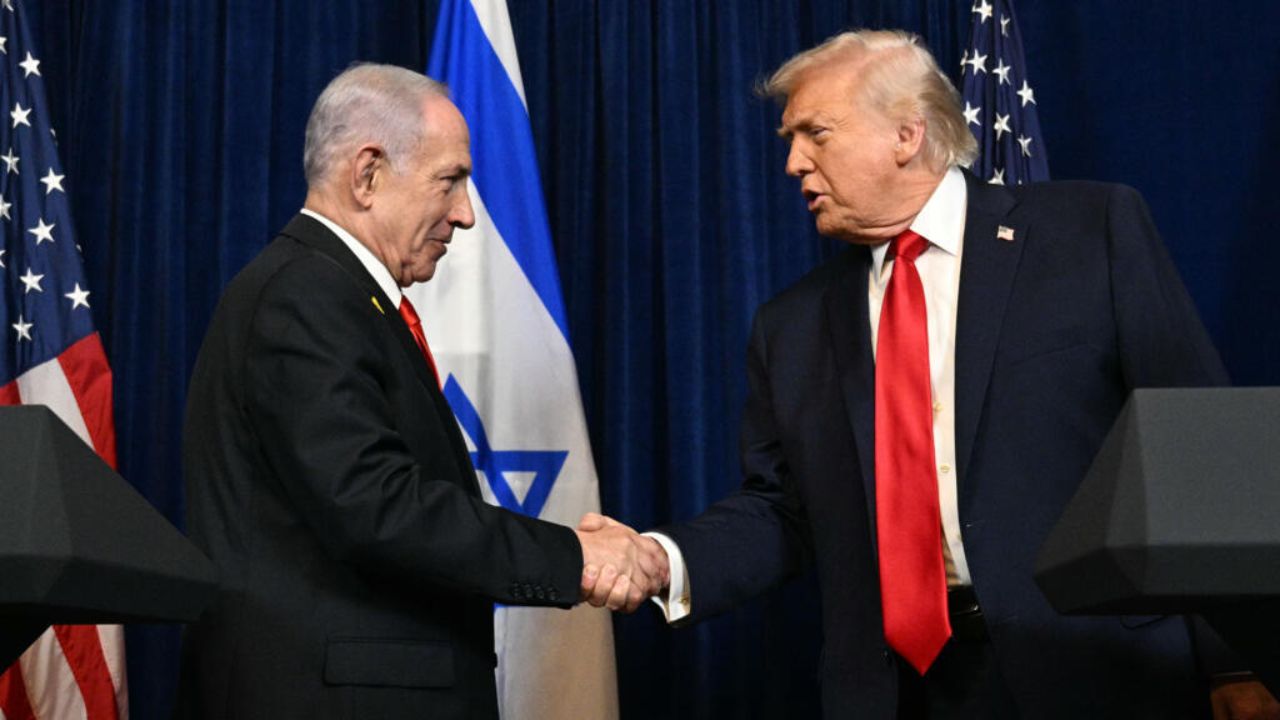
New Delhi: Amid growing speculation over a possible nuclear understanding between the United States and Iran, US President Donald Trump has brought the “Israel card” into play.
Trump has indicated that any future agreement with Iran would only be considered complete if key Arab-Muslim nations formally establish diplomatic ties with Israel under the framework of the Abraham Accords.
According to Trump, countries such as Saudi Arabia, Qatar, Pakistan, Turkey, Egypt, Jordan and Bahrain must normalize relations with Israel as part of a broader regional peace framework.
He warned that nations unwilling to recognize Israel should not become stakeholders in any future US-Iran agreement.
Trump further suggested that, if diplomacy succeeds, even Iran could eventually be included in the Abraham Accords — a move he claims could usher in an unprecedented era of peace across West Asia.
What Are the Abraham Accords?
The Abraham Accords were launched during Trump’s first presidential term as a US-backed diplomatic initiative aimed at normalizing relations between Israel and Arab-Muslim countries. Trump has repeatedly described the agreement as a “historic peace model” for the Middle East.
The accords led to landmark normalization deals between Israel and several Arab nations, reshaping regional diplomacy and opening new channels for trade, tourism, investment, technology partnerships, and security cooperation.
Now, Trump appears eager to expand the framework further by persuading influential Muslim-majority nations - especially Saudi Arabia and other regional powers - to formally join the initiative.
Why Is Participation So Important?
Analysts believe the inclusion of more Arab-Muslim countries could significantly strengthen the political legitimacy of any future US-Iran agreement.
If major regional players join the Abraham Accords, the deal could be projected as not just a nuclear arrangement, but as the foundation of a broader geopolitical realignment in West Asia.
However, the issue also carries major risks. Many Muslim nations remain cautious about openly recognizing Israel due to domestic political sensitivities and the unresolved Palestinian issue.
Any reluctance from these countries could complicate ongoing diplomatic efforts between Washington and Tehran.
How Would Israel Benefit?
For Israel, broader participation in the Abraham Accords would mark a major diplomatic victory. Recognition from countries that have historically kept their distance would significantly boost Israel’s regional standing and reduce its diplomatic isolation in the Muslim world.
It would also pave the way for deeper economic ties, intelligence-sharing, defense cooperation, and strategic regional alliances - particularly amid ongoing tensions involving Iran and regional security.
‘No Final Deal Yet,’ Says Iran
Despite the diplomatic push, Iran has indicated that no final agreement with the United States appears imminent at this stage. Iranian officials acknowledged that progress has been made on several key issues, but cautioned that major differences still remain.
The United States has also admitted that negotiations are moving forward cautiously, while emphasizing that Trump is not willing to rush into a final deal without broader regional guarantees.

