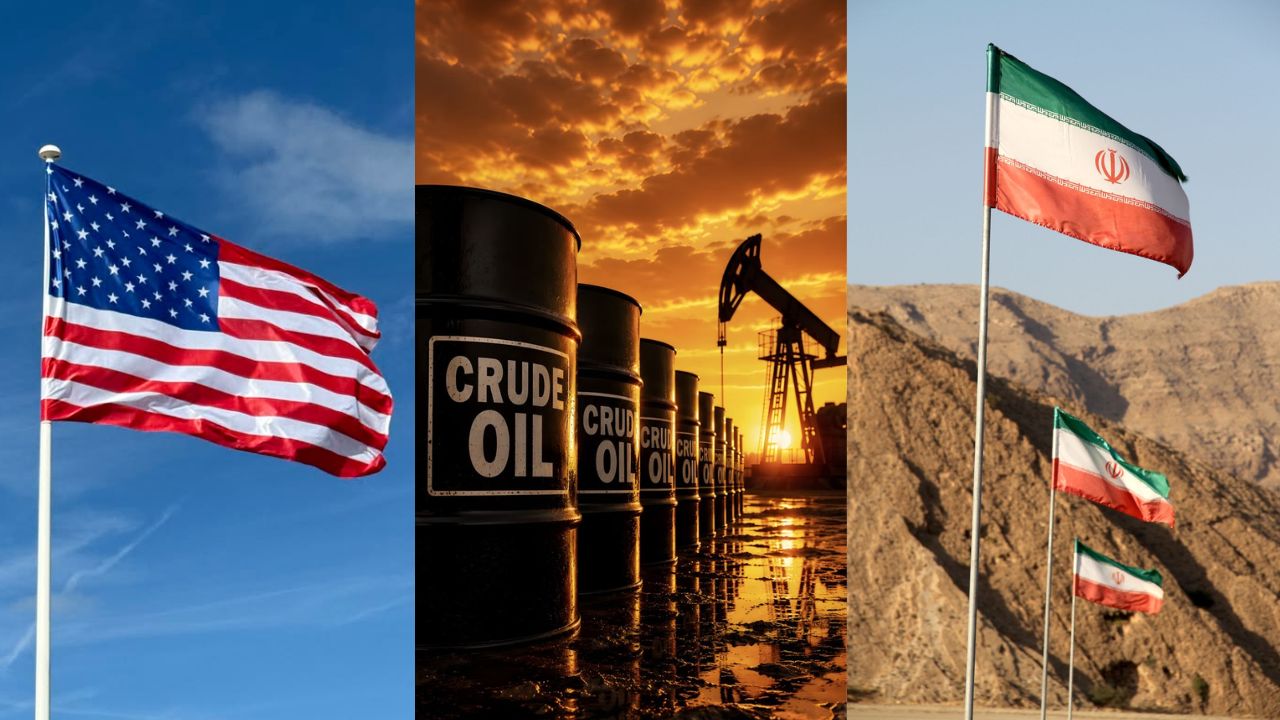
Oil prices edged higher after reports of a US strike on Iran's Qeshm Island revived concerns over Middle East supply disruptions. (Img: Pinterest)
Tehran: Global crude oil prices edged higher in early Asian trading on Tuesday after reports of a US strike on Iran’s Qeshm Island reignited concerns over a fresh escalation in the eight-month-long conflict and the possibility of prolonged disruptions to energy supplies from the Middle East. The reported military action has unsettled oil markets just as diplomatic efforts to end the conflict were beginning to generate optimism, bringing the strategic Strait of Hormuz and its vulnerable shipping lanes back into focus.
Brent crude futures climbed 48 cents, or 0.5 per cent, to USD 105.25 per barrel by 0104 GMT, while US West Texas Intermediate (WTI) crude advanced 47 cents, or 0.5 per cent, to USD 96.93. In another market update at 0355 GMT, Brent was trading at USD 104.80, up 0.03 per cent, while WTI stood at USD 96.66, gaining 0.21 per cent.
The modest recovery followed a dramatic sell-off on Monday, when Brent plunged 7.63 per cent, shedding 8.66 to settle at USD 104.77 per barrel. The steep decline reflected growing expectations that diplomatic engagement between Washington and Tehran could pave the way for a negotiated settlement and ease the threat to global energy supplies.
However, reports of renewed US military action have brought geopolitical risk back into the pricing equation, prompting traders to reassess the possibility of further disruption across one of the world's most critical energy corridors.
The Wall Street Journal reported, citing US officials, that American forces had struck targets on Iran's Qeshm Island. Some officials reportedly characterised the attacks as defensive measures intended to prevent Iranian forces from targeting commercial vessels operating in the Strait of Hormuz.
The reported strike has reinforced concerns that the conflict could enter another volatile phase, potentially threatening oil transportation infrastructure and maritime traffic across the Gulf. Qeshm Island is strategically positioned near the Strait of Hormuz, making developments in the area particularly significant for energy traders and shipping operators.
Market analysts said the latest reports had reintroduced a geopolitical risk premium into crude prices after investors had begun factoring in the possibility of a diplomatic breakthrough. However, the relatively limited price gains suggested that markets were not yet convinced that the latest developments would trigger a sustained disruption to physical oil supplies.
The distinction between headline-driven volatility and an actual supply shock remains crucial. Unless military escalation translates into damage to critical energy infrastructure, restrictions on tanker movements or a substantial reduction in crude exports, the latest developments may not be sufficient to sustain a prolonged rally in benchmark prices.
The Strait of Hormuz continues to be the biggest strategic vulnerability in the global oil supply chain. Before the conflict erupted in late February, the narrow maritime passage handled approximately one-fifth of the world's crude oil and natural gas supplies, making it indispensable to international energy trade.
The conflict has sharply reduced shipping traffic through the waterway, raising concerns over tanker availability, freight costs, insurance premiums and the reliability of crude deliveries to major importing economies.
Any further military confrontation in or around the strait could have far-reaching consequences for global energy markets, particularly for countries heavily dependent on oil and gas imports from the Middle East. Prolonged disruption could also intensify inflationary pressures by increasing transportation, manufacturing and fuel costs.
Brent crude had already reached a six-month high towards the end of October as markets anticipated the possibility of renewed military escalation in the region, particularly after the US midterm elections.
Despite the latest reports of military action, diplomatic channels between Washington and Tehran remain open. Iran indicated on Monday that contacts with the United States aimed at ending the conflict were continuing after discussions involving Qatari mediators concluded without a breakthrough.
The negotiations reportedly produced revised proposals, suggesting that both sides were still exploring possible terms for de-escalation. However, the absence of a concrete agreement has left the diplomatic process vulnerable to developments on the military front.
US President Donald Trump has also expressed uncertainty over the prospect of resuming threatened military strikes against Iran, while maintaining that a negotiated agreement with Tehran remains possible. His latest signals have added another layer of uncertainty to market expectations, with traders attempting to assess whether Washington is moving towards diplomacy or preparing for renewed military pressure.
Iranian President Masoud Pezeshkian said Supreme Leader Ayatollah Mojtaba Khamenei had granted the government certain powers to pursue peace negotiations. The development indicates that Tehran's political leadership has authorised the government to explore diplomatic options, even as tensions remain elevated.
The competing signals from both capitals have left energy markets caught between the possibility of a negotiated settlement and the risk of another round of military confrontation.
The prolonged conflict has also become an economic and political challenge for the Trump administration. Elevated crude prices have contributed to higher gasoline costs in the United States, increasing the financial burden on households and adding to voter concerns ahead of the US midterm elections.
With fuel prices emerging as a politically sensitive issue, Trump faces growing pressure to bring the conflict to an end and prevent further disruption to global energy supplies.
The sharp fall in crude prices on Monday reflected market hopes that diplomatic engagement could reduce the threat of a wider confrontation. However, the reported strike on Qeshm Island has demonstrated how quickly military developments can reverse market sentiment and unsettle investor expectations.
Separately, the United States is preparing to host delegations from Russia and Ukraine in Abu Dhabi on November 10 and 11 for discussions aimed at ending Moscow's war against Kyiv. The proposed talks are expected to focus on a possible pathway towards ending the conflict, post-war security arrangements and measures to reduce military tensions. The diplomatic initiative comes amid continuing international efforts to contain geopolitical instability across multiple regions.
For oil markets, the immediate focus remains on the evolving confrontation between the United States and Iran, the future of shipping through the Strait of Hormuz and whether ongoing diplomatic contacts can prevent another escalation. Until there is greater clarity on the security of energy transportation routes and the prospects of a durable agreement, crude prices are likely to remain sensitive to every significant military or diplomatic development in the Middle East.

