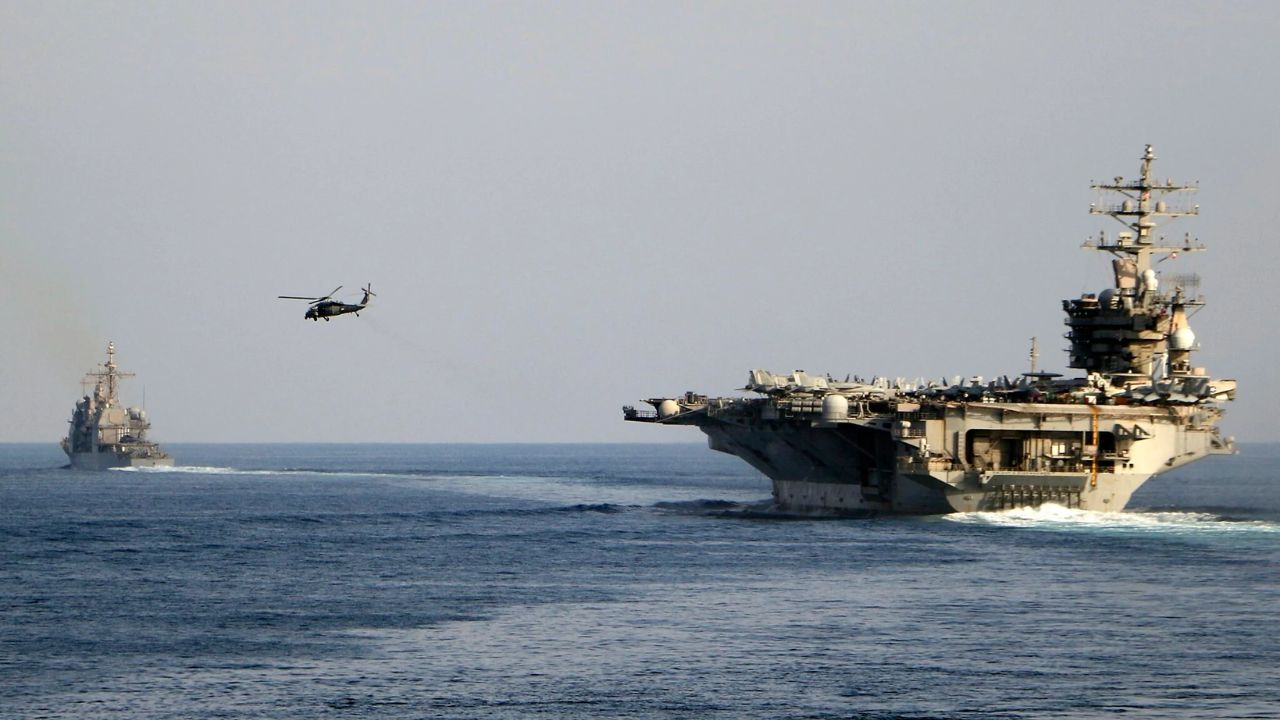
Representational Image
New Delhi: Tensions between the United States and Iran have sharply escalated in the Middle East after Washington deployed its largest naval fleet toward the region. In response, Iran has announced plans to conduct a two-day naval exercise in the strategically vital Strait of Hormuz, signaling a tough posture amid the growing standoff.
The US Central Command has warned Iran against what it described as “unsafe and unprofessional actions,” including low-altitude flights over American warships and close maneuvers by Iranian speedboats that could risk collisions at sea. US officials said such actions would not be tolerated.
Iran Open to Talks, But With Red Lines
Iranian Foreign Minister Abbas Araghchi has said Tehran remains open to fair and balanced negotiations but firmly rejected key demands previously raised by former US President Donald Trump. Araghchi made it clear that Iran’s defense policies and missile capabilities are non-negotiable and will not be part of any talks.
Iran Claims Boost in Military Strength
Iran has also asserted that its military strength has improved following a recent 12-day conflict. According to the country’s state-run media, Army Chief Amir Hatami said the confrontation allowed Iranian forces to better assess both their own capabilities and the strategies of their adversaries.
He claimed that Iran’s missile systems, air defense network, and overall military readiness are now stronger than before, describing the experience as crucial in preparing for any future threats.
Why the Strait of Hormuz Matters
The upcoming naval drills are expected to focus on the Strait of Hormuz, a narrow but critically important waterway linking the Persian Gulf with the Gulf of Oman. A significant share of the world’s oil and gas exports passes through this route, much of it destined for Asian markets.
Although the strait lies within the territorial waters of Iran and Oman, it is recognized as an international shipping passage. The US Energy Information Administration has noted that there is no viable alternative route for most of the energy supplies that transit this corridor. Any disruption here can have immediate global economic consequences.
Iran Issues Strong Warning
Ali Shamkhani, a senior security official and advisor to Iran’s Supreme Leader, warned that any hostile move against Iran would be met with a powerful and deterrent response.
He stressed that Iran’s response would not be confined to maritime operations alone and could involve broader military options. Shamkhani also downplayed the increased US military presence in the region, saying it does not give Washington an upper hand. “This is our region,” he said, adding that Iran understands its geography and strategic advantages better than any outside power.

