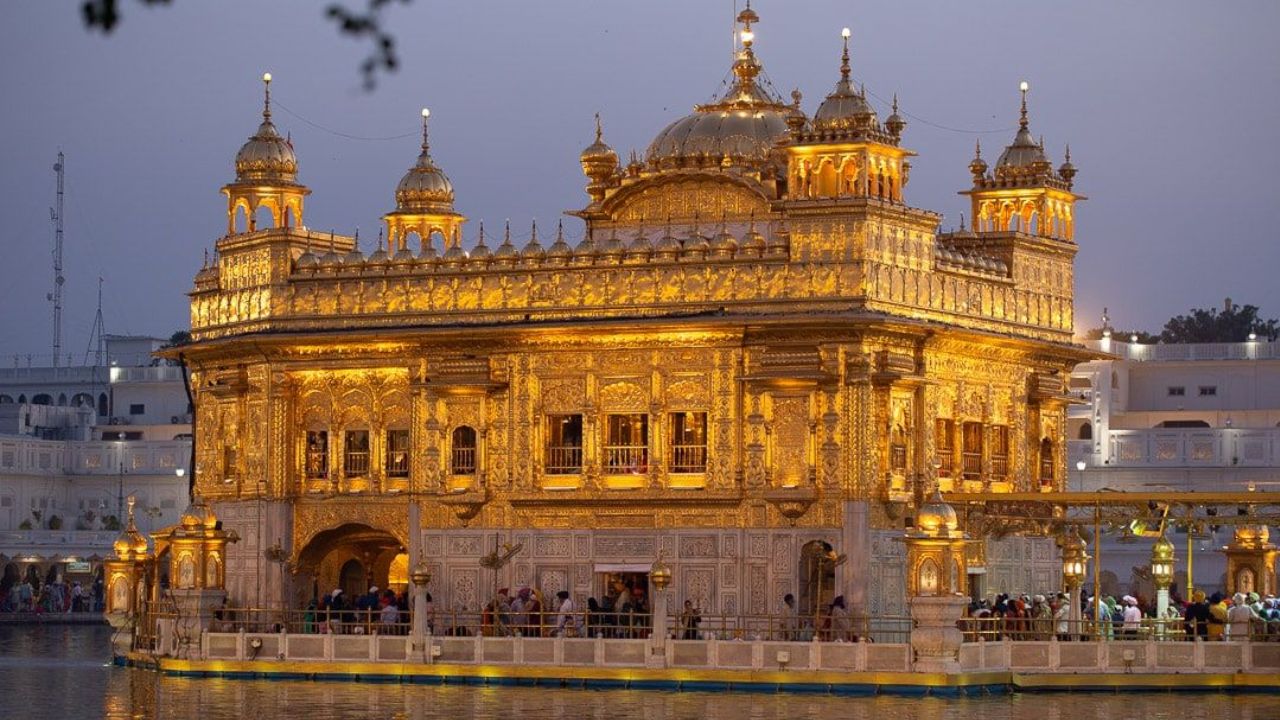
Golden Temple, Amritsar (Img-pinterast)
Amritsar: All 78 Sikh members of Punjab's 117 -seat assembly- including Chief Minister Bhagwant Mann, his Sikh cabinet colleagues and Speaker Kultar Singh Sandhwan--appeared before Akal Takht, the supreme temporal seat of Sikhism, in Amritsar on Monday over a law they passed two months ago.
By the end of the sitting, the legislators present had agreed to re-amend the legislation in line with Sikh sentiments, after Akal Takht gave the Punjab government one month to act on a formal list of objections. Jatedhar Gargajj handed the assembled legislators a formal list of objections. All the MLAs present agreed to re-amend the act in line with sikh sentiments.
The latest dispute concerns Jaagat Jot Sri Guru Granth Sahib Satkar (Amendment) Act 2026, which governs protection of the Guru Granth sahib, Sikhism's holiest scripture.
The Akal Takht is not a government body but the highest temporal authority in Sikhism, seated inside the Golden temple
complex in Amritsar. It is headed by a Jathedar-- currently the acting Jathedar is Giani Kuldeep Singh Gargajj-- who along with four other senior clergy known as the Panj Singh Sahiban, can summon any Sikh and issue binding religious directives. A Sikh who defies such a directive can be declared "Tankhaiya"
(guilty of religious transgression).
The Akal Takht has also been examining a video, which surfaced in January, that allegedly shows CM Mann making disrespectful remarks about Sikh tenets. Mann has said the video is AI-generated and fake, and has separately argued that the person in footage was wearing a mask impersonating him.
The Akal Takth said forensic reports it commissioned found the video genuine, and on June 15-- the same day it summoned all Sikh legislators over the sacrilege law-- it declared Mann "Guru Dhoki" and Khalsa Panth Virodhi directing the Sikh community not to associate with him.

