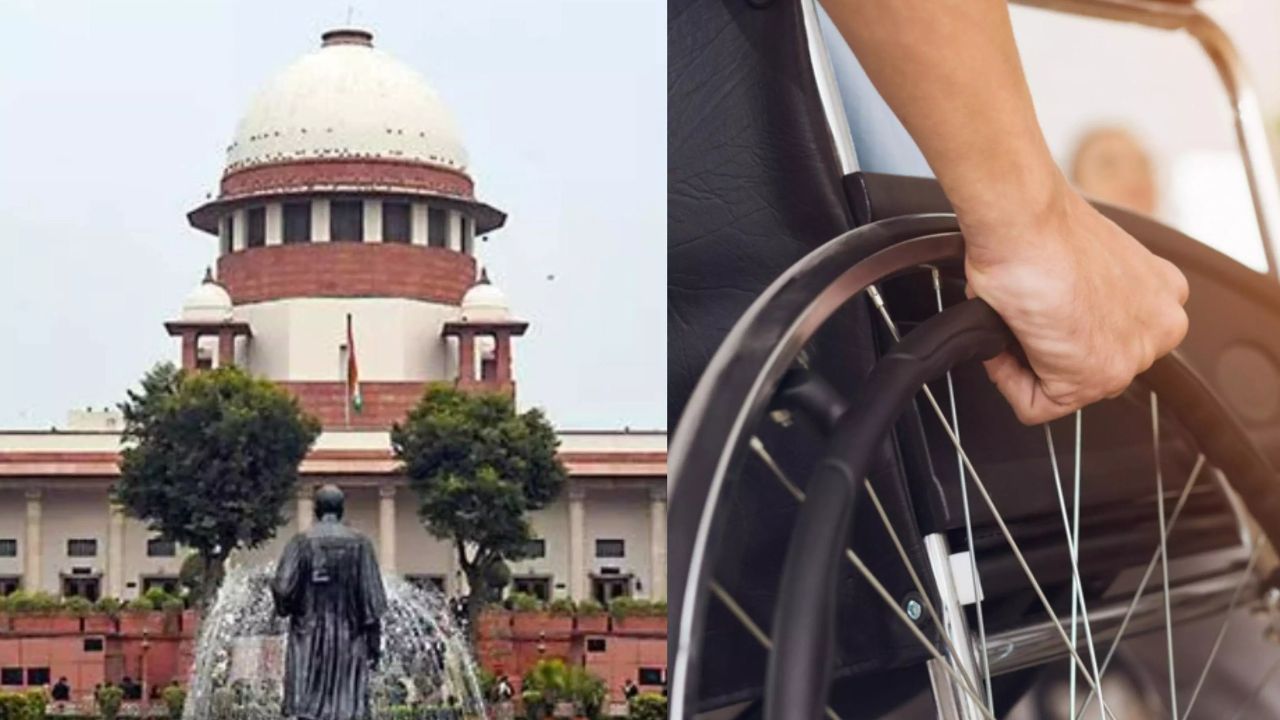
Supreme Court Advocates For Specially Modified Cabs For Persons with Disabilities
New Delhi: The Supreme Court of India has underscored the urgent need to make cab services more accessible for persons with disabilities (PwDs), particularly those who rely on wheelchairs and assistive devices for mobility.
Hearing a Public Interest Litigation (PIL), the court raised concerns about the lack of inclusive transport solutions, especially in urban areas where app-based cabs have become a primary mode of travel.
‘Cannot remain male-only’: Supreme Court grants permanent commission rights to women in armed forces
During the hearing, the bench questioned how wheelchair users manage their mobility when cabs fail to accommodate assistive devices. It pointed out that many individuals depend on wheelchairs to reach main roads or transit points, but face practical difficulties when drivers are unable to carry these devices.
The court observed that without proper arrangements, such commuters are effectively excluded from accessing essential services and public transport networks.
The bench, comprising Justices Vikram Nath and Sandeep Mehta, suggested the introduction of specially modified cabs or additional carriers to accommodate wheelchairs.
It noted that existing vehicle designs, particularly those fitted with CNG cylinders, often leave no space for storing wheelchairs, creating a major barrier for PwDs. The court emphasised the need for practical and scalable solutions to address these issues.
The PIL seeks to improve “first” and “last” mile connectivity for persons with disabilities, enabling them to travel seamlessly from their homes to public transport hubs such as bus stops and railway stations.
Petitioners argued that while accessibility norms exist, their implementation remains weak. They also stressed that cab services today function as an extension of public transport and must follow inclusive design principles.
The court has sought assistance from Additional Solicitor General Aishwarya Bhati and adjourned the matter for further hearing.
Government counsel informed the bench that the issue is under consideration by a committee formed in an earlier case, though details about its composition were not immediately available.
The case highlights the broader need for accessible infrastructure and transport systems. The court reiterated that meaningful inclusion requires both policy action and on-ground implementation to ensure equal mobility for all citizens.

