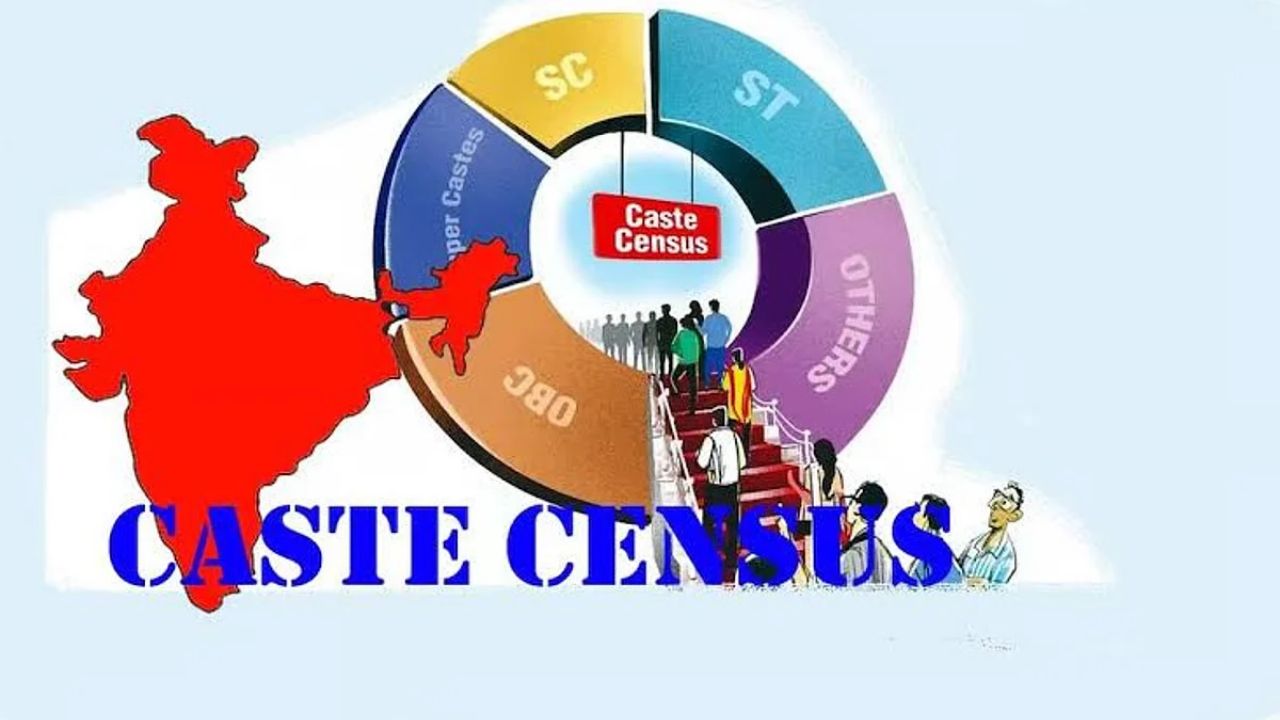
India’s Caste Census Returns (Img: X)
New Delhi: Population Census 2027 will enter its second phase from today, with self-enumeration beginning in Ladakh and snow-bound regions of Jammu & Kashmir, Himachal Pradesh and Uttarakhand. The exercise marks a historic moment as caste has been included in the population enumeration process for the first time in independent India.
The Centre has notified 40 questions that households will be asked during the population enumeration. Caste has been included as the 10th question in the questionnaire, bringing back a category that was last comprehensively counted during the 1931 Census under British rule.
The inclusion of caste data in Census 2027 comes nearly a century after the last caste-based enumeration conducted in 1931. The Cabinet Committee on Political Affairs approved the inclusion of comprehensive caste enumeration on April 30, 2025.
The move followed growing political demands from various parties and sections of society for a nationwide caste count. During the run-up to the Bihar Assembly elections, caste census became one of the key issues raised by the Opposition.
A state-run caste survey conducted in Bihar found that backward communities accounted for nearly two-thirds of the state’s population. The findings intensified demands for a nationwide caste census and increased pressure on the Centre to include caste details in the national population count.
The upcoming Census is expected to provide detailed social data that could influence discussions around welfare policies, reservations and representation.
While the decision to include caste enumeration is historic, officials face a difficult task in collecting and classifying the data. India has thousands of caste groups, with estimates suggesting that more than 4,000 castes exist across the country.
Historical records highlight the scale of the challenge. The 1901 Census during British rule identified around 1,646 castes, while the 1931 Census recorded 4,147 castes.
These figures show why caste identification cannot be treated as a simple counting exercise.
One of the biggest challenges for Census officials will be ensuring accurate classification of caste identities. The same surname may represent different castes in different regions, while members of the same caste may use different surnames.
In several communities, sub-castes and local identities are used differently across states and regions. This creates difficulties in creating a uniform and reliable database.
A major requirement for Census 2027 will be preparing standardised caste lists for every state to avoid duplication and ensure that communities are neither counted multiple times nor excluded.
Existing caste records from the 1931 Census, government documents from the 1980s and lists related to socially and educationally backward classes could serve as references for this exercise.
The challenge before the government is not just counting castes but ensuring that the information provided by millions of citizens is classified consistently.
The success of Census 2027 will depend on whether the exercise produces a reliable statistical database that can accurately reflect India’s social structure or becomes a massive collection of difficult-to-match caste entries.
With caste returning to the Census after nearly 100 years, the exercise is expected to become one of the most significant demographic studies in independent India.
The final outcome will depend on how effectively authorities handle the complex task of caste identification, classification and data management across a diverse country.

