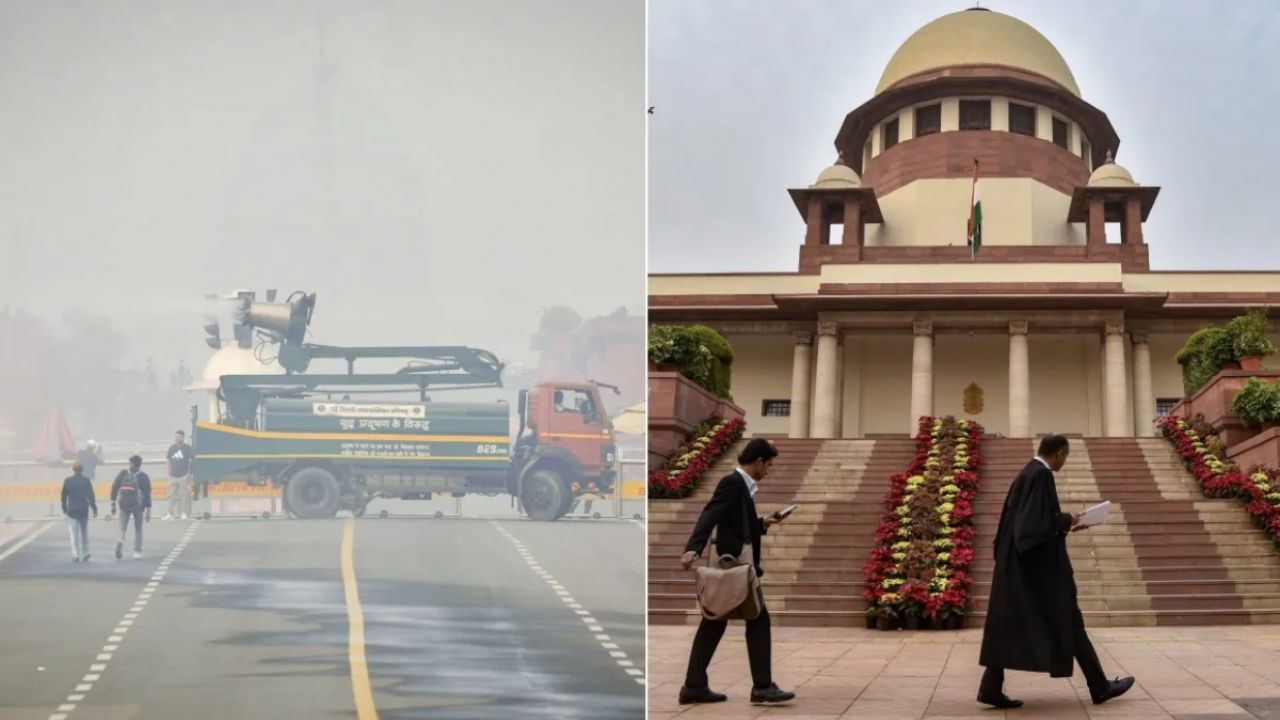
Supreme Court instructs CAQM to redo bad air plan
New Delhi: The Supreme Court on Wednesday slammed existing efforts to curb air pollution in Delhi and the National Capital Region (NCR), terming them a “total failure.” A bench led by Chief Justice of India Surya Kant, along with Justices Joymalya Bagchi and Vipul M Pancholi, directed the Commission for Air Quality Management (CAQM) to formulate a comprehensive long-term strategy.
The court emphasised that temporary measures may mitigate immediate health risks but cannot replace structural solutions.
Highlighting recurring pollution crises during winters, the court called for interventions targeting urban mobility, cleaner industrial processes, sustainable energy use, and stubble burning.
WFH, No Fuel Rule: Full list of anti-pollution curbs in Delhi from Thursday
It suggested incentivising farmers to reduce crop residue burning and explore alternative uses. Authorities were also urged to regulate construction activities better, provide alternative employment for halted workers, and increase green cover to combat air pollution.
The Supreme Court underscored the importance of public participation. It recommended strengthening citizen awareness programs and encouraging voluntary behavioural changes to complement government initiatives. Improving public transport infrastructure was also highlighted as a key area to reduce vehicular emissions.
The bench stressed that pollution control cannot succeed in isolation. It directed the CAQM to coordinate efforts across Delhi, Uttar Pradesh, Haryana, and Rajasthan. It also suggested considering a unified regulatory and administrative body for Delhi-NCR to ensure accountability and streamline measures across state boundaries.
Supreme Court halts fines on 10-year-old BS4 diesel vehicles in Delhi
Addressing the impact of construction bans under the Graded Response Action Plan (GRAP), the court emphasised that welfare measures for affected workers must be meaningful, not merely symbolic. States were asked to develop policies providing alternative work during prolonged construction halts, ensuring that benefits genuinely reach marginalised workers.
The Supreme Court, monitoring Delhi’s air quality since 1985, indicated continued vigilance. It will review CAQM’s progress at least twice a month, with the next hearing scheduled for January 6, 2026, when the commission is expected to present its revised long-term roadmap.

