 English
 English

Mundka Records Worst Air Quality at 381
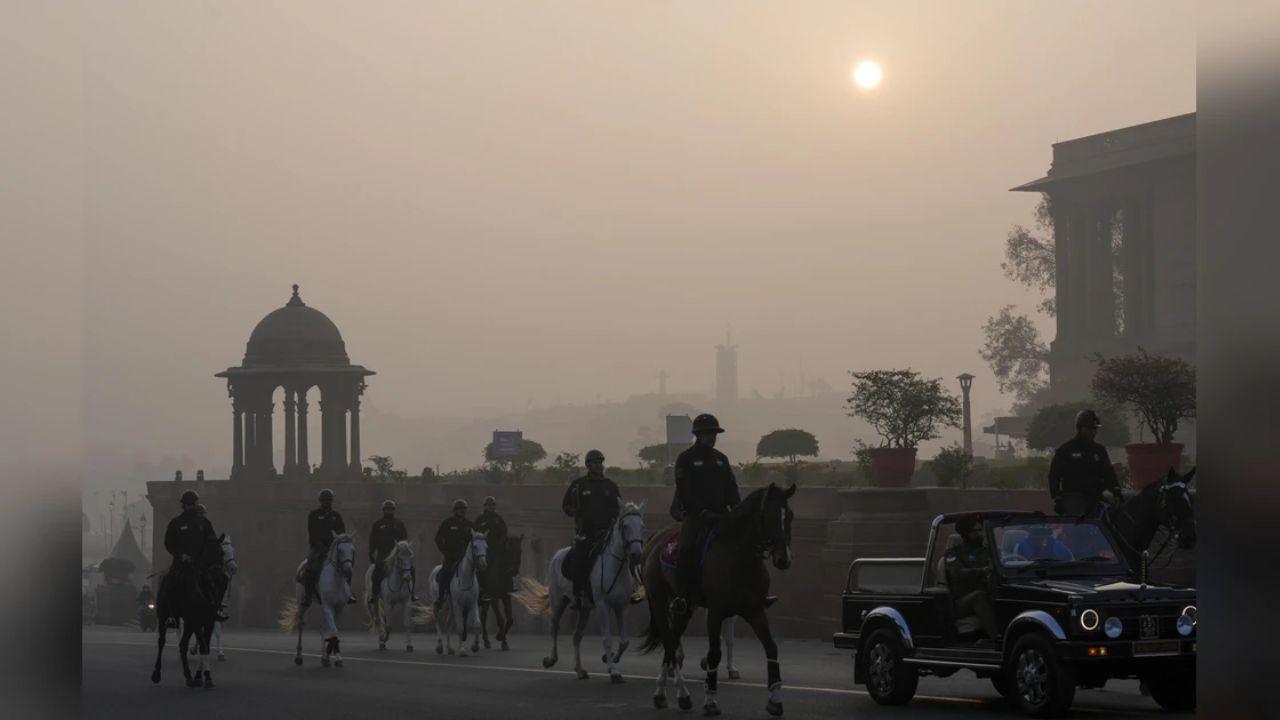
New Delhi: Delhi's air quality once again reached a critical level on Saturday. The capital's average Air Quality Index (AQI) was recorded at 333, falling into the ‘very poor’ category. The cold, humidity, and weak wind speed have further aggravated the pollution. The minimum temperature also dropped to 5.6 degrees Celsius, the coldest so far this season.
Of the 39 monitoring stations in Delhi, 35 recorded ‘very poor’ air quality, while the remaining four recorded AQI in the ‘poor’ category. The situation was most dire in Mundka, where the AQI level reached 381. Other areas such as RK Puram, Punjabi Bagh, Chandni Chowk, Rohini, Bawana, and Anand Vihar also recorded dangerously poor air quality. Meanwhile, areas like NSIT Dwarka, Mandir Marg, and IGI Airport recorded air quality in the ‘poor’ category.
Delhi-NCR chokes under ‘Toxic’ air as AQI soars to hazardous levels; Making breathing difficult
According to CPCB standards, an AQI between 301 and 400 is classified as ‘very poor’. This category of air pollution poses a serious threat to people suffering from respiratory, heart, and lung diseases. The continuously rising pollution levels in Delhi have alarmed both health experts and the administration, as the air quality consistently remains below safe standards.
According to data released by Delhi's Decision Support System (DSS), vehicular emissions are currently the largest local source of PM2.5, contributing 15.3 percent. Industrial activities contribute 7.6 percent, domestic sources 3.7 percent, construction dust 2.1 percent, and waste burning 1.3 percent. In the NCR regions, Jhajjar contributed 14.3 percent of external pollution to Delhi, further worsening the air quality.
This week, Delhi's AQI started at 279 and reached 372 on Tuesday. Although there was a slight improvement on some days, the overall air quality in the capital remained in the 'very poor' category. According to Mohammad Rafiuddin, Program Lead at CEEW, local sources have contributed more to the pollution after the reduction in stubble burning.
Delhi AQI crosses 400 again, fears of more next week; Why is this?
GRAP Stage-II has been implemented in Delhi to control pollution. Under this, measures such as dust control at construction sites, restrictions on the entry of vehicles below BS-IV standards, and staggered timings in offices have been implemented. Authorities have appealed to people to increase the use of public transport and wear masks when going outdoors to protect themselves from the ill effects of pollution.