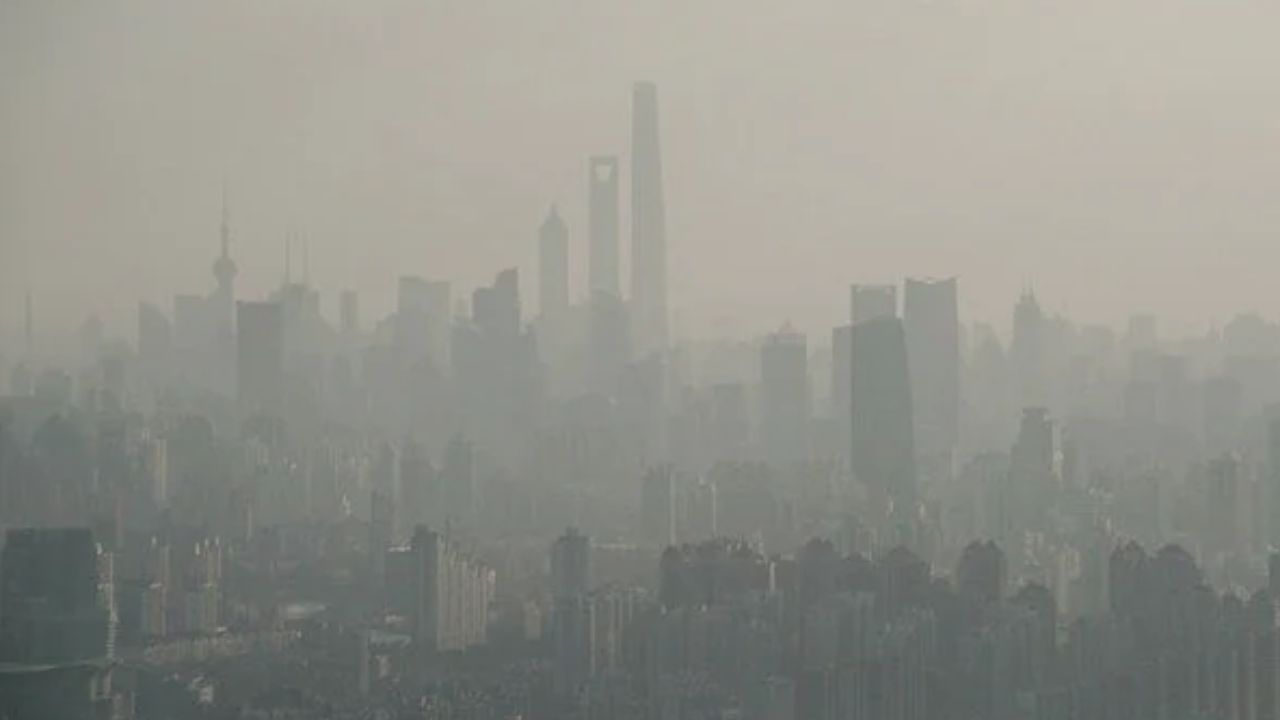
Authorities have imposed a temporary construction and demolition ban across Delhi-NCR to curb rising air pollution ahead of the winter smog season. (Img: Pinterest)
New Delhi: The Commission for Air Quality Management (CAQM) has announced a temporary ban on dust-producing construction and demolition work across Delhi-NCR between November 5 and 20, in an effort to curb the expected rise in pollution levels.
Union Environment Minister , Bhupender Yadav announced the measures, describing them as a preventive step to tackle deteriorating air quality during the region's most vulnerable pollution period.
The restrictions cover outdoor construction and demolition activities, including work on highways, roads, flyovers, overbridges, power transmission lines, pipelines and telecommunications infrastructure.
However, essential infrastructure projects, including metro services, railways, airports, hospitals, water supply, sanitation and defence-related works, have been exempted.
The order directs Delhi and other NCR state governments to ensure compliance throughout the region.
Alongside construction restrictions, government and private offices in Delhi, Ghaziabad, Gurugram, Faridabad, Sonipat and Gautam Buddha Nagar have been instructed to limit physical attendance to 50% of their workforce.
Also Read: Delhi Records Drop In Minimum Temperature; AQI At 95
The remaining employees are expected to work from home. Industrial establishments and essential services where remote working is impractical are exempt.
Delhi's separate winter pollution framework also provides for a 50% work-from-home arrangement from November 1.
CAQM said November typically brings unfavourable conditions due to crop-residue burning, local emissions, low wind speeds and limited atmospheric mixing. These factors contribute to a sharp deterioration in air quality.
The latest restrictions supplement Delhi's existing construction ban, which runs from November 1 to January 31, with stricter restrictions scheduled between December 10, 2026, and January 20, 2027.
Yadav also reviewed the newly developed PAVAN-I3C Integrated Command and Control Centre. The platform combines air-quality readings, weather information, satellite imagery, traffic data and compliance reports to identify pollution sources and prompt action.
The system monitors data from 111 air-quality stations, over 2,300 industries and more than 3,200 construction sites across Delhi-NCR.
Officials said the initiative aims to shift pollution management towards real-time monitoring and preventive enforcement.

