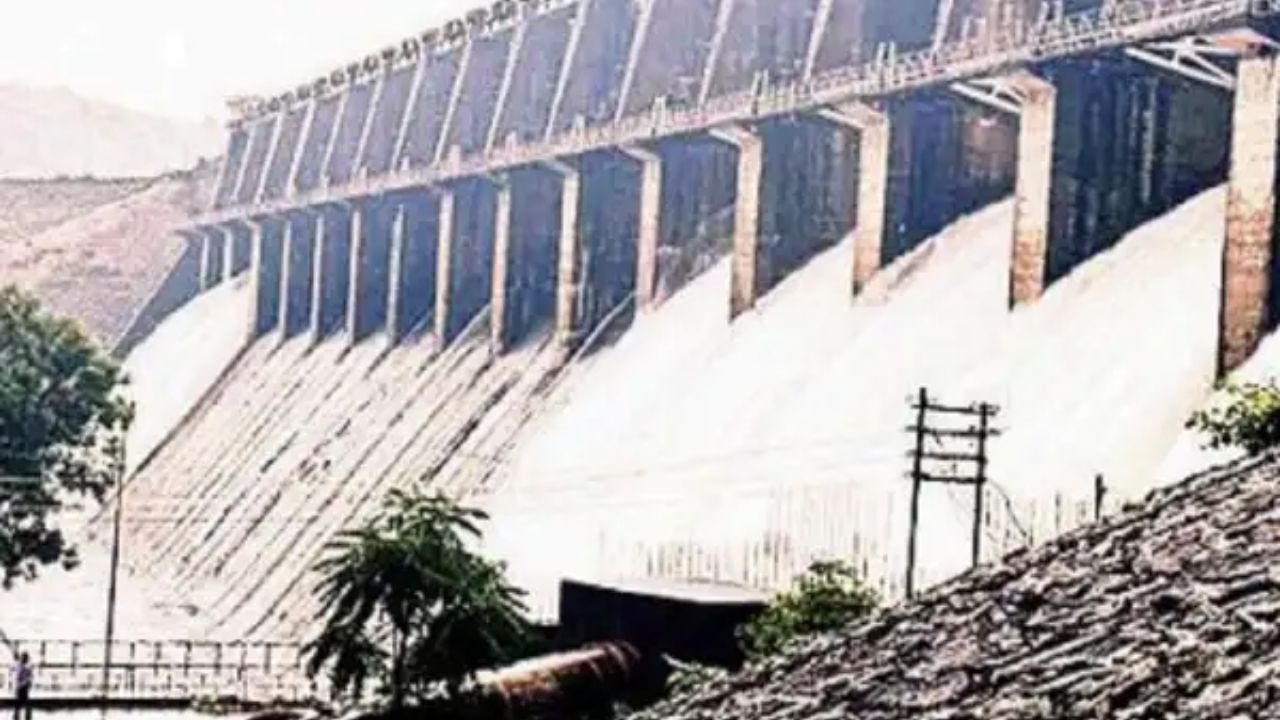
India will now restrict Ravi waters to Pakistan
New Delhi: With Pakistan already facing the impact of the suspension of the Indus Waters Treaty, India is now set to further tighten its water management strategy by regulating excess flow from the Ravi River. This may be effected by March with the completion of the Shahpur Kandi barrage.
For the last many years, excess water from the Ravi river has often flowed into Pakistan because of insufficient storage facilities in our country. But from April this situation may change.
Talking to reporters, J&K Minister Javed Ahmed Rana said the move was aimed at providing irrigation to the drought-prone Kathua and Samba districts. "Excess water to Pakistan will be stopped. It has to be stopped," Rana said.
To a question about the impact it would have on Pakistan, Rana shot back, "Why are you bothered about Pakistan? They are a marginal presence. Let them stew in the problems of their own making."
Indus Waters Treaty Put in Abeyance After Pahalgam Attack
On April 23, 2025-just a day after 26 civilians were killed in Pahalgam in a terror attack linked to Pakistan-India formally placed the Indus Waters Treaty (IWT) in abeyance. For the first time since its signing in 1960, New Delhi explicitly tied water cooperation to Pakistan’s alleged continued use of terrorism as an instrument of state policy.
The decision came alongside Operation Sindoor, signalling a decisive shift in India’s Pakistan policy: cooperation cannot continue in the face of hostility.
Pakistan’s dependence on the Indus river system is immense, with nearly 80-90% of its agriculture reliant on these waters. Moreover, Islamabad’s water storage capacity is limited-barely sufficient to hold about a month’s flow-making uninterrupted river access crucial for its economy.
Under the treaty framework, Pakistan had rights over the western rivers-Indus, Jhelum, and Chenab-while India retained control over the eastern rivers-Ravi, Beas, and Sutlej. With the treaty now in abeyance, the Centre is accelerating several hydroelectric projects in the Indus basin, including Sawalkote, Ratle, Bursar, Pakal Dul, Kwar, Kiru, and Kirthai I & II. Earlier this month, work on the Sawalkote project was fast-tracked as part of this broader strategy.
The move marks a significant recalibration of regional water diplomacy, placing strategic and security considerations at the forefront.

