English
 English
Eight years after the India-China standoff, Sikkim’s Doklam and Cho-La have opened for tourists under India’s Bharat Rannbhoomi Darshan initiative, blending battlefield history with border tourism while promoting local livelihoods and national pride.
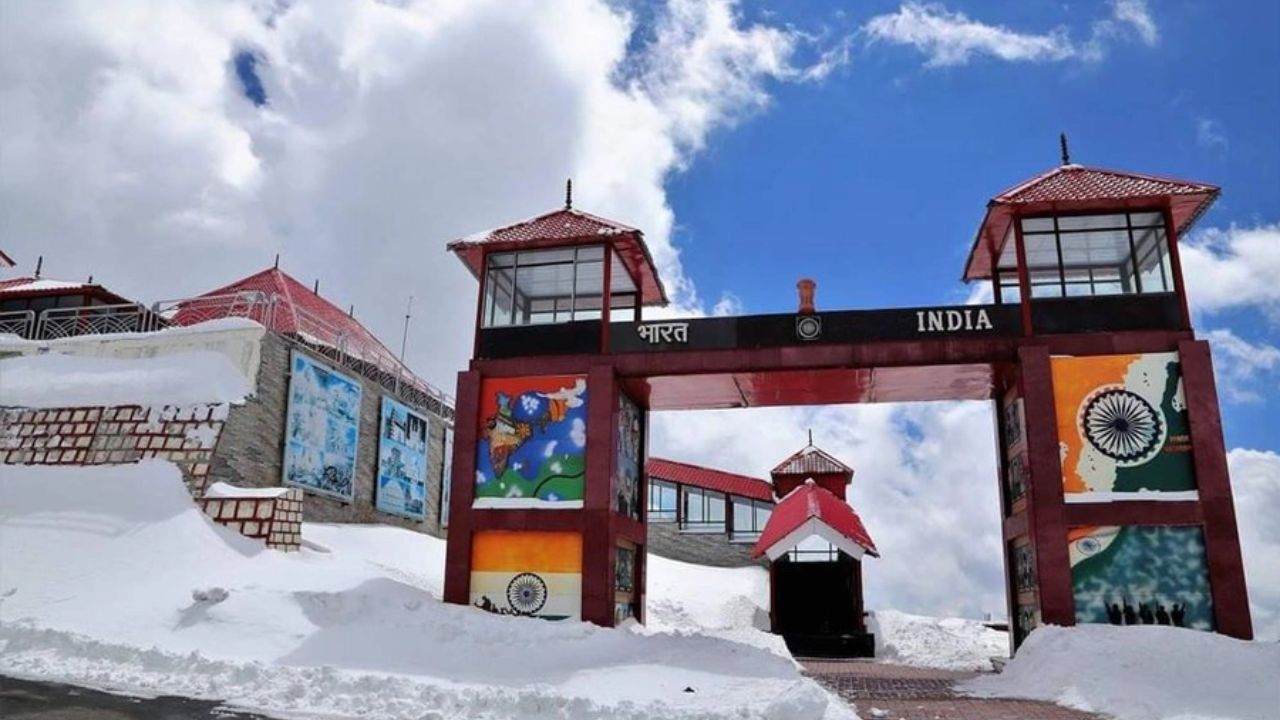
Doklam and Cho La are now open to tourists.
Gangtok: Strategic and historically significant areas like Doklam and Cho La in Sikkim have now been opened to the general public. Under the central government's Bharat Ranbhoomi Darshan (India Battlefield Tourism) scheme, these two Himalayan passes were formally opened for tourism on Monday, December 15, 2025.
Doklam is the area where a prolonged standoff between Indian and Chinese troops occurred in 2017, while Cho La witnessed the India-China conflict in 1967.
Sikkim Chief Minister Prem Singh Tamang flagged off 25 motorcycles and vehicles from the capital, Gangtok, to launch the initiative. On the occasion, he said that opening Doklam and Cho La for tourism is part of the Vibrant Villages Programme, which aims to promote tourism in border areas and create new employment opportunities for the local people.
Doklam standoff was China's strategy to separate Indians from Bhutanese: Menon
The Chief Minister stated that this initiative has been made possible through the mutual coordination of the central government, the state government, and the Indian Army.

Not Siachen, but now Doklam-Cho La becomes a tourist spot
Tourism activities here will be completely controlled and secure to ensure the protection of both security and the environment. Battlefield tourism will educate people about the valor and sacrifices of the army and the importance of protecting the country's borders, thereby strengthening patriotic feelings.
Doklam, or Dok-La, is located about 68 kilometers east of Gangtok and is situated at an altitude of approximately 13,780 feet above sea level. This area falls in the Chumbi Valley, located at the tri-junction border of Bhutan, China, and India.
In June 2017, this region became controversial when China attempted to construct a road in an area claimed by Bhutan. India intervened, keeping in mind Bhutan's interests and its own strategic security, after which China had to stop the construction work following a standoff that lasted for more than two months.
The Cho La pass is situated at an altitude of 17,780 feet above sea level and was a major site of the Indo-China conflict in 1967. The area is accessible from Tamzey via all-wheel-drive vehicles, where an army medical facility is also located. The route passes near Changu, or Tsomgo Lake, which is a short distance from Nathu La.
According to the Sikkim Tourism Department, a total of three sites are included in the battlefield tourism scheme in the state. The Nathu La pass is already open to tourists. Cafeterias, toilets, parking, and other facilities have been developed at the other two locations with the cooperation of the army.
India, China agree on process of disengagement in Doklam
The battlefield tourism initiative will not only promote tourism but will also give new recognition to Sikkim's historical and military significance. This step will contribute to the development of border areas and will also serve as a means of bringing the country's security narrative to the general public.