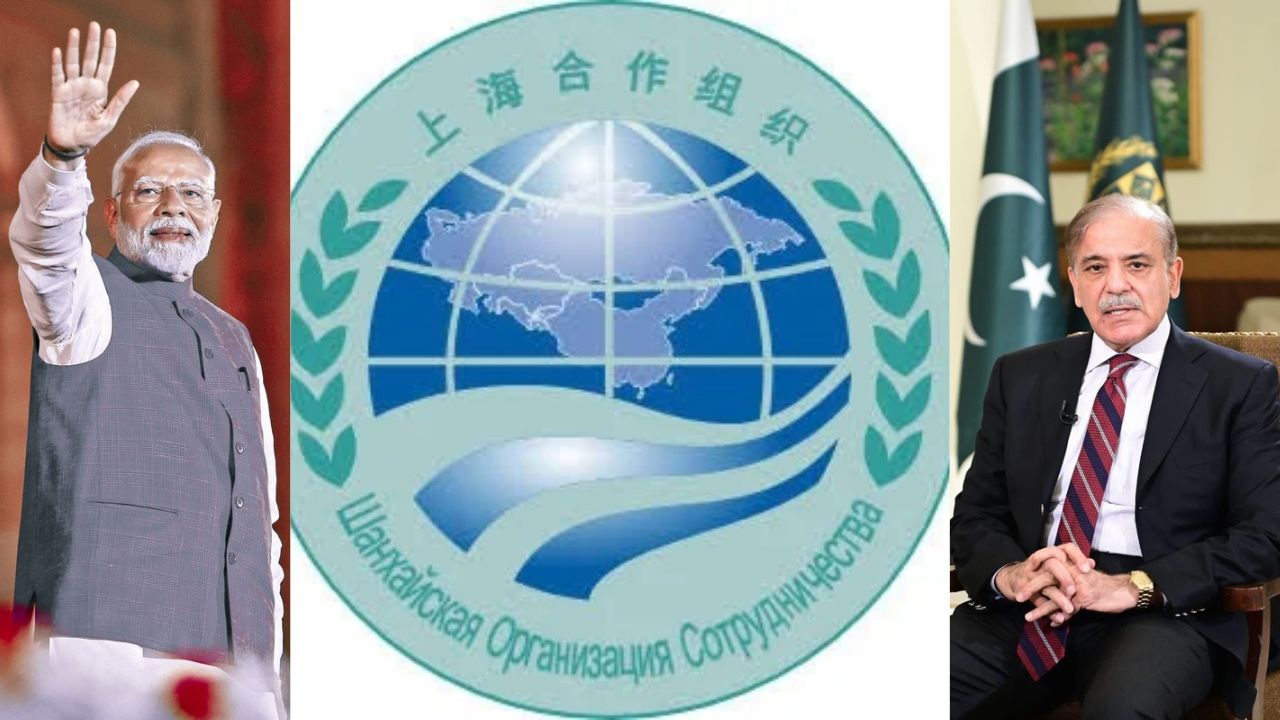
India invites all 10 SCO member states, including Pakistan, for a landmark cultural diplomacy event scheduled for November 20–22. (Img: X)
New Delhi: India has extended invitations to all 10 member countries of the Shanghai Cooperation Organisation (SCO), including Pakistan, for the grouping’s inaugural Civilisational Dialogue Forum, scheduled to take place in New Delhi from November 20 to 22. The initiative is aimed at strengthening cultural diplomacy, deepening people-to-people engagement and fostering mutual understanding among member states, even as India and Pakistan continue to face strained bilateral relations.
The proposed forum is expected to bring together cultural representatives and officials from SCO member countries, alongside participants from observer states and dialogue partner nations. According to media reports citing diplomatic sources, Pakistan’s Minister for National Heritage and Culture, Aurangzeb Khan Khichi, is among the invitees. Islamabad has yet to confirm its representation at the event.
Prime Minister Narendra Modi is expected to inaugurate the forum, which is reportedly planned at Purana Qila, the historic 16th-century fort in the national capital. The Ministry of Culture and the Ministry of External Affairs are expected to coordinate the event, combining India’s cultural outreach with its wider diplomatic engagement across Eurasia.
The initiative was proposed by Modi at the SCO leaders’ summit in Tianjin in 2025 and was subsequently adopted by the organisation. By hosting the first edition, India seeks to place civilisational heritage, cultural exchange and shared historical connections at the centre of regional cooperation.
The invitation follows Defence Minister Rajnath Singh’s announcement on October 20 that India would host the first SCO Civilisational Dialogue Forum before the end of the year. Addressing the 25th meeting of the SCO Council of Heads of Government in Dushanbe, Tajikistan, Singh highlighted India’s longstanding friendship with Tajikistan and its close historical and contemporary ties with Central Asian countries.
He also reflected on the SCO’s 25-year journey, noting the importance of assessing the organisation’s collective achievements while identifying priorities for its future. The anniversary, he indicated, offered an opportunity for member states to evaluate the effectiveness of regional cooperation and explore ways to strengthen the organisation’s institutional relevance.
Singh referred to Modi’s emphasis on practical initiatives to enhance security, connectivity and economic opportunities across the SCO region. These priorities remain central to the grouping’s broader agenda, which encompasses regional stability, trade, transport links, economic cooperation and people-to-people exchanges.
India’s proposed civilisational forum adds a cultural dimension to this agenda. By encouraging dialogue around heritage, traditions and shared historical experiences, New Delhi is seeking to complement conventional diplomatic and economic engagement with a platform for intercultural understanding.
While advocating regional cooperation, India has continued to press for an uncompromising and collective response to terrorism within multilateral forums. During his address in Dushanbe, Singh underscored the threat terrorism poses to peace, economic development and social stability.
He highlighted how terrorist violence claims innocent lives while undermining investment, disrupting commerce, encouraging radicalisation and restricting opportunities for young people. India’s position has consistently been that counterterrorism cooperation cannot be effective if member states apply selective standards or overlook the networks that sustain extremist violence.
Singh called for the dismantling of the entire ecosystem supporting terrorism, including its financing channels, logistical networks, support structures and safe havens. His remarks reinforced New Delhi’s demand for consistent action against terrorism across the region.
Pakistan’s Deputy Prime Minister and Foreign Minister Ishaq Dar was present at the Dushanbe meeting, where Singh delivered the message. The exchange underscored the parallel tracks of SCO engagement: maintaining multilateral cooperation while continuing to raise security concerns that affect India’s national interests.
India’s decision to invite Pakistan to the forum comes against the backdrop of persistent diplomatic tensions and heightened security concerns following Operation Sindoor in May 2025. The military operation followed the Pahalgam terror attack, in which 26 people were killed, and was accompanied by a sharp escalation in India-Pakistan hostilities before a ceasefire was announced.
Despite the deterioration in bilateral relations, India has continued to participate in SCO processes involving Pakistan. Officials cited in media reports have indicated that the invitation to the Civilisational Dialogue Forum is part of the multilateral initiative and should not be interpreted as a separate bilateral diplomatic overture.
Pakistan’s national heritage and culture minister, Aurangzeb Khan Khichi, has reportedly been invited. If he attends, the visit would represent a notable ministerial-level engagement between the two countries after the last Pakistani foreign ministerial participation in India at the SCO foreign ministers’ meeting in Goa in May 2023, when Bilawal Bhutto Zardari visited the country.
The final composition of Pakistan’s delegation, however, remains unconfirmed. Any assessment of the diplomatic significance of the invitation will therefore depend partly on Islamabad’s response and the level of representation it ultimately chooses.
The broader context is important: participation in a multilateral forum does not, by itself, signal a change in India’s position on cross-border terrorism or indicate a reset in bilateral relations. New Delhi’s approach combines continued engagement through regional institutions with its stated insistence on accountability and consistent counterterrorism measures.
The forum is also taking shape as Pakistan holds the rotating chairmanship of the SCO Council of Heads of State for the 2026–2027 term. Pakistan assumed the role on September 1, 2026, succeeding Kyrgyzstan following the SCO summit in Bishkek.
The chairmanship gives Islamabad a significant role in coordinating the organisation’s high-level agenda during its tenure. The next phase of SCO engagement is expected to test the member states’ ability to sustain cooperation on regional security, connectivity and economic issues despite bilateral disagreements.
India sent SCO National Coordinator Alok Dimri to Islamabad in September 2026 for a meeting ahead of Pakistan’s presidency and its planned SCO leaders’ summit in August 2027. Such participation illustrates the institutional requirements of multilateral diplomacy, where countries often continue working through shared platforms even when their bilateral relationships remain difficult.
The Shanghai Cooperation Organisation is a Eurasian multilateral grouping focused on regional security, political coordination, economic cooperation and cultural engagement. Its 10 member states are Belarus, China, India, Iran, Kazakhstan, Kyrgyzstan, Pakistan, Russia, Tajikistan and Uzbekistan.
India and Pakistan became full members in 2017. Afghanistan and Mongolia have observer status, while the organisation also maintains a network of dialogue partners. The grouping’s agenda covers counterterrorism, regional stability, transport connectivity, trade, economic development and cooperation among participating countries.
For India, the SCO provides an important platform for engagement with Central Asia, Russia, China and other Eurasian partners. The proposed Civilisational Dialogue Forum could broaden this engagement by placing culture and historical connections alongside the organisation’s established political, security and economic priorities.
As New Delhi prepares to host the inaugural gathering, attention will focus on participation from the 10 member states, Pakistan’s decision on representation and the extent to which the event can advance cultural cooperation without overshadowing the region’s unresolved security challenges.

