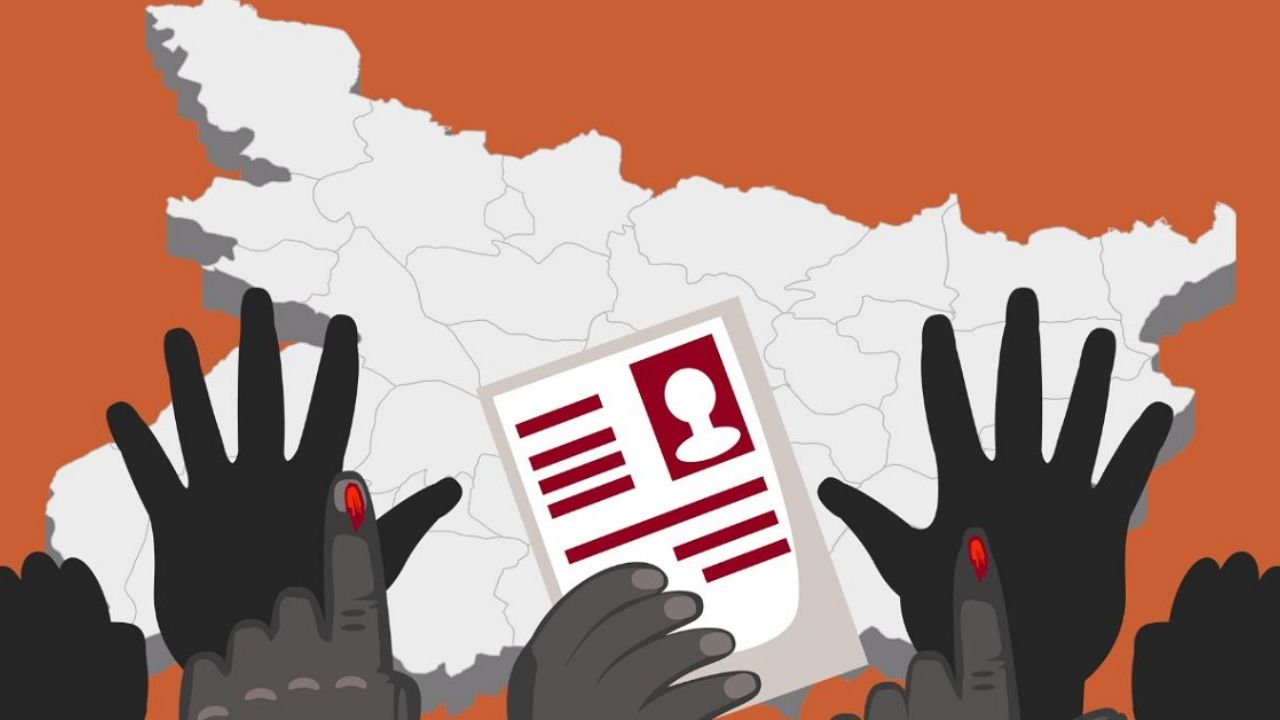
Special Intensive Revision: Ensuring Clean Electoral Rolls
New Delhi: Indian democracy has been rife with contradictions and paradoxes. While vehement opposition to executive decisions is a characteristic feature, few have divided opinion like the ongoing Special Intensive Revision (SIR) initiated by the Election Commission of India.
First carried out in Bihar, the exercise has now been further extended to 9 states and 3 UTs, including West Bengal and Tamil Nadu, which are due for polls in early 2026.
The Registration of the Electors Rules, 1960 provides for intensive revision and summary revision of rolls. In summary revision, existing rolls are published as a draft and updated with additions or deletions; whereas intensive revision involves preparation of fresh rolls from scratch.
Three to four people dying by suicide in Bengal everyday due to SIR anxiety: Mamata Banerjee
What makes it ‘special’ this time is the requirement of door-to-door verification, filling of enumeration forms, and valid documentary proof at the enumeration stage itself.
The last such intensive revision was conducted in 2003–04. In the past two decades, Indian voter demography has undergone substantial changes owing primarily to migration, rapid urbanisation, shifting of residence, deaths, and multiple and duplicate entries in rolls, etc. The Election Commission aims to ensure that no eligible citizen gets left out of the electoral roll and no ineligible person is included.
After the announcement of SIR, major concerns were raised by numerous political parties and interest groups regarding the constitutionality, legality, and timing of the exercise.
It has been alleged that the requirement of fresh enumeration forms and submission of documents is against fundamental rights and will lead to mass disenfranchisement of voters, especially the poor and marginalised sections.
However, amid the din of political slugfest, it is essential to understand that the SIR exercise is rooted in our constitutional scheme and the ECI is well within its mandate to undertake it. Article 324 of the Constitution of India vests the Election Commission with superintendence, direction, and control over the preparation of electoral rolls.
It cannot be doubted that maintaining the purity, integrity, and transparency of electoral rolls is a sine qua non of parliamentary democracy. The Representation of the People Act, 1950 specifically provides for special revision of electoral rolls from time to time.
Fears have been raised comparing SIR to a backdoor NRC and a virtual de-citizenship exercise. SIR is anything but that. Article 326 of the Constitution grants voting rights to every person who is a citizen of India and not less than eighteen years of age.
Under the Representation of the People Act, only two basic conditions govern inclusion in elector rolls — a person must be a citizen of India and should ordinarily be a resident of the constituency.
These are mandated by Sections 16 and 19 of the Act. It is clear that the ECI is vested with the powers to scrutinise the eligibility of a person regarding his right to be registered as a voter.
Though the burden of proof to meet the eligibility criteria falls on the person claiming the right to be registered in the electoral rolls, yet the proof is limited to ensuring eligibility for voter lists.
This obligation does not overlap with an assessment of a person’s citizenship under the Citizenship Act, 1955, wherein the status of an individual as a citizen of India itself is determined.
It can be safely assumed that under the SIR, the citizenship of a person will not terminate on account of the fact that they were found ineligible for registration in the electoral roll.
BLOs serve as key players at the grassroots level, tasked with the responsibility of collecting information, preparation of rolls, guiding voters, verification, and correction of lists. There have been multiple instances of BLOs committing suicides, allegedly due to excessive workload and pressure from senior officials to meet deadlines.
BLOs are not full-time election officials and are drawn from various government departments. Additional volunteers must be deployed to ease the burden on existing BLOs. The deadline for submission of forms should be extended by the ECI. BLOs should not face penal action for missing strict timelines, and relaxation must be granted.
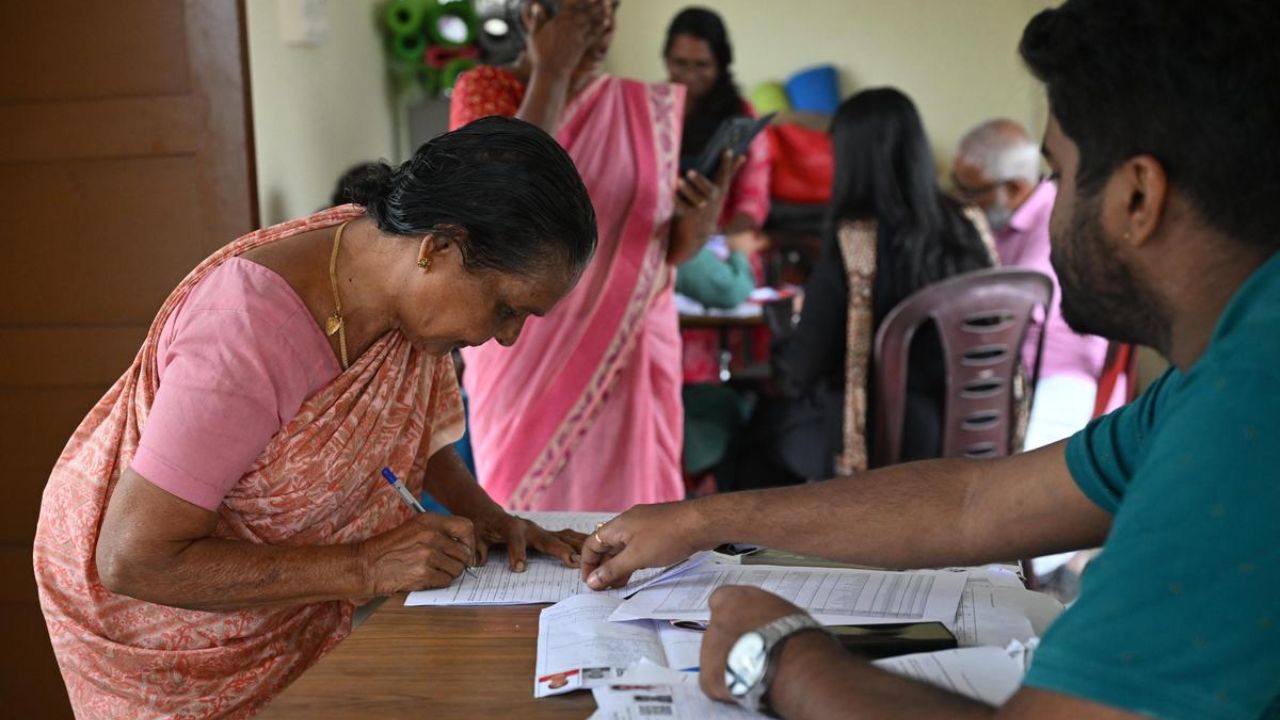
Kerala Voter Roll Revision Called ‘Harrowing’ by Congress Delegation
The ECI recently announced an increased honorarium for BLOs in West Bengal. A long-term solution may be a separate, dedicated cadre focused on booth-level responsibilities.
SIR represents a substantial pivot towards technology-driven electoral management. Enumeration forms are being made available online. Digital platforms are used for accurate house-to-house verification and online submissions for new registrations. Digitalisation of voter rolls has made the process more credible and transparent.
To enable persons who do not find their names in legacy-linked 2003 rolls, the ECI provided a list of 11 supporting documents to choose from. After the Supreme Court’s direction, Aadhaar was also accepted as an additional documentary proof.
In Bihar, after publication of the final electoral roll, the ECI gave one more opportunity to any eligible person for inclusion of their name in the electoral roll by submitting an application up to ten days before the last date for filing nominations for elections.
No deletion can take place without proper inquiry and giving a fair and reasonable opportunity of being heard. Any person not satisfied with a decision regarding non-inclusion in the final electoral roll can file a first appeal before the District Magistrate and a second appeal before the Chief Electoral Officer.
Kerala Congress delegation meets CEO; Calls SIR process ‘harrowing and vexing’ for voters
SIR is not an annual feature, and the present exercise is being conducted after a gap of more than two decades, in a phased manner. The right to vote is not an absolute right. It is subject to established constitutional and legal qualifications. The ECI is acting within its mandate to ensure the purity and unambiguity of electoral rolls.
In a vast democracy like ours, glitches are bound to occur. The electoral machinery is on a steady path of evolution and evaluation. SIR 2025–26 is the oiling that it needs.


