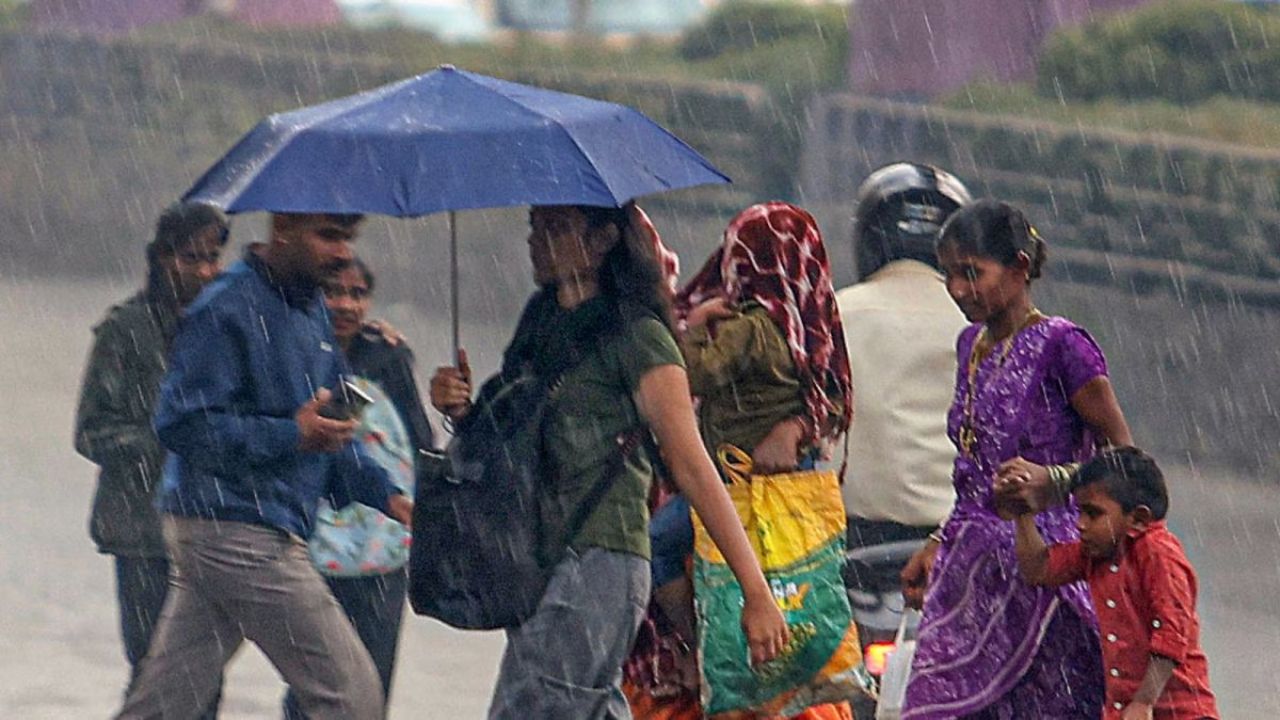
Mini Monsoon in March Disrupts India (Image Source: Internet)
New Delhi: Even within the month of March, the weather has taken an unexpected turn in several parts of the country. Typically, mild summer conditions begin to set in at this time; however, this year, the situation has become reminiscent of the monsoon season. Dense clouds, strong winds, rainfall, storms, and incidents of lightning strikes are being observed continuously across the skies.
According to the Meteorological Department, several factors are converging to drive this change. This unusual weather pattern is being sustained by the combined effects of Western disturbances, cyclonic circulations in the upper atmosphere, and the influence of the jet stream. This is the reason why weather conditions have deteriorated across a vast region, stretching from North India to the Northeast and South India.
The India Meteorological Department (IMD) has issued warnings for several states covering the next 24 hours. The forecast indicates a likelihood of storms, heavy rainfall, and hailstorms. Farmers, in particular, have been advised to remain vigilant, as these weather conditions pose a risk of damaging standing crops.
This unseasonal rainfall and strong winds have had the most significant impact on the agricultural sector. Winds gusting at speeds of 50–60 km/h have flattened wheat crops in numerous locations. Meanwhile, increased moisture levels in crops such as gram (chana) and lentils (masoor) have heightened the risk of grain spoilage and the shattering of pods. Consequently, farmers' anxieties have risen considerably.
In states such as Punjab, Haryana, Uttar Pradesh, and Rajasthan, the weather has undergone a complete transformation. These regions are currently experiencing a continuous spell of rain, strong winds, and thunderstorms. Some areas are also witnessing hailstorms, which could prove highly detrimental to the Rabi crops.
As a result of this shift in weather patterns, temperatures have also witnessed a decline. In Northwest India, temperatures are expected to drop by 3 to 4 degrees Celsius, causing people to experience a lingering sense of mild winter chill. However, this relief is not expected to last long, and temperatures may rise again in the coming days.
The impact of the weather has been particularly pronounced in Himachal Pradesh, Uttarakhand, Jammu & Kashmir, and Ladakh. Here, heavy rainfall is being accompanied by snowfall in the higher-altitude regions. Several highways have been blocked, and strong winds have disrupted daily life.
Overall, such a drastic shift in weather during March is unusual. While it has brought relief from the heat for some, it has simultaneously posed a challenge for farmers and the general public. It is essential to continue monitoring the situation closely in the days ahead.

