The Government of India has taken consistent and stringent action against various organizations found involved in illegal activities in accordance with the provisions of the Unlawful Activities (Prevention) Act, 1967. In the last five years, the government has declared 23 organizations as unlawful associations.
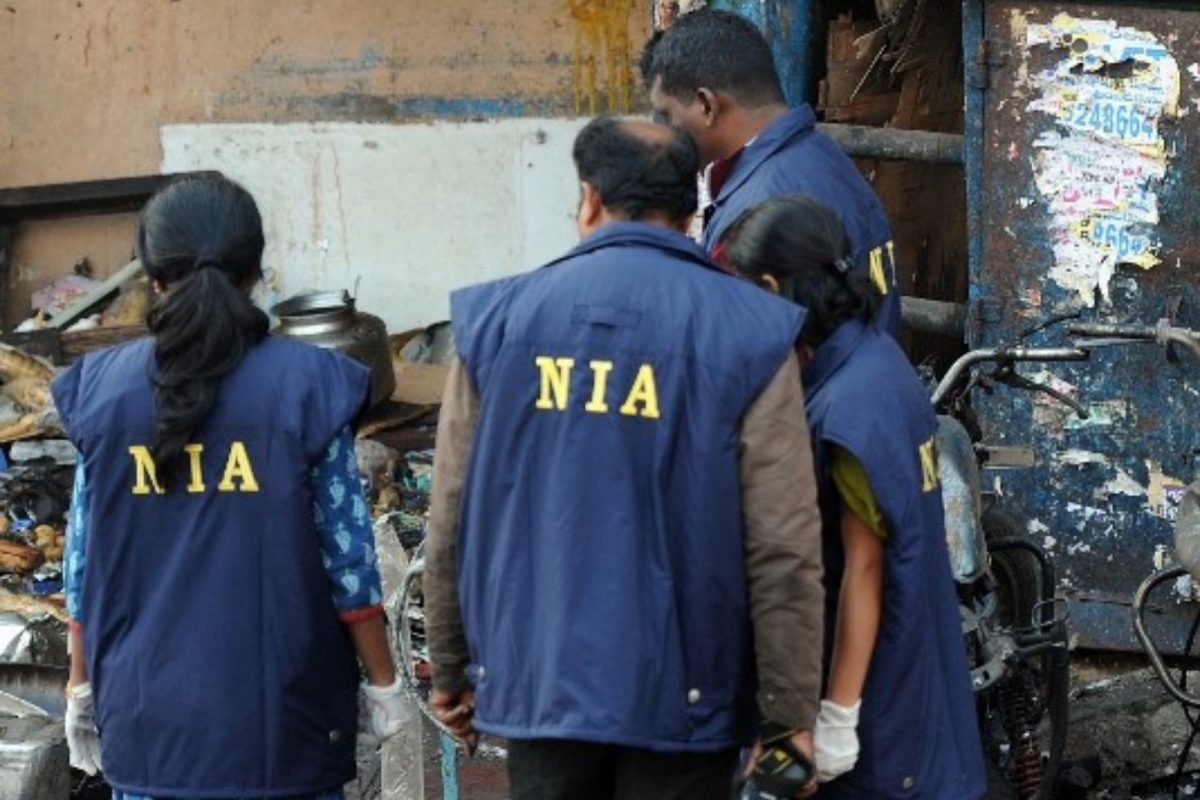
Representational Image
New Delhi: The National Investigation Agency (NIA) was established under the National Investigation Agency Act, 2008, as a central anti-terrorism law enforcement agency after the 26/11 Mumbai attacks.
Since its inception, 692 cases have been registered. The conviction rate in 172 cases has been 92.44 percent. The NIA has now emerged as a globally respected investigating agency.
The Government of India has taken consistent and stringent action against various organizations found involved in illegal activities in accordance with the provisions of the Unlawful Activities (Prevention) Act, 1967. In the last five years, the government has declared 23 organizations as unlawful associations.
The agency investigates and prosecutes crimes affecting the sovereignty, security, and integrity of India, the security of the State, friendly relations with foreign States, matters relating to international treaties, etc., as specified in the Schedule to the NIA Act, 2008.
Several steps have been taken to enhance the NIA's capabilities and make it a world-class investigating agency that efficiently discharges its responsibilities in the prevention, investigation, and prosecution of crimes affecting/threatening national security.
Through the NIA (Amendment) Act, 2019, the Government has empowered the NIA to investigate scheduled crimes committed outside India involving Indian citizens or Indian interests. Additionally, the NIA's jurisdiction has been expanded to include investigations of crimes under the Explosive Substances Act, 1908, human trafficking, cyberterrorism, and the Arms Act, 1959.
The NIA's jurisdiction has been expanded across India by establishing 21 branch offices in various parts of the country, including two regional offices (in Guwahati and Jammu) and a headquarters in Delhi.
Currently, the NIA has a total sanctioned strength of 1,901 posts, of which 769 posts have been sanctioned during the last five years. The government has established 52 NIA Special Courts across the country, of which three NIA Special Courts located in Ranchi, Jammu, and Mumbai have been designated as special courts exclusively for trial of scheduled crimes investigated by the NIA.
The National Terrorism Data Fusion and Analysis Centre (NTDFAC) has been established within the NIA to enable big data analytics and facilitate automation and digitization of various investigative processes, thereby strengthening oversight and enhancing efficiency, consistency, and accountability.
The government established the ISIS Investigation Research Cell (IIRC) within the NIA in January 2018. Expanding its scope to other areas of terrorism, it has been renamed the Counter Terrorism Research Cell (CTRC).
Specialized divisions have also been created within the NIA, such as the Anti-Human Trafficking Division (AHTD), the Counter-Cyber Terrorism Division (ACTD), the Financial Action Task Force (FATF) Cell, the Financial Analysis Unit (FAU), and a special cell comprised of legal experts.
To institutionalize India's capability to handle investigations involving foreign jurisdictions, a dedicated Foreign Investigation Request Unit (FIRU) has been established within the NIA in 2024.
The NIA has been made the nodal agency at the central level for investigating terrorist financing and high-quality Fake Indian Currency Note (FICN) cases, for which a Terrorist Financing and Counterfeit Currency (TFFC) Cell has been formed within the NIA to conduct focused investigations.
To collaborate with countries around the world, the NIA organized the third edition of the Ministerial-level Conference on 'No Funding for Terrorism' (NMFT) during 2022. Representatives from 78 countries and 16 multilateral organizations participated in the conference.
During the last five years, the NIA, in collaboration with foreign agencies, has organized Capacity Building Training Programs (CBTPs) for NIA officers and police officers of states/union territories, Central Police Organizations (CPOs), and Central Armed Police Forces (CAPFs). During the last three years, the NIA has also organized such programs for foreign officers.
A Joint Task Force (JTF) has been formed between India and Bangladesh to exchange information related to FICN.
The NIA has organized capacity building programs for various law enforcement agencies (LEAs) at the central and state levels, as well as for police officers from neighboring countries, including Bangladesh and Nepal, to combat FICN trafficking.
To enhance the NIA's capabilities in preventing, investigating, and prosecuting crimes that affect/threaten national security, efforts have been made to align its capabilities with the standards of functioning of the best counter-terrorism agencies in the world.
As a result of these steps, the NIA's capabilities have significantly enhanced, enabling it to emerge as a premier investigating agency. The Government of India maintains a zero-tolerance policy towards any unlawful activity that is detrimental to the sovereignty, unity, integrity, and security of the nation.
The Government of India has taken consistent and stringent action against various organizations found involved in unlawful activities in accordance with the provisions of the Unlawful Activities (Prevention) Act, 1967.
In the last five years, the Government has declared 23 organizations as unlawful associations.

