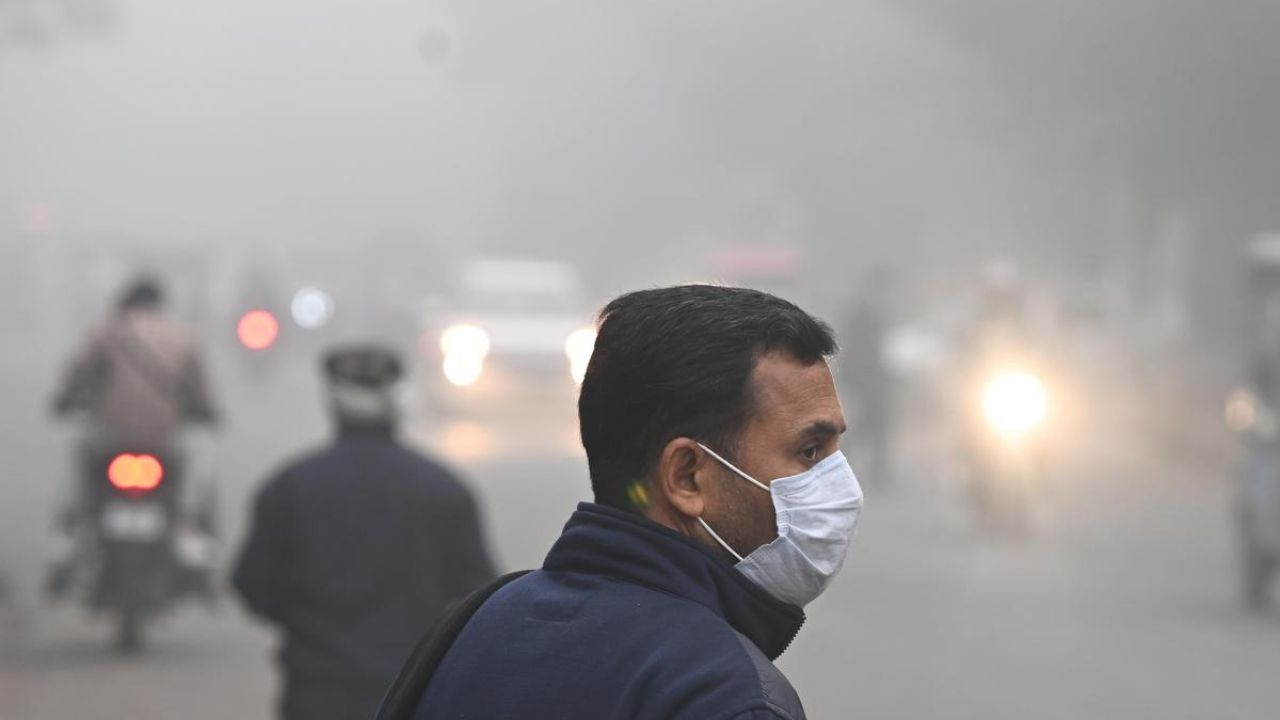
No direct relation between higher AQI, lung diseases
New Delhi: The Union environment ministry has stated that while air pollution can trigger respiratory ailments, there is no conclusive evidence linking higher Air Quality Index (AQI) levels directly to lung diseases. Minister of State (MoS) for Environment, Kirti Vardhan Singh, clarified this in response to concerns raised by BJP MP Laxmikant Bajpai regarding rising cases of lung fibrosis in Delhi-NCR.
“Air pollution is one of the triggering factors for respiratory ailments and associated diseases. There is no conclusive data which establishes a direct correlation between higher AQI levels and lung diseases,” MoS Singh said.
AQI crosses 400 in several parts of Delhi amid rising pollution; Health concerns grow
The MP had asked whether studies confirmed that residents of Delhi-NCR were developing lung fibrosis an irreversible reduction in lung capacity due to hazardous pollution levels. He also inquired if the lung capacity of people in the region was significantly lower than in cities with better air quality, and whether the government had measures to protect millions from diseases such as COPD, emphysema, and declining lung function.
To address air pollution in Delhi-NCR, the government has established the Commission for Air Quality Management (CAQM) under the 2021 Act. The commission coordinates research, identifies pollution sources, and directs action across the region.
Singh noted that CAQM has issued 95 statutory directions to guide agencies in reducing air pollution. A monitoring mechanism has also been set up to oversee the implementation of these directives, ensuring a collaborative approach with all stakeholders.
The National Clean Air Programme (NCAP) aims to reduce PM10 levels across cities between 2019-20 and 2025-26. Actions targeting PM10 also help reduce PM2.5 levels to a certain extent. City-specific Clean Air Action Plans have been prepared for all 130 cities, focusing on pollution sources such as road and soil dust, vehicular emissions, waste burning, construction activities, and industrial pollution.
Through these measures, the government emphasizes a structured and evidence-based approach to improving air quality, while continuing to monitor the impact of pollution on public health.

